Cable Wire Shredder Machine for Insulation Scrap & Cable Recycling
Shred PVC and XLPE insulation offcuts, sheathing scrap, extruder purge lumps and rejected cable at wire plants — the honest first step of cable recycling, sized by a Mumbai machine builder since 1985.
The Cable & Wire Scrap Challenge
A wire and cable plant generates plastic scrap at every stage: PVC and XLPE insulation offcuts from stripping and rework, sheathing trim, start-up and changeover purge lumps from the extruder, and rejected cable lengths that failed testing. The plastic fraction alone is valuable — insulation compound is expensive material — and the copper inside rejected cable is more valuable still. Yet at most plants this scrap accumulates in drums and goes to whoever pays the day’s rate for mixed scrap.
The reason is size. Coiled cable lengths, extruder lumps the size of footballs and tangles of stripped insulation are unmanageable in raw form — recyclers discount what they cannot inspect or feed into their own lines. The informal alternative, burning cable to get at the copper, is illegal and toxic. Size reduction in-house changes the equation: shredded insulation compound sells as sorted single-polymer scrap, purge lumps become regrind-ready pieces, and copper-bearing cable becomes liberated shred ready for proper separation. The shredder is where cable recycling starts — and being clear about where it stops matters just as much, as we explain below.
The Right Shredding Approach for Cable Scrap — and What a Shredder Won’t Do
First, the honest boundary: a shredder does not separate copper from plastic. Shredding liberates the two — it tears cable into fragments where conductor and insulation are no longer locked together — but recovering clean copper granules requires downstream equipment: a granulator and a separation stage (typically gravity or air-based). If a supplier tells you one machine turns cable drums into copper nuggets and clean PVC, walk away. We size the shredding step properly and will tell you plainly what your line still needs after it.
Within that boundary, match the machine to the scrap. Copper-bearing cable and mixed offcuts want a dual shaft shredder — slow, high-torque blades that pull in springy coils and tear them apart; because conductor metal is involved, we ask for a material trial first so blade wear and feed behaviour are known before you buy, not discovered after. Plastic-only scrap is simpler: extruder purge lumps and bulky compound waste run through the S3-600 single shaft shredder at 300–500 kg/hr, and clean stripped insulation goes through an RE-series grinder, which cuts it against a screen into uniform regrind that compounders buy directly. Many cable plants run exactly this two-stream setup: lumps and strip scrap processed for resale, copper-bearing rejects shredded and sent to a separation line.
Cable Scrap Processing — From Drum to Saleable Fractions
- Sorting by scrap type Plastic-only scrap (strip waste, purge lumps) is separated from copper-bearing cable — they follow different routes
- Pre-cutting long lengths Coiled cable and continuous strip are cut to feedable lengths; armoured and steel-cored cable stays out
- Primary shredding Dual shaft shredding tears cable and offcuts into fragments, liberating conductor from insulation
- Granulation of plastic scrap Clean insulation and sheathing scrap is ground to screened regrind that compounders buy directly
- Downstream copper separation Copper-bearing shred goes to a granulator-plus-separator line — separate equipment, honestly stated
Recommended Machines for Cable & Wire Scrap
Three options, matched to the three scrap streams a cable plant generates — mixed cable offcuts, extruder lumps, and clean insulation strip. Full spec tables live on each machine page.
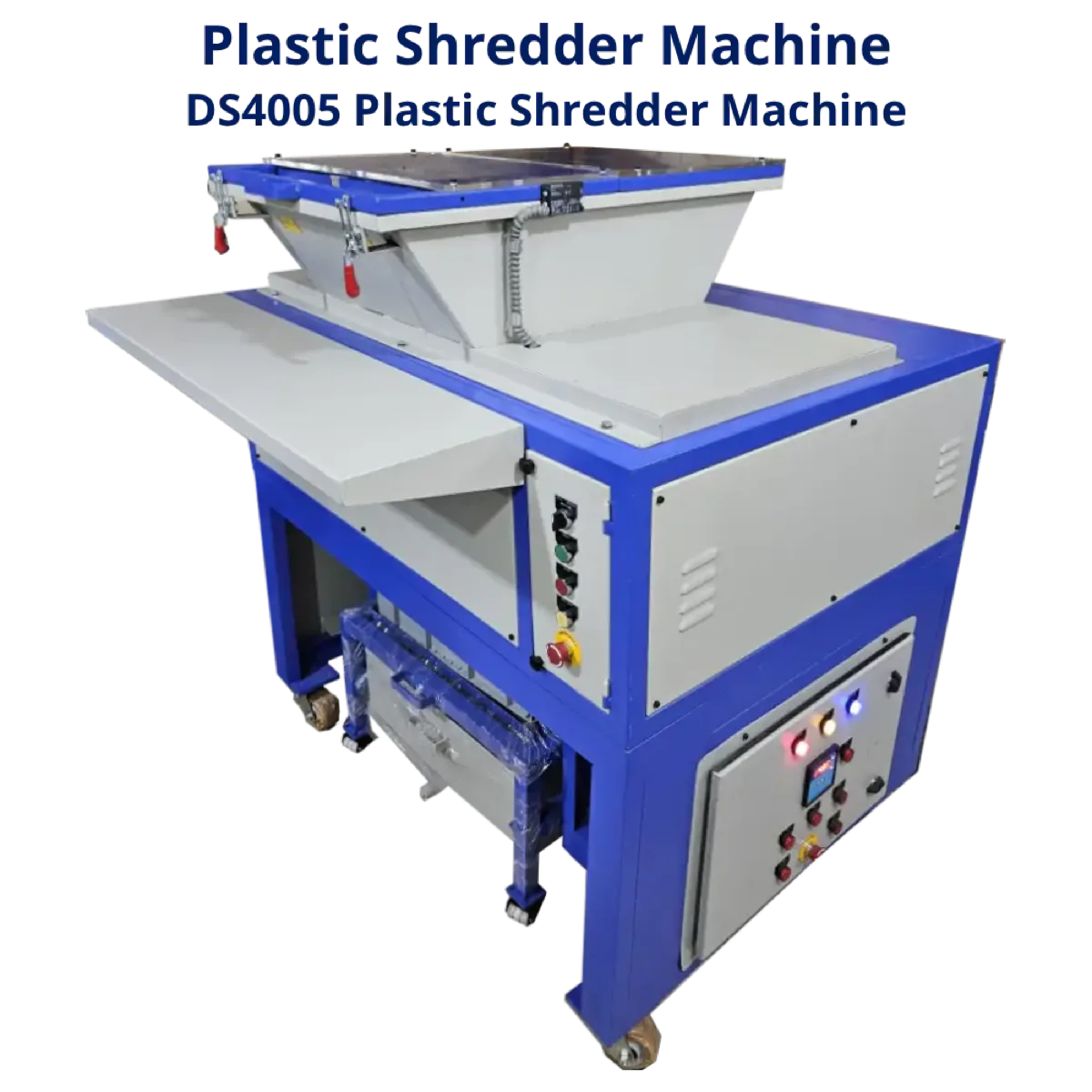
Dual-Shaft Shredder
Dual shaft shredder · high-torque tearing
- Capacity: sized to your stream
- Motor: sized to the model
- Runs continuously for 24 hours
- Material trial advised for copper-bearing cable
Best for: mixed cable offcuts and sheathing scrap — primary liberation before separation.
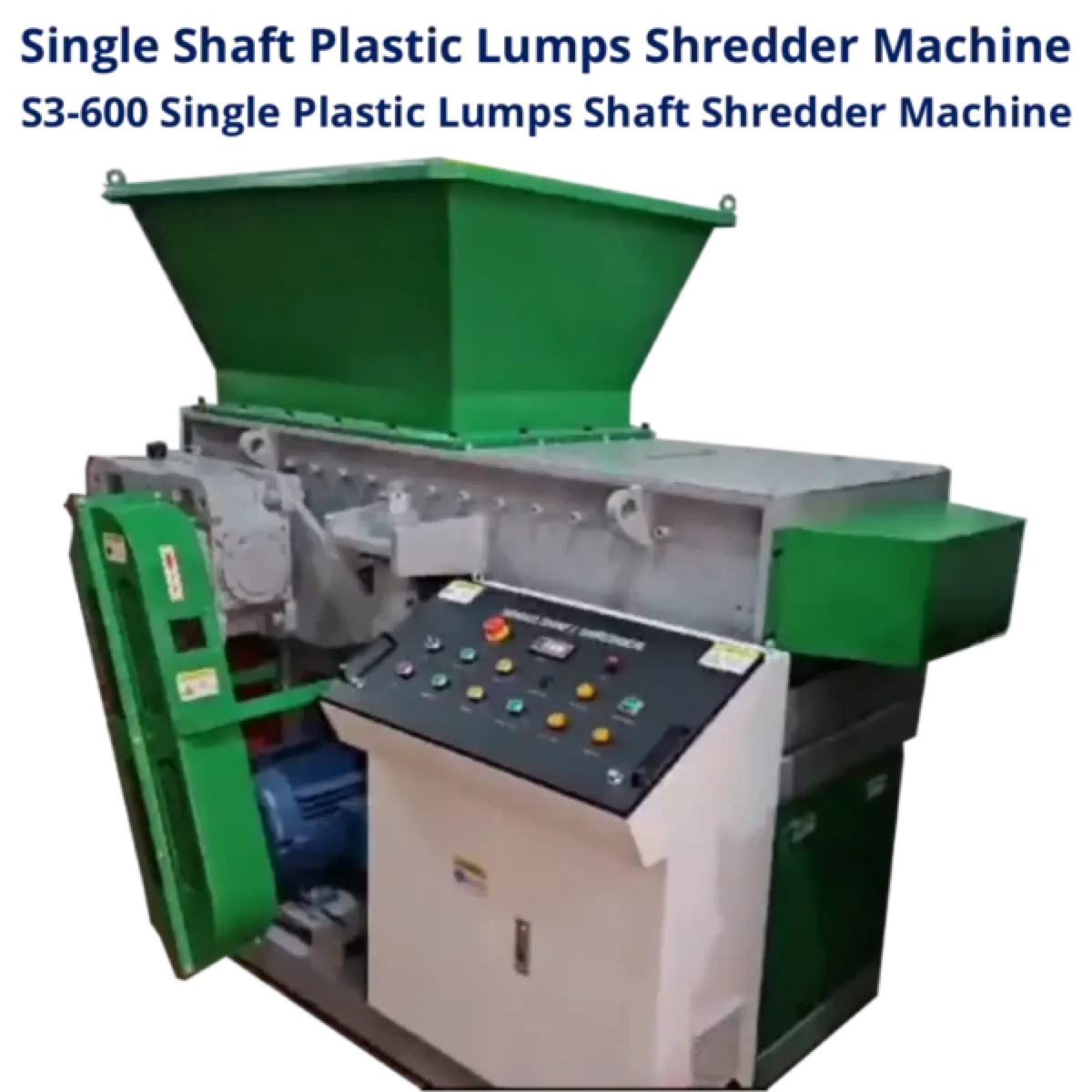
S3-600 Single Shaft Shredder
Single shaft · 24-hr continuous duty · lumps & purgings
- Capacity: 300–500 kg/hr
- Drive: 22 kW, 415 V 3-phase
- 600 × 1000 mm side feeding hopper
- 26 rotary + 2 fixed hardened blades
Best for: extruder purge lumps and bulky PVC/XLPE compound scrap from start-ups and changeovers.
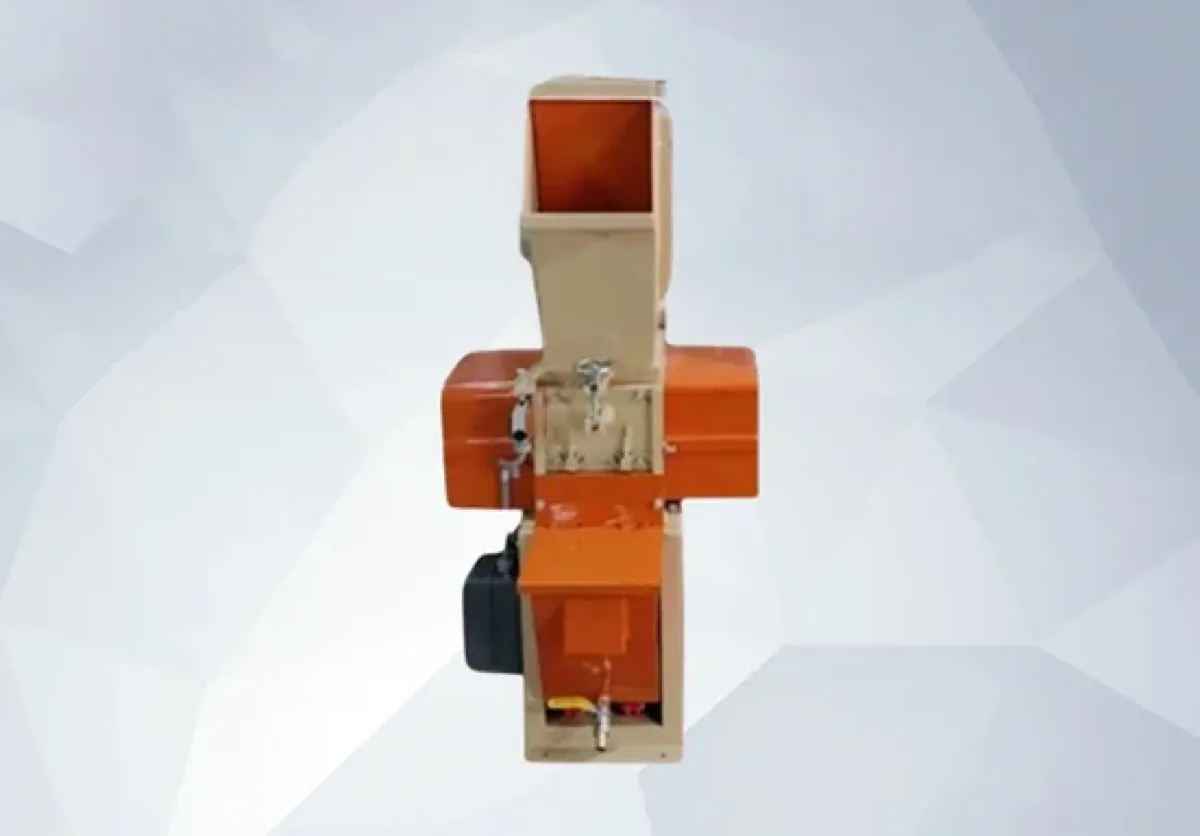
Plastic Grinder — RE Series (RE8–RE40)
Six grinder models · screened regrind output
- Capacity: 35–1,200 kg/hr across models
- Power: 3–30 HP
- Throat sizes: 8″ × 8″ to 30″ × 30″
- No metal in feed — plastic-only scrap
Best for: clean stripped insulation and sheathing trim — regrind that compounders buy directly.
Technical Specifications Comparison
| Specification | Dual-Shaft Shredder | S3-600 Lumps Shredder | Plastic Grinder RE Series |
|---|---|---|---|
| Machine type | Dual shaft shredder | Single shaft shredder | Blade-type grinder, 7 models |
| Motor power | Sized to the model | 22 kW, 415 V 3-phase | 3–75 HP |
| Capacity | Sized to your stream | 300–500 kg/hr | 35–1,200 kg/hr |
| Feed | Manual feeding | 600 × 1000 mm side hopper | Top throat, 8″–30″ |
| Suits | Cable offcuts, sheathing scrap | Extruder purge lumps, bulky compound | Clean stripped insulation |
| Output | Uneven shred size | Shred for further grinding | Screened regrind |
| Best for | Primary liberation | Lump reduction | Saleable regrind |
| Get Quote → | Get Quote → | Get Quote → |
Not sure how to set up your cable scrap line?
Tell our technical team what your plant generates — offcuts, lumps, rejected cable — and we’ll recommend the shredding stage honestly, including what you’ll need downstream.
Why Choose Raj Electricals
A Mumbai machine builder since 1985 — straight answers on what a shredder will and won’t do, and machines built to run on tough industrial scrap.






Frequently Asked Questions
Does a cable shredder separate the copper from the plastic?
No — and any answer other than no is a sales pitch, not engineering. Shredding liberates copper from insulation by tearing the cable into fragments, but the fragments come out mixed. Recovering clean copper granules needs a downstream granulator and a separation stage (gravity table or air separation). What the shredder does is make that separation possible and make the scrap transportable and saleable to processors who run separation lines. We supply the shredding stage and will tell you exactly what your line still needs after it.
What types of cable and wire scrap can be shredded?
Plastic-only scrap — stripped insulation, sheathing trim, extruder purge lumps — shreds and grinds without complication. Copper-bearing flexible cable and offcuts can go through a dual shaft shredder, but conductor metal accelerates blade wear, so we ask for a material trial on your actual cable before quoting — blade life and feed behaviour should be known facts, not assumptions. Armoured cable, steel-wire-reinforced cable and anything with heavy metal cores should stay out of these machines entirely. When in doubt, bring a sample.
What happens to PVC and XLPE insulation scrap after grinding?
Clean, single-polymer insulation regrind has a ready market. PVC compound regrind goes back to compounders and moulders of non-critical products — footwear soles, garden pipe, mats and similar. XLPE is cross-linked and cannot simply be remelted, but ground XLPE is bought as a filler and for specialised reprocessing. The key to price is sorting before grinding: keep PVC and XLPE streams separate at the plant, and keep the regrind free of metal and dirt. A screened grinder output in a known polymer is what buyers pay properly for.
Which machine should a wire manufacturer start with?
Audit a month of scrap by type first. If extruder purge lumps and bulky compound waste dominate, start with the S3-600 lumps shredder — lumps are otherwise nearly unsaleable. If stripping and sheathing trim dominate, an RE-series grinder turns that stream into direct revenue. A dual shaft shredder earns its place when meaningful volumes of copper-bearing offcuts need liberation before sale. Most plants phase the purchase in that order rather than buying everything at once.
How much does a cable wire shredder cost in India?
Every machine is quoted to the job. What moves the number is capacity, throat size, motor rating, MS or SS construction and the automation you add — a blower, a conveyor, a control panel. Our guide to what drives machine cost walks through each of those; send us your material and daily volume and we will size the machine and quote it, usually the same day.
Can we trial the machine on our own cable scrap first?
Yes — for cable scrap we actively insist on it. Bring representative samples of each stream — purge lumps, insulation trim, and a length of your rejected cable — to our works at Andheri East, Mumbai. You will see the shred quality, the throughput on your material and, for copper-bearing cable, the liberation the shredder achieves. That trial is what makes our quotation honest. Contact us to schedule it, and tell us in advance what you are bringing.
What maintenance should we expect when shredding cable scrap?
More blade attention than on soft plastics — that is the honest baseline. Insulation compounds are dense and any conductor metal in the feed accelerates wear, so plan periodic blade sharpening and keep a spare blade set on hand. The machines are all-metal, built for continuous duty, and designed for easy cleaning and lubrication; we provide installation and on-site service, with spares supported pan-India from Mumbai. At quotation we will give you a realistic maintenance schedule based on your declared scrap mix — not a best-case one.
Get a Free Quote for Cable Wire Shredders
Tell us your scrap mix — insulation trim, purge lumps, rejected cable — and monthly volumes. Our technical team responds with an honest recommendation and firm pricing, usually within one working day. No spam, no obligation.
102/103/104, Madhu Industrial Estate, Old Nagardas Road, Mogra Lane, Andheri East, Mumbai – 400069
Mon–Sat, 9:00 AM – 7:00 PM
Related Solutions
E-Waste Plastic Shredder
Shred electronic housings, PCBs and e-waste plastics — the neighbouring stream at many cable recyclers.
Learn more →
Automobile Plastic Shredder
Shred bumpers, dashboards and trim — including the wiring-harness-adjacent plastics of vehicle dismantling.
Learn more →
PVC Pipe Shredding
Shred rigid PVC pipes and profiles — the same polymer family as most cable insulation compound.
Learn more →