Liquid Pouch Squeezing & Recovery Machine — DS3003 / DS4005
Recover the liquid locked inside rejected, expired or damaged sealed pouches — and keep the wrapper material separate for controlled disposal or recycling. Stainless-steel machines that squeeze and shred in a single pass, built in Mumbai.
The Expired-Stock Problem This Machine Solves
Every FMCG, cosmetics, pharma and food plant accumulates sealed pouches it cannot sell — production rejects, expired stock, damaged or returned lots. Dumping them whole wastes the product, sends branded packaging into the open market intact, and mixes liquid into wrapper material that could otherwise be recycled. Cutting them open by hand is slow, messy and impossible at plant volumes.
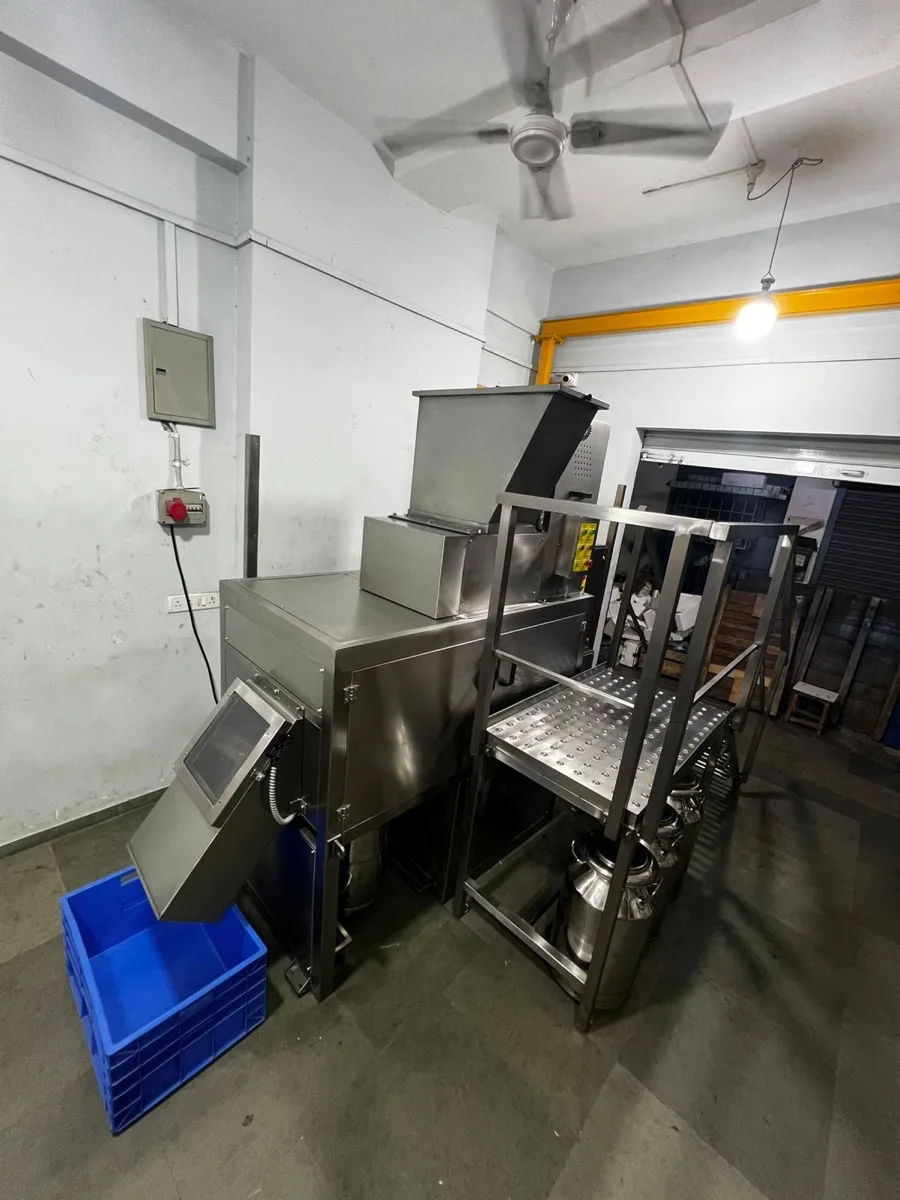
The Liquid Pouch Squeezing & Recovery Machine does both jobs in one pass: pouches are fed gradually into the cutting chamber, the cutting unit opens and shreds the pouch material, and the squeezing unit presses the liquid or semi-liquid product out into collection vessels. Product on one side, wrapper on the other — recovered liquid can be disposed of, treated or reused under your control, and the empty wrapper material goes to controlled disposal or recycling.
It handles shampoo, hair dye, juice, puree and similar pouch products across FMCG, cosmetic, pharma and food streams — recovering 60–95% of the trapped liquid depending on viscosity, at 40–120 kg/hr depending on the model.
How Squeeze-and-Shred Recovery Works
- Feed the pouches Sealed pouches go gradually into the cutting chamber — an optional feeding platform supports higher-volume operation
- Cutting unit opens the pouch SS440 cutters open and shred the pouch material in the same pass
- Squeezing unit recovers the liquid The squeezing unit presses trapped product out — 60–95% recovery depending on viscosity
- Liquid collects in vessels Recovered product drains into collection vessels — SS304 30-litre vessels on standard models
- Wrapper discharges separately Shredded wrapper material leaves the machine drained — ready for controlled disposal or recycling
A reverse/forward jam-clearing provision removes excess material during blockages, and stop–start interlocking with a LOTO switch, 24V DC controls and 360° guarding keeps operation safe throughout.
Two Platforms, Seven Variants
Pick the platform by throughput, then the variant by steel grade. Every variant runs Siemens motors, SS440 cutters, a 24V DC interlocked control panel and 360° safety guarding.
Technical Specifications
DS3003 Platform (300 mm Feed)
| Specification | DS3003 SS304 | DS3003 SS316 | DS3003ECO SS304 | DS3003ECO SS316 |
|---|---|---|---|---|
| Feed width | 300 mm | |||
| Main motor | 3 HP, 415 V AC with gearbox | |||
| Squeezing unit motor | 7.5 HP AC | 7.5 HP AC | 5 HP AC | 5 HP AC |
| Total drive power | 7.5 HP | 7.5 HP | 5 HP | 5 HP |
| Capacity | 60–90 kg/hr | 60–90 kg/hr | 40–50 kg/hr | 40–50 kg/hr |
| Recovery / squeezing efficiency | 60–95% (depending on material viscosity) | |||
| Motor make | Siemens | |||
| Control panel | 24V DC, stop–start interlocking with LOTO switch & indicator lamps | 24V DC, stop–start interlocking with LOTO switch | ||
| Safety | 360° safety guarding | |||
| Cutter grade | SS440 | |||
| Contact parts | SS304 | SS316 | SS304 | SS316 |
| Non-contact parts | SS304 | SS316 | SS304 | SS316 |
| Collection tray / bin | SS304 vessel, 30 L × 2 | SS304 vessel, 30 L × 2 | Plastic bin × 2 | Plastic bin × 2 |
DS4005 Platform (400 mm Feed)
| Specification | DS4005 MID | DS4005 SS304 | DS4005 SS316 |
|---|---|---|---|
| Feed width | 400 mm | ||
| Main motor | 5 HP, 415 V AC with gearbox | ||
| Squeezing unit motor | 7.5 HP AC | ||
| Total drive power | 7.5 HP | ||
| Capacity | 100–120 kg/hr | ||
| Recovery / squeezing efficiency | 60–95% (depending on material viscosity) | ||
| Motor make | Siemens | ||
| Control panel | 24V DC, stop–start interlocking with LOTO switch & indicator lamps | ||
| Safety | 360° safety guarding | ||
| Cutter grade | SS440 | ||
| Contact parts | SS316 | SS304 | SS316 |
| Non-contact parts | SS304 | SS304 | SS316 |
| Collection tray / bin | SS304 vessel, 30 L × 2 | ||
Capacity depends on feeding speed and the viscosity of the liquid. Standard panel enclosure in SS304; optional feeding platform available in MS or SS304. All specifications are subject to change for constant product development.
Key Features
Where It Earns Its Keep
Any plant that generates sealed liquid pouches it cannot sell — see the applications this machine serves.
FMCG Rejects & Returns
Shampoo, detergent and personal-care pouches destroyed in-house — brand protected, product recovered, wrapper recycled.
Learn more →Pharma & Cosmetic Waste
Expired syrups, gels and dye pouches separated into liquid for controlled treatment and wrapper for compliant disposal.
Learn more →Tetra Pak & Liquid Cartons
Juice and dairy cartons with product still inside — the shredder-cum-separator approach for carton streams.
Learn more →Which platform and steel grade fit your product?
Tell our technical team your product type, pouch size and monthly reject volume — we’ll recommend the right variant and arrange a trial with your own pouches.
Liquid Pouch Recovery Machine — Frequently Asked Questions
What products and pouches can the machine handle?
Sealed pouches of liquid and semi-liquid products — shampoo, hair dye, juice, puree and similar FMCG, cosmetic, pharma and food items. Typical feeds are production rejects, expired stock and damaged or returned lots. The DS3003 platform takes pouches up to its 300 mm feed width; the DS4005 extends that to 400 mm. If your pouch or product is unusual, bring samples for a trial — viscosity decides recovery more than pouch shape does.
How much of the liquid does it actually recover?
60–95%, depending on the viscosity of the product. Thin liquids like juice squeeze out at the high end; thick pastes and purees retain more in the wrapper. The recovered product drains into collection vessels — SS304 30-litre vessels on standard variants — where you decide its fate: treatment, disposal or reuse under your own control.
What happens to the shredded wrapper material?
It leaves the machine shredded and drained, separated from the product. Drained wrapper material can go to controlled disposal or into a recycling stream — multilayer laminate wrappers follow the same routes as other laminate waste, typically co-processing or energy recovery, while mono-material wrappers can be recycled conventionally. Either way, branded packaging never leaves your plant intact.
SS304 or SS316 — which steel grade do I need?
SS304 is the standard food-grade choice and suits most shampoo, juice and detergent streams. Step up to SS316 when the product is aggressive — acidic juices, salty or chemically active formulations — or when your quality system specifies 316 for product-contact surfaces. The DS4005 MID splits the difference: SS316 on contact parts where it matters, SS304 elsewhere. Tell us your product and we will recommend honestly.
What is different about the ECO variants?
The DS3003ECO keeps the same squeeze-and-shred process, cutting grade and safety interlocking, but runs a 5 HP squeezing motor instead of 7.5 HP — 40–50 kg/hr instead of 60–90 — and collects into plastic bins instead of SS304 vessels. It is the budget entry point for plants with modest reject volumes; the full DS3003 and DS4005 earn their premium on throughput and collection hygiene.
How do I size the machine to my reject volume?
Work in kilograms per shift. A DS3003 at 60–90 kg/hr clears roughly 500–700 kg across an 8-hour shift; the DS4005 at 100–120 kg/hr handles 800–1,000 kg. Count your monthly reject and expiry volumes, divide by working days, and size with headroom — destruction jobs arrive in batches, not evenly. Send us your numbers and we will recommend the platform and variant.
What is the price of a liquid pouch recovery machine?
It depends on the platform (DS3003 vs DS4005), the steel grade (SS304, SS316 or the ECO build) and accessories like the feeding platform — so we quote against your specification rather than publish one number. Send your product type and volumes through the enquiry form and our team replies within one working day with a firm quotation.
Can I see my own pouches processed before buying?
Yes — bring your actual pouches to our works in Andheri East, Mumbai, and watch them processed on the machine you are considering. A trial settles recovery percentage, throughput and output-handling questions better than any brochure, especially for unusual viscosities.
Get a Free Quote for the Pouch Recovery Machine
Tell us your product, pouch sizes and monthly reject volume. Our technical team replies within one working day with a variant recommendation and a firm price — no obligation.
Call: +91 98700 12462
WhatsApp: Chat with our team
Email: rajelectricalsmumbai@gmail.com
Address: 102/103/104, Madhu Industrial Estate, Old Nagardas Road, Mogra Lane, Andheri East, Mumbai – 400069
Hours: Mon–Sat, 9:00 AM – 7:00 PM
Related Machines
Laminate Shredder
For empty laminate and lamitube waste — the destruction-only route when there is no product to recover.
Learn more →Dual-Shaft Shredder
The 400 mm dual-shaft shredder for rigid packaging, drums and mixed plastic waste destruction.
Learn more →Plastic Grinders & Granulators (RE Series)
The RE series (RE8–RE40) for grinding rigid bottle and container rejects into uniform, saleable regrind.
Learn more →