FMCG Rejects Shredder Machine for Expired & Recalled Stock
Destroy expired, recalled and off-spec consumer goods — filled sachets, pouches, bottles, lamitubes and cartons — before they reach the grey market. The same Mumbai workshop that builds FMCG waste shredders for Godrej, HUL, Dabur, Parle and GSK.
The FMCG Reject Destruction Challenge
Fast-moving consumer goods move fast in both directions: expired stock comes back from distributors, recalled lots come back from the market, and the plant itself generates off-spec production — underfilled sachets, mislabelled bottles, damaged cartons, artwork-change leftovers. All of it carries a brand name, and most of it is still filled with product. Stock like this cannot be handed to a scrap dealer intact: filled sachets sold at a discount in the grey market, or branded packaging refilled with counterfeit product, is direct damage to the brand — and the brand owner answers for it.
There is also a regulatory dimension. Under India’s plastic waste management framework, brand owners carry Extended Producer Responsibility (EPR) for their packaging — and a documented in-house destruction and recycling stream is far easier to account for than waste that disappears into informal channels. Add the commercial need to document write-offs of destroyed stock, and the case is clear: rejected FMCG goods need controlled, witnessed, recorded destruction — not disposal on trust.
The Right Shredding Approach for FMCG Rejects
FMCG reject lots are the most mixed waste stream in industry — laminate sachets filled with shampoo or oil, HDPE and PET bottles, lamitubes, monocartons and corrugated shippers, often all on one pallet. The workhorse here is a dual shaft shredder: slow-turning interlocked blades pull in filled pouches, bottles and cartons together and reduce everything to unrecoverable shred. For streams dominated by laminate sachets and tubes, a dedicated laminate shredder fits beside the packing hall; for bottle-heavy streams, a blade-type bottle shredder destroys and size-reduces in one pass.
Filled product deserves a straight answer: liquids and powders go through the shredder with the pack, but the wet shred that results is harder to sell to recyclers. Where volumes justify it, Raj Electricals has built machines that squeeze or separate the product from the packaging — see the liquid pouch squeezing & recovery machine (DS3003/DS4005), and ask about lamitube squeezing, masala powder separation and tetra pack shredder-cum-liquid-separation builds developed for exactly these jobs. Recovering the product fraction keeps the plastic dry and saleable, and in some cases the recovered product itself has value.
This is the segment Raj Electricals knows best: our shredders and recovery machines run at India’s biggest consumer goods names — Godrej, Hindustan Unilever, Dabur, Parle, GSK and Nissin among them. The machines below are the standard starting points; customized configurations are our normal practice, not an exception.
FMCG Reject Destruction Process — From Returned Pallet to Recycler
- Reject consolidation Expired returns, recalled lots and off-spec production are logged and held in a controlled destruction area
- Sorting by pack type Filled sachets, bottles, tubes and cartons are grouped — glass and metal route separately from plastics
- Witnessed shredding Stock is fed in whole and leaves as shred — no pack, label or brand mark survives intact
- Product–packaging separation Where volumes justify it, recovery machines squeeze or separate liquids and powders from the plastic fraction
- Recorded dispatch Destroyed material is weighed and documented, then sent to recyclers — supporting write-off and EPR records
Recommended Machines for FMCG Reject Shredding
Three options, matched to whether your rejects are mixed pallets, laminate sachets or bottle-heavy lots. Full spec tables live on each machine page.
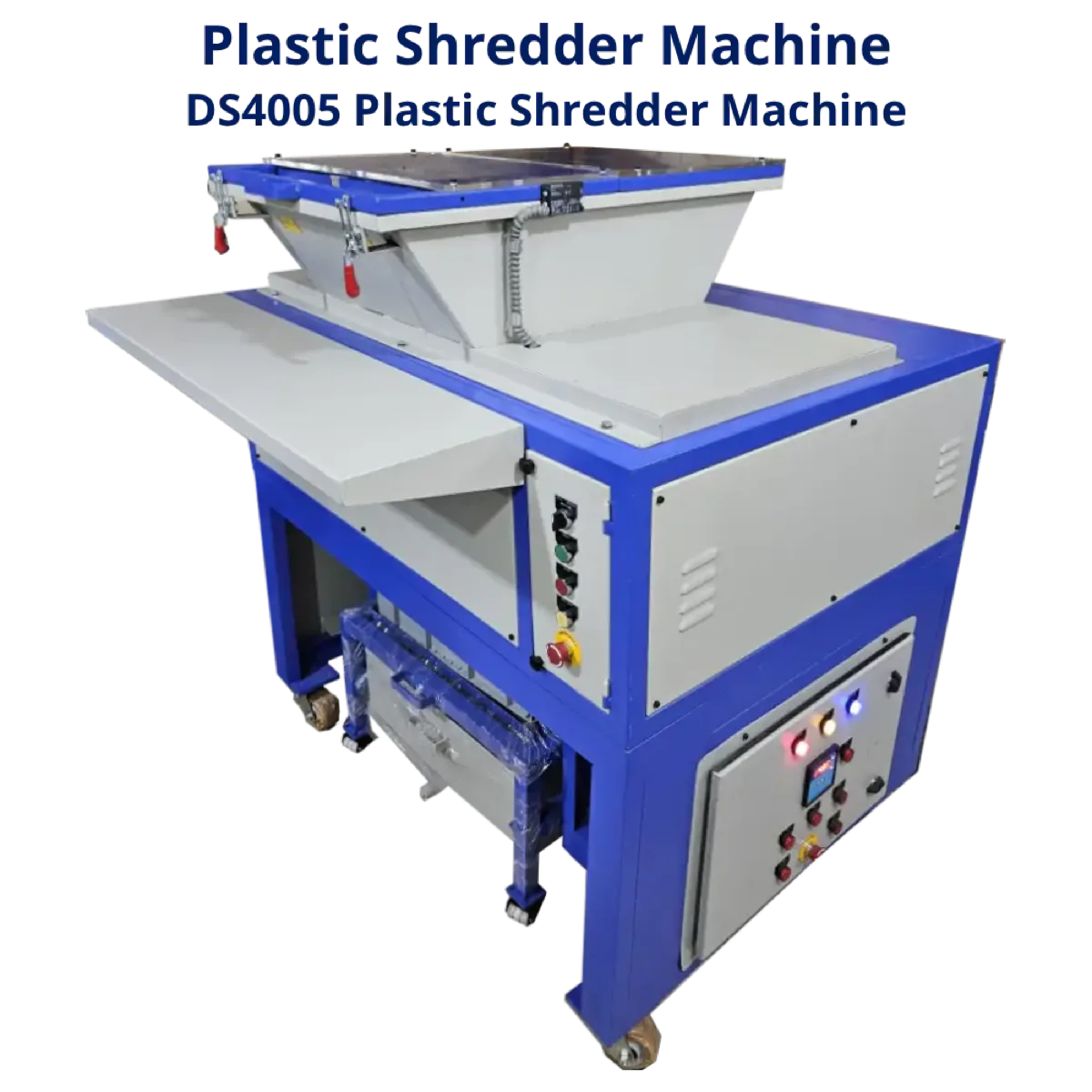
Dual-Shaft Shredder
Dual shaft shredder · 24-hr continuous duty
- Capacity: sized to your stream
- Motor: sized to the model
- MS build; SS grade available
- Takes pouches, bottles & cartons together
Best for: mixed reject pallets — the one-machine answer for most FMCG plants and warehouses.
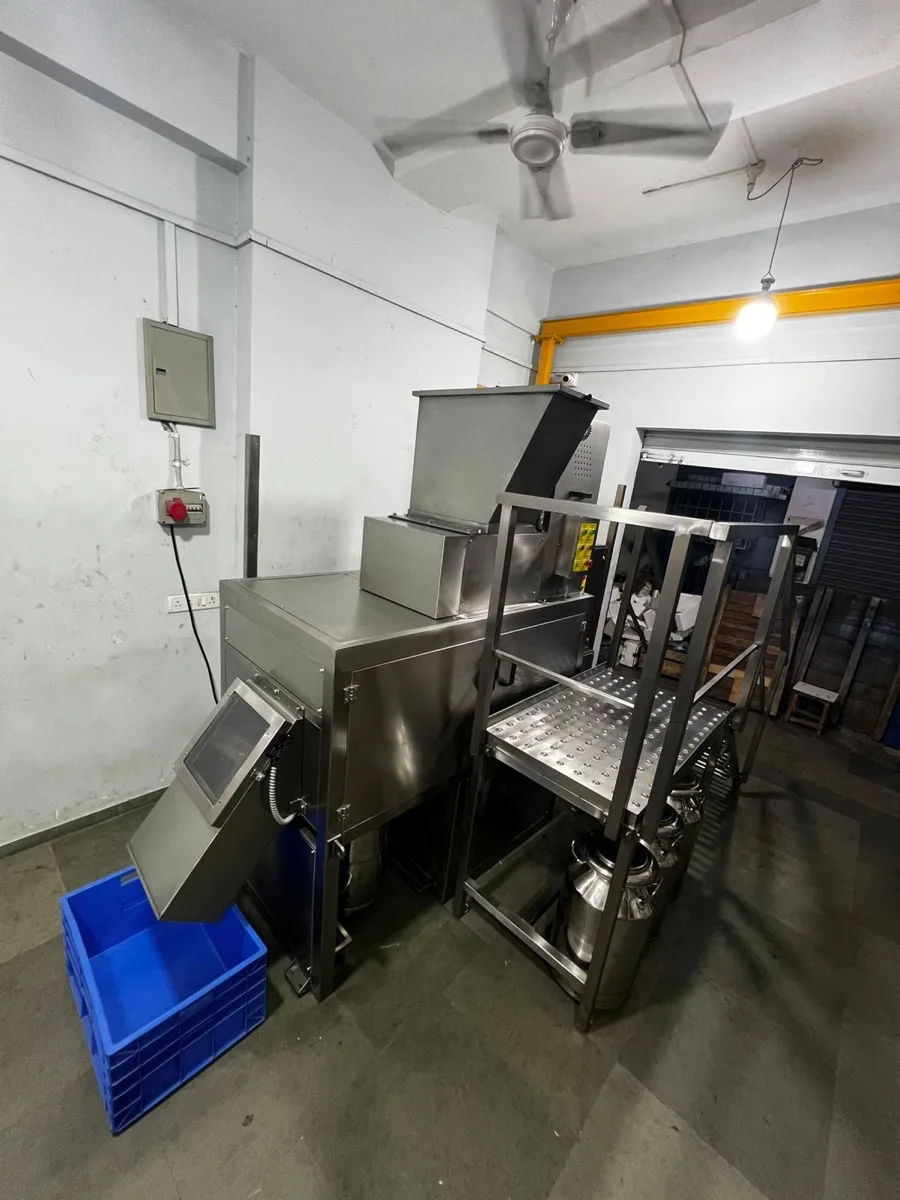
Liquid Pouch Squeezing & Recovery Machine
Squeeze + shred in one pass · SS304/SS316
- Capacity: 40–120 kg/hr (DS3003/DS4005)
- Recovers 60–95% of trapped liquid
- Wrapper discharged drained, ready to recycle
- Food-grade SS build, LOTO-interlocked controls
Best for: filled shampoo, oil and personal-care pouches — recover the product, protect the brand.
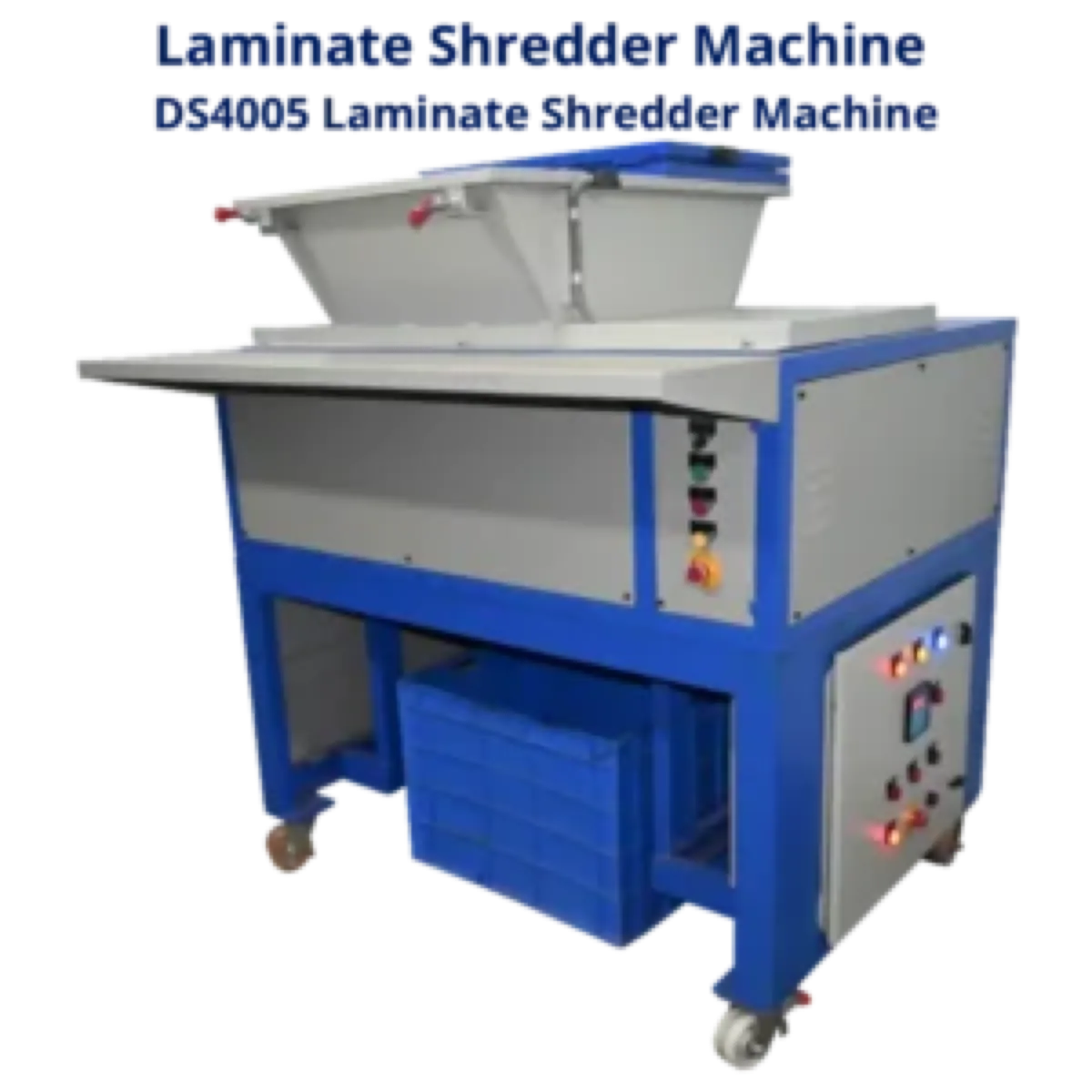
Laminate Shredder
Dual shaft shredder · laminate & pouch duty
- Shreds laminate sachets, pouches & lamitubes
- Handles printed webs and label stock
- Built to order for your pack formats
- Contact us for detailed specifications
Best for: sachet- and pouch-heavy reject streams from filling and packing lines.
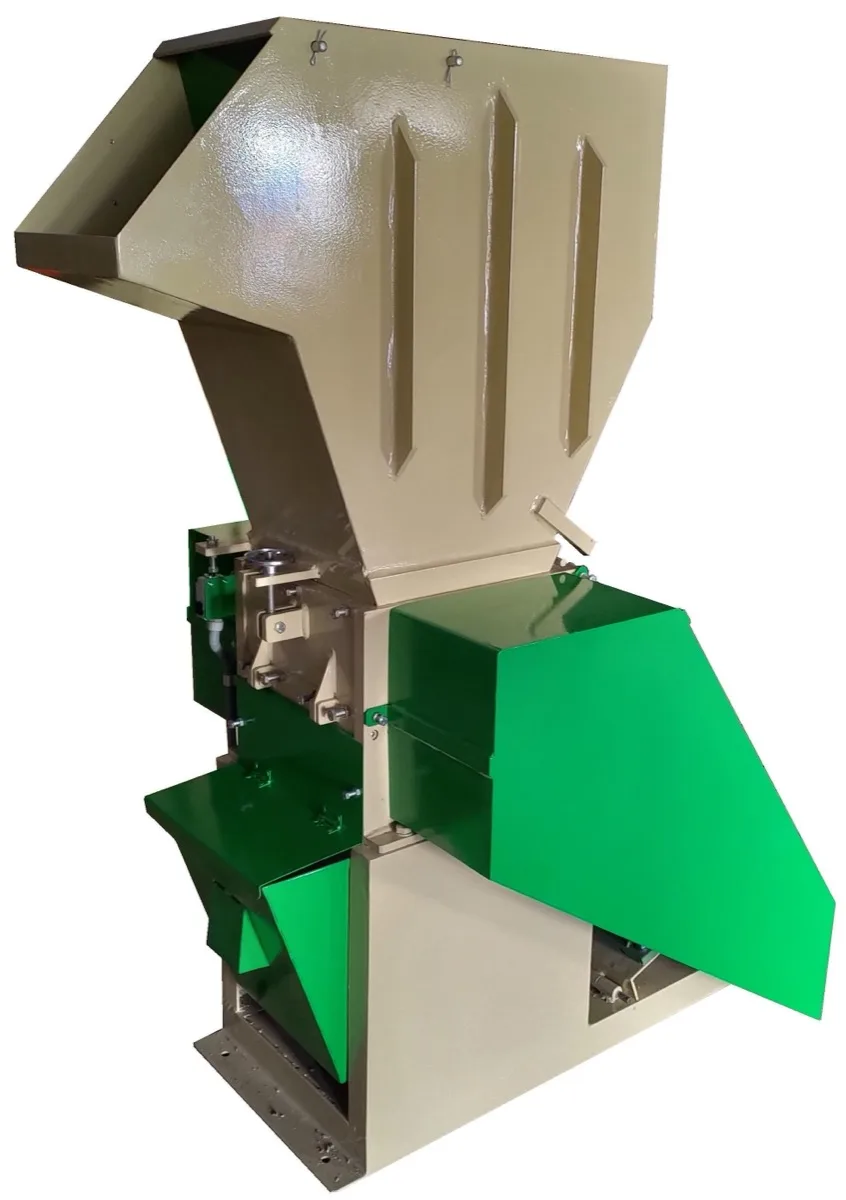
RE16 Plastic Grinder
Blade-type grinder · 16″ throat · plastic bottles & rigids
- Capacity: 150–250 kg/hr
- Power: 10 HP
- Throat: 16″ × 16″
- Handles bottles & jars up to 10 litres
Best for: bottle-heavy rejects — shampoo, oil and home-care bottles destroyed and size-reduced in one pass.
Technical Specifications Comparison
| Specification | Dual-Shaft Shredder | Laminate Shredder | RE16 Plastic Grinder |
|---|---|---|---|
| Machine type | Dual shaft shredder | Dual shaft shredder | Single-rotor bottle machine (RE series) |
| Motor power | Sized to the model | Contact us for detailed specifications | 10 HP |
| Capacity | Sized to your stream | Contact us for detailed specifications | 150–250 kg/hr |
| Handles | Mixed rejects — pouches, bottles, cartons | Sachets, laminates, lamitubes | Bottles & jars up to 10 L |
| Output | Uneven shred size | Contact us for detailed specifications | Contact us for detailed specifications |
| Machine weight | By model | Contact us for detailed specifications | 950 kg (approx) |
| Best for | Mixed reject pallets | Sachet & pouch streams | Bottle-heavy reject lots |
| Get Quote → | Get Quote → | Get Quote → |
Not sure which machine fits your reject stream?
Tell our technical team your pack formats — sachets, bottles, tubes, cartons — and monthly volume; we’ll recommend the right setup, free.
Why Choose Raj Electricals
A Mumbai machine builder since 1985 — the workshop behind shredders and product-recovery machines at India’s biggest FMCG names.






Frequently Asked Questions
How do FMCG companies usually destroy expired or recalled stock?
The controlled route is in-house shredding: returned or recalled stock is consolidated, logged batch-wise, fed whole into a shredder under supervision, and dispatched to recyclers as unrecoverable shred — with photographs and weighbridge records supporting the write-off. The uncontrolled alternatives are what brands work hard to avoid: discounted stock leaking through informal channels, or branded packaging being refilled. Most large FMCG plants now treat reject destruction as a standing process with its own machine, not an occasional headache.
Can filled sachets and pouches go straight into the shredder?
Yes — dual shaft shredders take filled sachets, pouches and bottles as they come; emptying thousands of sachets by hand defeats the purpose. The honest caveat: shredding filled packs gives you wet shred mixed with product, which recyclers discount. Where volumes are large, a recovery machine that squeezes or separates the product from the packaging first — like our oil pouch squeezing-cum-recovery and shampoo recovery machines — keeps the plastic fraction dry and saleable. Tell us your daily filled-pack volume and we will advise which approach pays.
How does shredding rejects help with EPR compliance?
Extended Producer Responsibility makes brand owners answerable for the plastic packaging they put on the market. An in-house destruction and recycling stream gives you exactly what EPR accounting needs: weighed, documented quantities of packaging waste moving to registered recyclers — rather than waste vanishing into informal channels with no paper trail. Shredding is the step that turns branded stock into recyclable material, and the records around it support both your EPR filings and your financial write-offs. We keep this general: your compliance team owns the filings; our machine makes the material stream documentable.
Our rejects include sachets, bottles, tubes and cartons together — one machine or several?
Start with one dual shaft machine — it takes the full mix as it comes, which is how most plants begin. A second, dedicated machine makes sense when one pack format dominates daily volumes: a laminate shredder beside a sachet-filling hall, or a bottle shredder at a beverage or home-care plant. The deciding factor is whether sorting before a specialised machine costs you more labour than it saves in throughput. We will tell you honestly which side of that line your numbers fall on.
What capacity do we need for periodic destruction drives rather than daily running?
Most FMCG sites run destruction as scheduled events — clearing a month’s accumulated returns in a day or two — rather than continuously. Size for the event, not the average: we pick the dual shaft model that clears your accumulated lot in a supervised shift or two. If your quarterly recall-and-returns lot runs into tens of tonnes, plan multiple shifts or a larger configuration. Our machine selection guide covers the sizing arithmetic, or send us your lot sizes for a recommendation.
How much does an FMCG waste shredder cost in India?
Every machine is quoted to the job. What moves the number is capacity, throat size, motor rating, MS or SS construction and the automation you add — a blower, a conveyor, a control panel. Our guide to what drives machine cost walks through each of those; send us your material and daily volume and we will size the machine and quote it, usually the same day.
Can the machine be customized to our pack formats and line layout?
Yes — customized shredder configurations are our normal practice. We have built conveyor-fed shredders, shredder-cum-separator machines and product recovery machines against specific client requirements, including for FMCG majors. Hopper size, feeding arrangement, output size and MS or SS construction can all be specified. If your destruction area has space or layout constraints, share a sketch with your enquiry and we will configure around it rather than forcing a standard footprint.
Can we see our own rejects destroyed before we commit?
Yes. Bring a representative reject lot — filled sachets, bottles, cartons, whatever your stream contains — to our works at Andheri East, Mumbai, and watch the machine destroy it. Check the shred yourself for anything recoverable, and time the throughput against your volumes. For outstation teams we arrange video trials on your material. Contact us to book a slot.
Get a Free Quote for FMCG Rejects Shredders
Tell us your pack formats and monthly reject volume — our technical team responds with a model recommendation and firm pricing, usually within one working day. No spam, no obligation.
102/103/104, Madhu Industrial Estate, Old Nagardas Road, Mogra Lane, Andheri East, Mumbai – 400069
Mon–Sat, 9:00 AM – 7:00 PM
Related Solutions
Pharma Waste & Blister Pack Shredder
Destroy expired medicines, blister packs and pharma rejects with witnessed, documented shredding.
Learn more →
Tetra Pack Shredder cum Liquid Separator
Shred filled beverage cartons and recover the liquid separately — built for dairy and juice rejects.
Learn more →
Laminates & Lamitube Shredder
Shred multilayer laminates, lamitubes and foil-backed packaging waste from filling and printing lines.
Learn more →