Plastic Grinder Machine, RE Series Granulators for Plastic Scrap (RE8–RE40)
Whether you call it a plastic grinder, a granulator or a plastic crusher machine, the RE series is fourteen machines on one proven platform: seven base plastic grinder machines from 3 HP to 75 HP, and seven cyclone-blower (CB) variants that bag their own output. Built by Raj Electricals since 1985. Pick your size, then choose base or blower.
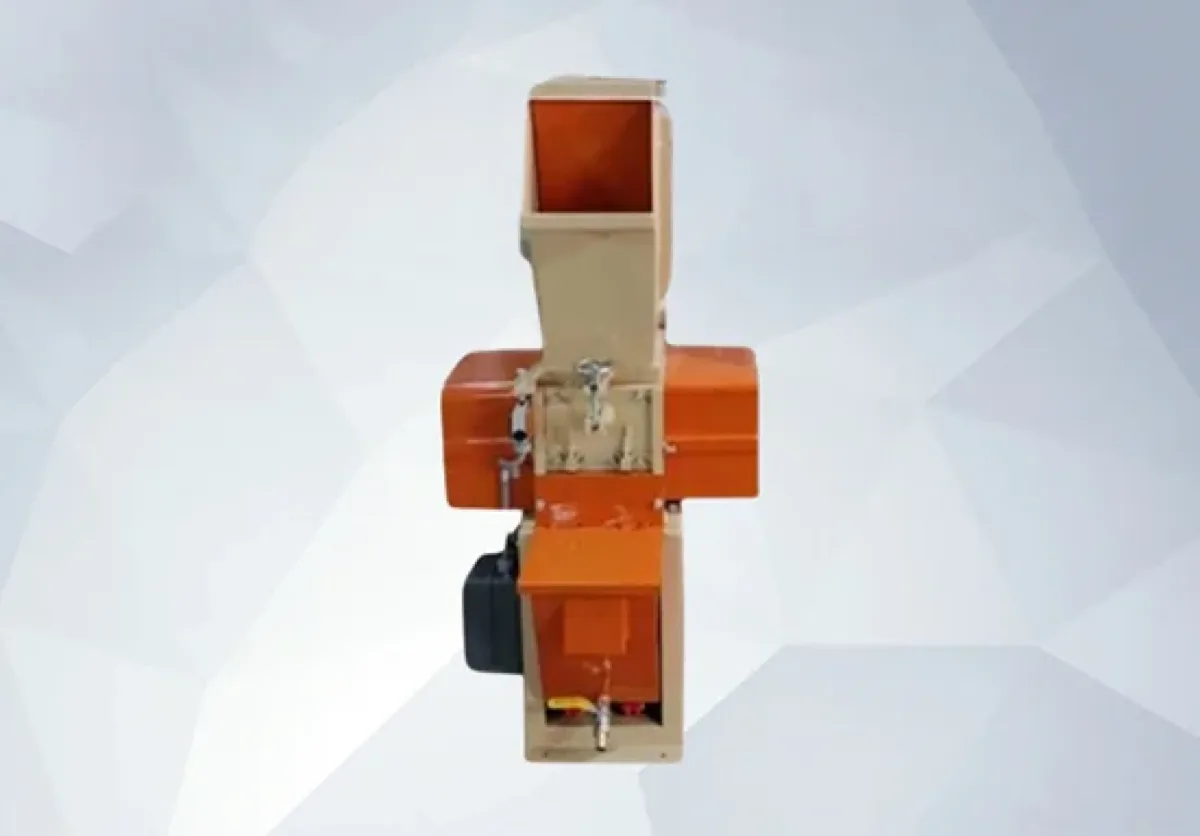
How a Grinder Machine for Plastic Works
A grinder (granulator) is a rotor-and-knife machine. Rotating blades sweep past fixed blades in a fast scissor action, chopping the plastic again and again. Below the rotor sits a screen, 12–15 mm as standard on RE-series machines, customisable to your spec. Nothing leaves the chamber until it is small enough to fall through the mesh, which is why granulator output is uniform while shredder output is not.
- Feed the throat Bottles, sprues or parts drop into the throat, 8″×8″ on the RE8 up to 40″×40″ on the RE40
- Rotor knives cut Rotating blades shear the plastic against fixed blades in rapid scissor cuts, 3+2 on most models, up to 9+6 on the RE40
- Screen sizes the granule Pieces recirculate until they pass the mesh, every granule comes out below screen size
- Collect or convey Regrind collects below, CB variants convey it straight into bags through the cyclone blower
Grinder or Shredder: Which Do You Actually Need?
Many recycling lines run both: a single shaft or dual shaft shredder for primary breakdown, then an RE-series grinder for final granule size. Our guide to plastic grinding and shredding explains how the two stages fit together. Searching for a mini plastic grinder or small plastic grinder machine for a beside-the-press setup? That’s the RE8, 3 HP, 35–45 kg/hr and just 150 kg.
RE Series Base Grinders, All 7 Models Compared
Every base model grinds against a 12–15 mm screen (customisable), runs on 415 V / 50 Hz 3-phase supply with manual feeding, and cuts with hardened steel blades. Output size follows the screen. Click a model for its full page.
| Specification | RE8 | RE12 | RE16 | RE20 | RE25 | RE30 | RE40 |
|---|---|---|---|---|---|---|---|
| Throat size | 8″ × 8″ | 12″ × 12″ | 16″ × 16″ | 20″ × 20″ | 25″ × 25″ | 30″ × 30″ | 40″ × 40″ |
| Motor HP / kW | 3 HP / 2.21 kW | 5 HP / 3.68 kW | 10 HP / 7.36 kW | 15 HP / 11.03 kW | 25 HP / 18.39 kW | 30 HP / 22.07 kW | 75 HP / 55.16 kW |
| Throughput (15 mm screen) | 35–45 kg/hr | 60–80 kg/hr | 150–250 kg/hr | 250–400 kg/hr | 400–600 kg/hr | 600–800 kg/hr | 1,000–1,200 kg/hr |
| Blades (rotating + fixed) | 3 + 2 | 3 + 2 | 3 + 2 | 3 + 2 | 3 + 2 | 6 + 4 | 9 + 6 |
| Machine weight (approx.) | 150 kg | 360 kg | 950 kg | 1,062 kg | 2,137 kg | 3,000 kg | 4,700 kg |
| Can grind | PET bottle up to 500 ml | PET bottle up to 1 litre | PET bottle/jar up to 10 litres | PET bottle/jar up to 20 litres | Any plastic material below 25″ | Any plastic material below 30″ | Any plastic material below 40″ |
| Starter | D.O.L. Starter | D.O.L. Starter | D.O.L. Starter | Star Delta Starter | Star Delta Starter | Star Delta Starter | Star Delta Starter (optional control panel) |
Throughput varies with feeding speed, material and its bulk density. A finer screen lowers output. All specifications are subject to change for constant product development.
Grinder with Blower (CB) Variants, All 7 Models
The CB variants add a cyclone blower that conveys ground output pneumatically into collection bags. That gives continuous operation on light material, with the dust contained. Mechanical construction matches the base machine of each size. Throughputs below are for light-weight material.
| Specification | RE8 CB | RE12 CB | RE16 CB | RE20 CB | RE25 CB | RE30 CB | RE40 CB |
|---|---|---|---|---|---|---|---|
| Throat size | 8″ × 8″ | 12″ × 12″ | 16″ × 16″ | 20″ × 20″ | 25″ × 25″ | 30″ × 30″ | 40″ × 40″ |
| Grinder motor | 3 HP / 2.21 kW | 5 HP / 3.68 kW | 10 HP / 7.36 kW | 15 HP / 11.03 kW | 25 HP / 18.39 kW | 30 HP / 22.07 kW | 75 HP / 55.16 kW |
| Blower motor | 0.5 HP / 0.37 kW | 1 HP / 0.74 kW | 2 HP / 1.47 kW | 3 HP / 2.21 kW | 5 HP / 3.68 kW | 7.5 HP / 5.52 kW | 10 HP / 7.36 kW |
| Throughput (light material, 15 mm screen) | 20 kg/hr | 45 kg/hr | 90 kg/hr | 175 kg/hr | 400 kg/hr | 550 kg/hr | 700 kg/hr |
| Output size | As per screen size | As per screen size | Uneven shred size | Uneven shred size | As per screen size | As per screen size | As per screen size |
| Machine weight (approx.) | 229 kg | 473 kg | 1,076 kg | 1,180 kg | 2,302 kg | 3,250 kg | 5,100 kg |
| Can grind | PET bottle up to 500 ml | PET bottle up to 1 litre | PET bottle/jar up to 10 litres | PET bottle/jar up to 20 litres | Any plastic material below 25″ | Any plastic material below 30″ | Any plastic material below 40″ |
Blower capacities are for light-weight material on a 15 mm screen. Denser scrap grinds at base-model rates. The RE16 CB and RE20 CB produce an uneven shred size, reproduced faithfully from the machine sheets. All specifications are subject to change for constant product development.
Choose Your Model
Every machine below has its own page with the full spec table, applications and FAQs.
RE8 Plastic Grinder
3 HP · 35–45 kg/hr · 8″ × 8″ throat · PET bottle up to 500 ml.
Learn more →RE8CB Grinder with Blower
3 + 0.5 HP · 20 kg/hr on light material · cyclone blower bags the output.
Learn more →RE12 Plastic Grinder
5 HP · 60–80 kg/hr · 12″ × 12″ throat · PET bottle up to 1 litre.
Learn more →RE12CB Grinder with Blower
5 + 1 HP · 45 kg/hr on light material · cyclone blower bags the output.
Learn more →RE16 Plastic Grinder
10 HP · 150–250 kg/hr · 16″ × 16″ throat · PET bottle/jar up to 10 litres.
Learn more →RE16CB Grinder with Blower
10 + 2 HP · 90 kg/hr on light material · cyclone blower bags the output.
Learn more →RE20 Plastic Grinder
15 HP · 250–400 kg/hr · 20″ × 20″ throat · PET bottle/jar up to 20 litres.
Learn more →RE20CB Grinder with Blower
15 + 3 HP · 175 kg/hr on light material · cyclone blower bags the output.
Learn more →RE25 Plastic Grinder
25 HP · 400–600 kg/hr · 25″ × 25″ throat · Any plastic material below 25″.
Learn more →RE25CB Grinder with Blower
25 + 5 HP · 400 kg/hr on light material · cyclone blower bags the output.
Learn more →RE30 Plastic Grinder
30 HP · 600–800 kg/hr · 30″ × 30″ throat · Any plastic material below 30″.
Learn more →RE30CB Grinder with Blower
30 + 7.5 HP · 550 kg/hr on light material · cyclone blower bags the output.
Learn more →RE40 Plastic Grinder
75 HP · 1,000–1,200 kg/hr · 40″ × 40″ throat · Any plastic material below 40″.
Learn more →RE40CB Grinder with Blower
75 + 10 HP · 700 kg/hr on light material · cyclone blower bags the output.
Learn more →Plastic Scrap Grinder Applications and Industries
A plastic scrap grinder earns its place wherever clean scrap has to become uniform regrind: beside the press, at the end of a recycling line, or after a shredder has broken bulky waste down. Material arrives as rejects, bottles, offcuts or pre-shredded pieces and leaves as regrind sized by the screen, ready to go back into production or to be sold. Here is which scrap grinder machine suits which scrap, industry by industry.
Which RE model fits your material?
Tell us what you grind, your largest piece and your monthly volume. We’ll size the right model and quote it, free. Trials at our Andheri East works are welcome.
Plastic Grinder Machine Price, Uses and Care: FAQs
What is a plastic grinder used for?
A plastic grinder cuts clean plastic scrap into uniform regrind that goes back into production or sells as raw material. Molding shops grind sprues, runners and rejects beside the press. Recyclers grind PET, HDPE and LDPE bottles and containers. Plants with bulky waste shred it first and grind the shredded pieces. The screen under the rotor sets the granule size, so the regrind is even enough to feed a molding machine or an extruder.
Is a granulator the same as a plastic grinder or a plastic crusher machine?
In the Indian market the three words describe the same rotor-and-knife machine. “Granulator” is the technical term, “grinder” is the common name, and “crusher” usually appears with bottles. Whatever the name, the working parts are the same: rotating knives, fixed knives and a screen that fixes the output size.
What granule size will I get, and can it be changed?
Granule size is set by the screen (mesh) under the rotor, 12–15 mm standard on RE-series machines, customisable to your requirement. Material keeps recirculating in the cutting chamber until it passes the mesh, so output is consistently below screen size. Note that the RE16 CB and RE20 CB blower configurations produce an uneven shred size, stated faithfully on their pages.
I run a small unit. Is there a mini plastic grinder machine?
Yes, the RE8 is our smallest plastic grinder: 3 HP motor, 35–45 kg/hr, 8″×8″ throat and just 150 kg. It grinds PET bottles up to 500 ml and small molding scrap, and fits beside the press in a small workshop. If your volumes grow, the same design scales up through the RE12 all the way to the 75 HP RE40.
How much does a plastic grinding machine cost?
There is no list price: every plastic grinder machine price is quoted to the job. What decides it is the model and throat size, the motor (3 HP on the RE8 up to 75 HP on the RE40), base or CB blower model, MS or SS construction, the screen you need and options such as a conveyor or control panel. A small plastic crusher machine beside one press and an RE40 for a recycling plant are very different purchases. Our plastic shredder machine price guide explains each factor. Send us your material and daily volume and we will size the machine and quote it in writing.
How much does a plastic recycling machine cost?
It depends on what the line has to do. For one plant a plastic recycling machine is a single grinder beside the press. For another it is a shredder, a grinder and the conveying between them. The price follows the machines in the line, their capacity and motors, and how the material is fed and discharged. Tell us your material, the form it arrives in and your daily volume, and we will recommend the line and quote each machine. Planning a whole recycling unit? Our guide to plastic recycling plant cost covers the rest of the plant.
How do I maintain plastic grinder blades?
Sharpen the blades periodically, keep the cutting head lubricated, and never let metal objects enter the cutting area, because they break blades. Abrasive material such as glass-filled scrap wears the edges faster, so check them more often. We give blade sharpening guidance and supply spares across India.
Can I see my material ground before buying?
Yes. Bring your actual scrap to our works in Andheri East, Mumbai, and watch it ground on the model you are considering. For export orders we fit motors wound for your country’s voltage and frequency. Our machines already run in Dubai, the UK, Egypt, Mauritius, Nigeria and Kenya.
Get a Free Quote for a Plastic Grinder
Tell us your material, largest piece size and monthly volume. We’ll recommend the right RE model, base or CB, and send a written quotation.
Call: +91 98700 12462
WhatsApp: Chat with our team
Email: rajelectricalsmumbai@gmail.com
Address: 102/103/104, Madhu Industrial Estate, Old Nagardas Road, Mogra Lane, Andheri East, Mumbai – 400069
Hours: 9:00 AM – 6:00 PM, all seven days