Medical Waste Shredder Machine for Hospitals & CBWTF Operators
Mutilate disinfected biomedical plastics — saline bottles, IV sets, syringes, tubing and gloves — so they can never re-enter use. A Mumbai builder of medical and biomedical waste shredders since 1985.
The Biomedical Plastic Waste Challenge
Every hospital bed in India generates a steady stream of recyclable plastic — saline and IV fluid bottles, tubing, catheters, syringes and gloves. India’s Bio-Medical Waste Management Rules require this material to be segregated at source, disinfected, and then mutilated or shredded before it can leave for recycling. The reason is blunt: intact syringes and bottles have a black-market value, and shredding is what guarantees a used item can never be repacked and reused.
For an authorized Common Bio-medical Waste Treatment Facility (CBWTF), the problem is volume and audit pressure — tonnes of autoclaved waste a day that must be demonstrably destroyed, with pollution control boards inspecting the trail. For a large hospital running its own pre-treatment, the problem is fitting a robust, safe machine into a small waste room and keeping it running every single day. In both cases, a shredder breakdown is not an inconvenience — it is a compliance failure, because disinfected waste cannot lawfully pile up untreated. That is why the machine choice matters more here than in almost any other shredding application.
The Right Shredding Approach for Disinfected Medical Plastics
One point of honesty first: a shredder does not disinfect anything. Disinfection — autoclave, hydroclave or chemical treatment — always comes before shredding. The shredder’s job is mutilation and volume reduction of the already-treated waste. Any supplier who suggests the shredder itself makes waste safe is selling you a compliance problem.
For the mixed disinfected stream a CBWTF handles — bottles, tubing, sharps containers and gloves together — a dual shaft shredder is the right tool: slow-turning interlocked blades grip and tear irregular, springy material without jamming. For a hospital mutilating mostly saline and IV bottles, a blade-type bottle shredder does the job at lower cost. Where the shredded output is sold to plastic recyclers, an RE-series grinder reduces it further to uniform regrind that fetches a better rate. Machines are built in MS as standard and can be built in SS grade where washdown corrosion resistance is required.
This is not a new line for us. Raj Electricals’ catalogue has included medical waste shredders, hospital waste shredders, biomedical waste shredders and vials-and-ampoules shredders for decades, and our medical waste shredders have been exported globally. The machines on this page are the current production models we recommend for biomedical plastic duty.
Medical Waste Shredding Process — Disinfect First, Then Destroy
- Segregation at source Recyclable plastics are collected in the designated colour-coded bags, separate from sharps and anatomical waste
- Disinfection Waste is treated by autoclave, hydroclave or chemical disinfection — always before it reaches the shredder
- Metal & sharps check Needles and stray metal are kept out of the plastic stream — metal objects break shredder blades
- Shredding / mutilation Disinfected bottles, tubing and gloves are shredded so no item can ever be reused or repacked
- Granulation (optional) Shred is ground to uniform regrind where recyclers pay better for sized material
- Documented dispatch Mutilated plastic is weighed, recorded and sent to authorized recyclers, closing the compliance trail
Recommended Machines for Medical Waste Shredding
Three proven options — sized by whether you run a CBWTF, a hospital waste room, or a recycling-grade output line. Full spec tables live on each machine page.
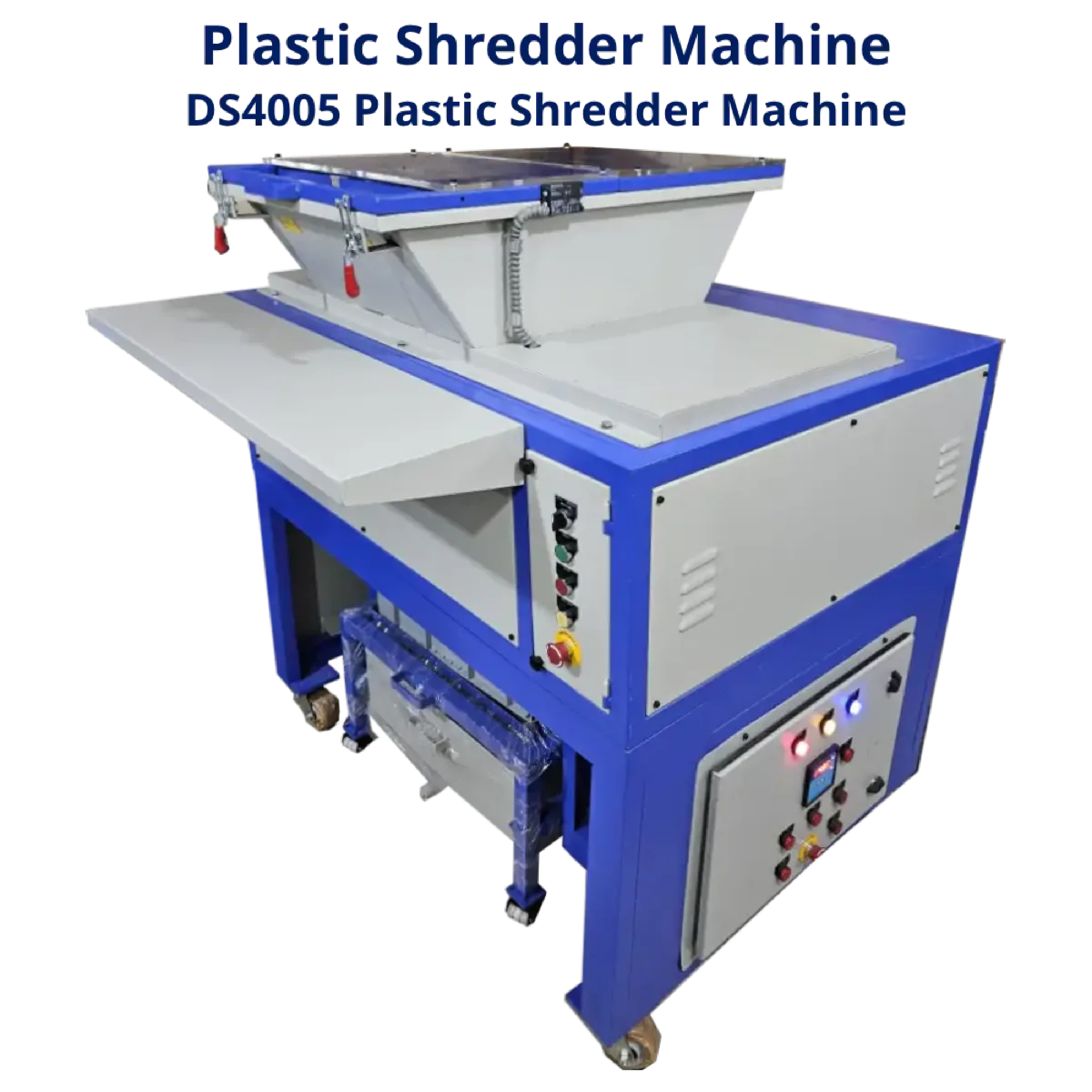
Dual-Shaft Shredder
Dual shaft shredder · 24-hr continuous duty
- Capacity: sized to your stream
- Motor: sized to the model
- MS build; SS grade available
- Handles mixed, irregular waste streams
Best for: CBWTF operators shredding the full mixed disinfected stream — bottles, tubing and gloves together.
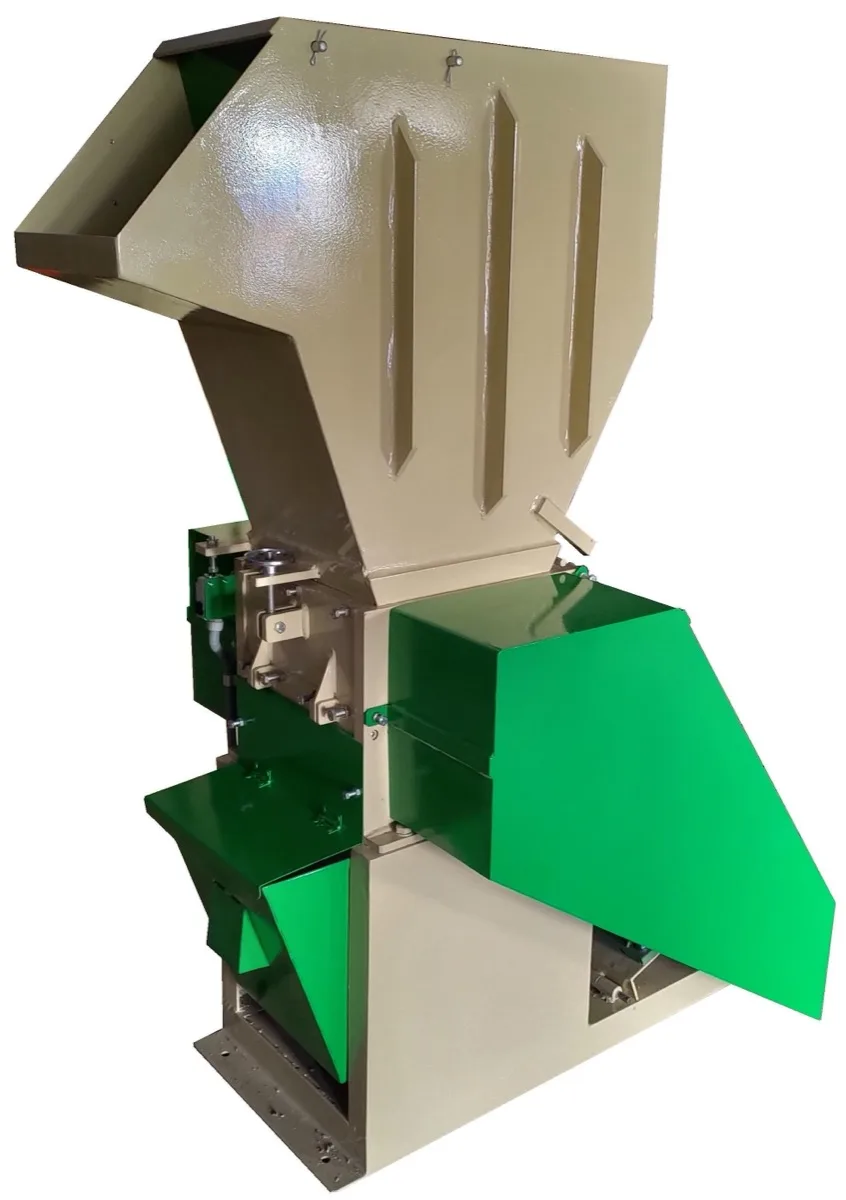
RE16 Plastic Grinder
Blade-type grinder · 16″ throat · plastic bottles & rigids
- Capacity: 150–250 kg/hr
- Power: 10 HP
- Throat: 16″ × 16″
- Handles bottles & jars up to 10 litres
Best for: hospitals mutilating disinfected saline and IV fluid bottles in-house.
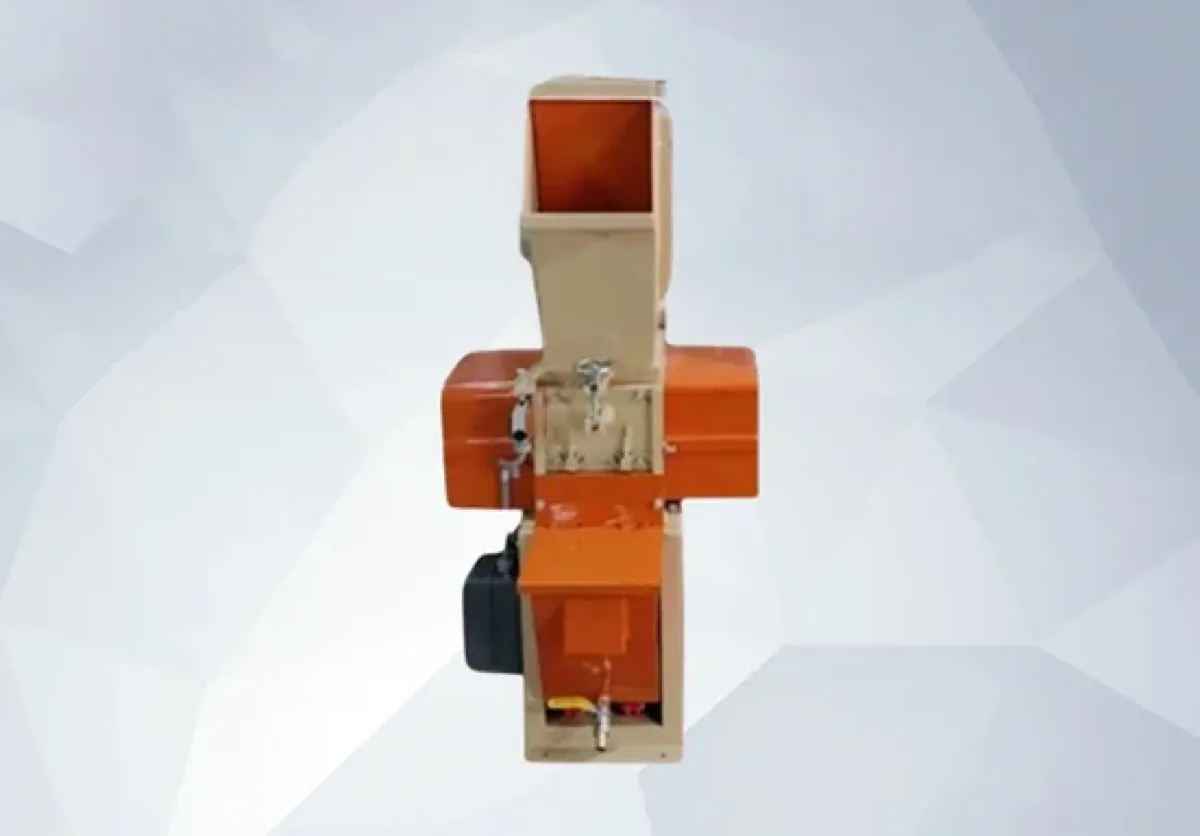
Plastic Grinder — RE Series (RE8–RE40)
Six grinder models · screened regrind output
- Capacity: 35–1,200 kg/hr across models
- Power: 3–30 HP
- Throat sizes: 8″ × 8″ to 30″ × 30″
- 5 blades per set; overload-protection starter
Best for: CBWTFs grinding mutilated plastic into uniform regrind that recyclers pay better for.
Technical Specifications Comparison
| Specification | Dual-Shaft Shredder | RE16 Plastic Grinder | Plastic Grinder RE Series |
|---|---|---|---|
| Machine type | Dual shaft shredder | Single-rotor bottle machine (RE series) | Blade-type grinder, 7 models |
| Motor power | Sized to the model | 10 HP | 3–75 HP |
| Capacity | Sized to your stream | 150–250 kg/hr | 35–1,200 kg/hr |
| Output | Uneven shred size | Contact us for detailed specifications | Screened regrind |
| Construction | MS; SS grade available | Contact us for detailed specifications | MS construction |
| Machine weight | By model | 950 kg (approx) | 150–4,700 kg by model |
| Best for | CBWTF mixed disinfected stream | Saline / IV bottle mutilation | Regrind for recyclers |
| Get Quote → | Get Quote → | Get Quote → |
Not sure which shredder fits your biomedical waste volumes?
Tell our technical team your daily disinfected-waste quantity and waste mix — we’ll recommend the right model, free.
Why Choose Raj Electricals
A Mumbai machine builder since 1985 — with medical, hospital, biomedical and vials-and-ampoules shredders in the catalogue for decades, exported globally.




Frequently Asked Questions
Why do biomedical waste rules require plastic waste to be shredded?
Mutilation is the safeguard against reuse. An intact syringe, saline bottle or IV set has resale value in the grey market, and used items re-entering circulation is a genuine public-health risk. India’s biomedical waste rules therefore require recyclable plastic waste to be disinfected and then mutilated or shredded before it goes to an authorized recycler. Once shredded, the material has value only as plastic scrap — exactly as intended. Shredding also cuts waste volume sharply, which reduces storage and transport cost for hospitals and CBWTF operators alike.
Does the shredder disinfect the waste, or must waste be treated first?
The shredder does not disinfect — and we will not tell you otherwise. Biomedical waste must be disinfected first, by autoclave, hydroclave or chemical treatment, and only then shredded. The shredder’s role is mutilation and volume reduction of already-treated waste. When you plan your waste room or CBWTF line, position the shredder downstream of the autoclave. If you are setting up a complete treatment line, tell us your disinfection equipment and throughput and we will size the shredder to match it.
Dual shaft or blade-type shredder — which is right for hospital plastics?
It depends on your stream. A mixed disinfected stream — bottles, tubing, gloves, catheters together — is irregular and springy, and the slow, high-torque interlocked blades of a dual shaft machine grip and tear it without jamming. If your stream is predominantly saline and IV bottles, a blade-type machine like the RE16 mutilates them at lower cost. Many CBWTFs run both: dual shaft for primary destruction, then a grinder to size the output for recyclers.
Can the machine shred needles and metal sharps?
No — and keeping metal out matters. Needles and other metal sharps follow their own separate disposal route under the biomedical waste framework, and stray metal in the plastic stream will break shredder blades. Segregate sharps at source in the designated containers, and feed the shredder only the plastic fraction — bottles, tubing, gloves and similar items. If your waste mix is unusual, bring a sample to our works and we will run a trial before you commit.
What capacity shredder does a CBWTF or large hospital need?
Work from kilograms of disinfected plastic per day. A hospital mutilating a few hundred kilograms per shift is well served by the RE16 at 150–250 kg/hr; a CBWTF processing several tonnes daily needs a dual shaft shredder sized to the load — or more than one machine, so a blade change never stops the line. Size with headroom: waste volumes only grow, and compliance does not pause for maintenance. Our machine selection guide walks through the calculation, or send us your numbers.
How much does a medical waste shredder cost in India?
Every machine is quoted to the job. What moves the number is capacity, throat size, motor rating, MS or SS construction and the automation you add — a blower, a conveyor, a control panel. Our guide to what drives machine cost walks through each of those; send us your material and daily volume and we will size the machine and quote it, usually the same day.
Can we see the machine running before we buy?
Yes. Bring a sample of your material — disinfected, please — to our works at Andheri East, Mumbai, and we will run a live trial so you can verify throughput and output size yourself. For outstation buyers we arrange video trials on your material. Machines from our medical line have been exported globally, so we are also used to documenting trials for buyers who cannot visit. Contact us to book a slot.
What about after-sales service, spares and blade replacement?
We support machines pan-India with spares and service from Mumbai, including on-site installation and maintenance. Routine upkeep is blade sharpening and lubrication; blade sets are straightforward to remove and re-fit, and we keep spares available so a CBWTF is never down for long — important when untreated backlog is a compliance issue. For export buyers we fit motors to your country’s voltage and frequency and pack machines for sea freight.
Get a Free Quote for Medical Waste Shredders
Tell us whether you run a hospital, clinic or CBWTF, and your daily disinfected-waste volume — our technical team responds with a model recommendation and firm pricing, usually within one working day. No spam, no obligation.
102/103/104, Madhu Industrial Estate, Old Nagardas Road, Mogra Lane, Andheri East, Mumbai – 400069
Mon–Sat, 9:00 AM – 7:00 PM
Related Solutions
Pharma Waste & Blister Pack Shredder
Destroy expired medicines, blister packs and pharma rejects at the plant — with full documentation.
Learn more →
FMCG Rejects Shredder
Shred expired and recalled consumer products — sachets, pouches, bottles and cartons — for brand protection.
Learn more →
PP Plastic Shredding
Much disposable medical plastic is polypropylene — see how PP waste is shredded and ground for recycling.
Learn more →