PP Waste Shredder & Polypropylene Grinder for Recycling
Crates, caps, woven sacks and molded furniture — a pp waste shredder and grinder pairing that turns India’s most versatile plastic back into mold-ready regrind. Dual shaft shredding, then grinding to 1,200 kg/hr.
The Polypropylene Waste Challenge
Polypropylene is the workhorse plastic of Indian industry, and its waste stream shows it: broken crates from dairies, breweries and logistics fleets; bottle caps and closures by the tonne from beverage and FMCG plants; PP woven sacks from cement, fertiliser and grain; and molded furniture — chairs, tables, stools — coming back through the scrap trade. The items could not be more different physically. A crate is a rigid, hollow box that resists crushing; a woven sack is a limp sheet of slit-film tape; a chair is bulky, curved and awkward to feed.
That physical variety is exactly what defeats single-purpose machines. A blade grinder sized for caps will jam on a crate; a machine that rips crates happily can wrap and stall on woven tape. Meanwhile PP regrind is in constant demand from injection molders — crates, automotive parts, household goods — because clean single-grade PP reprocesses with very little property loss. For scrap aggregators and molders alike, the gap between PP scrap piling up in the yard and PP regrind selling at good rates is one correctly chosen shredding line.
The Right Shredding Approach for PP Waste
For mixed PP — crates, furniture, sacks — we recommend starting with a dual shaft shredder. Two counter-rotating shafts with interlocked blades grip bulky items and rip them apart with torque rather than speed: a crate collapses and tears instead of bouncing on top of a cutting chamber, and woven sacks are drawn down between the shafts rather than spinning on a rotor. These machines run on 415 V three-phase power with the drive sized to the model, process material at a rate set by feed speed and density, and are built to run continuously for 24 hours.
Dual shaft output is deliberately an uneven shred — ideal for volume reduction and onward sale to granulators. If you reuse material in-house or sell directly to molders, add an RE-series plastic grinder as a second stage: it cuts the shred against a mesh screen into uniform granules at the size your molding machine or buyer specifies. Small, dense items like caps and closures can skip the dual shaft entirely and go straight to the grinder. Both machines are MS-built (SS-grade available where contact-part hygiene matters) and supported pan-India from our Mumbai works.
PP Shredding Process — From Crate to Regrind
- Collection & sorting PP is sorted by source and colour — crates, caps, sacks and furniture are kept as separate lots
- Contaminant removal Metal hinges, labels with foil, and non-PP parts are pulled out before feeding
- Primary dual shaft shredding The dual shaft shredder rips crates, furniture and sacks into coarse shred
- Secondary grinding An RE-series grinder converts shred to uniform granules against a customisable mesh
- Washing & drying (post-consumer) Used crates and sacks are washed to remove dirt and residue before regrind reuse
- Regrind to molding Clean PP granules blend with virgin material for crates, parts and household goods
Recommended Machines for PP Waste Shredding
Dual shaft torque for the bulky items, mesh-controlled grinding for the final size. Full spec tables live on each machine page.
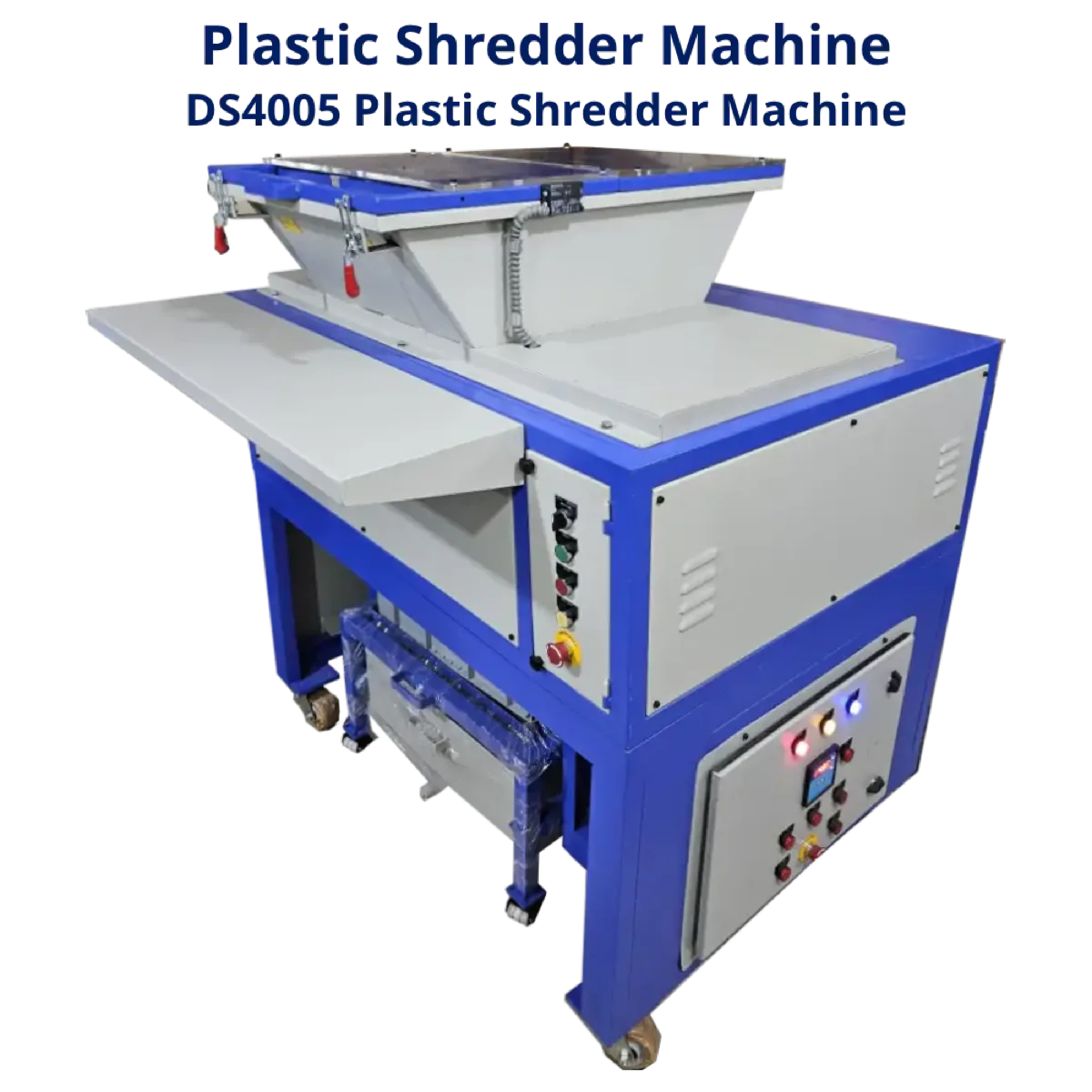
Dual Shaft Shredder
Twin counter-rotating shafts · 24-hr duty
- Capacity: sized to your stream
- Motor: sized to the model, 415 V 3-phase
- Output: coarse shred for onward granulation
Best for: ripping crates, molded furniture and woven sacks — the bulky PP a grinder can’t swallow.
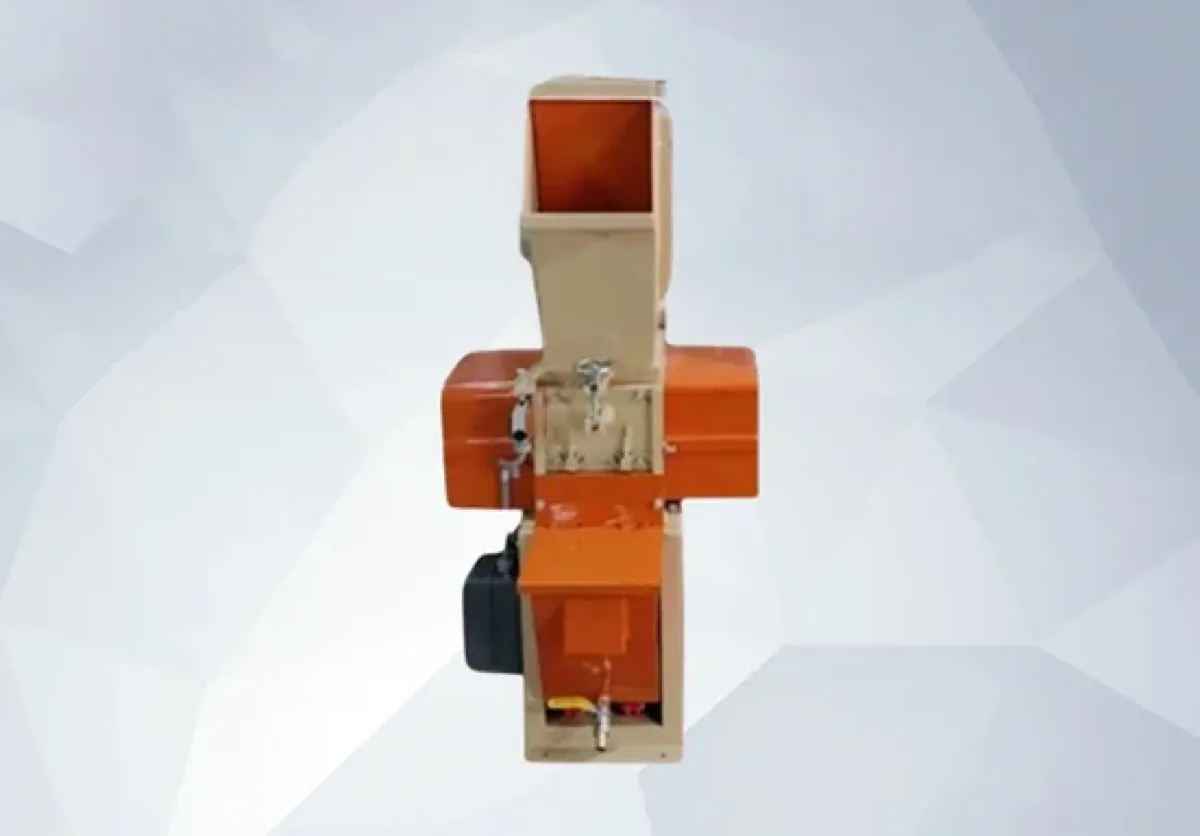
Plastic Grinder — RE Series (RE8–RE40)
Granulation to size · six models
- Capacity: 35–1,200 kg/hr across models
- Power: 3–30 HP
- Mesh-controlled granule size, customisable
- 5 blades per set; overload-protection starter
Best for: caps and closures fed direct, and converting dual shaft shred into mold-ready granules.
Technical Specifications Comparison
| Specification | Dual-Shaft Shredder | Plastic Grinder (RE Series) |
|---|---|---|
| Role in PP line | Stage 1 — rip bulky items to shred | Stage 2 — granulate to uniform size |
| Motor power | Sized to the model | 3–75 HP across six models |
| Power supply | 415 V AC, 3-phase, 50 Hz | 415 V AC, 3-phase, 50 Hz |
| Capacity | Sized to your stream | 35–1,200 kg/hr |
| Output | Uneven coarse shred | Uniform granules via mesh screen |
| Feeding | Manual feeding | Manual via throat, 8″ × 8″ to 30″ × 30″ |
| Machine weight | By model | 150–4,700 kg by model |
| Best for | Crates, furniture, woven sacks | Caps, closures, shred granulation |
| Get Quote → | Get Quote → |
Not sure which machine fits your PP scrap mix?
Crates only? Sacks and furniture too? Tell our technical team your mix and volumes — we’ll recommend single-machine or two-stage processing, free.
Why Choose Raj Electricals
Dual shaft and grinder machines built in Mumbai since 1985 — running in FMCG plants, breweries and recycling yards across India.






Frequently Asked Questions
What PP products can this shredding line handle?
The full range of rigid and woven polypropylene: dairy, beverage and logistics crates; bottle caps and closures; PP woven sacks (cement, fertiliser, grain bags); molded furniture like chairs, tables and stools; and general PP molding scrap. Bulky and woven items go through the dual shaft shredder first; small dense items like caps can feed straight into an RE-series grinder. If you have an unusual PP item, bring a sample for a trial — that settles it faster than any datasheet.
Why do crates and furniture need a dual shaft shredder rather than a grinder?
Geometry. A crate is a rigid hollow box bigger than most grinder throats — on a high-speed rotor it bounces, deflects and jams long before it cuts. A dual shaft machine’s two counter-rotating shafts grip the item and pull it down between interlocked blades, tearing it apart with torque. The same grip-and-rip action handles curved furniture shells and folded sacks. Grinders excel at the next stage: turning that coarse shred into uniform granules. See the dual shaft shredder range for how the mechanism works.
Don’t woven sacks wrap around shredder shafts?
Wrapping is the classic failure mode for woven PP on single-rotor, high-speed machines — the tape winds around the shaft like thread on a bobbin. Slow-turning dual shaft designs are far more resistant because the interlocked blades keep pulling material down and through rather than letting it spin. Practical tips that help further: feed sacks in batches rather than a continuous stream, and keep strapping and liner bags out of the feed. Raj Electricals also builds dedicated machines for cement bag and non-woven bag shredding.
What output size will I get, and is it good enough to sell?
A dual shaft shredder produces a deliberately uneven coarse shred — that is normal for dual shaft machines and is exactly what granulators and large recyclers buy for further processing. If your buyer is an injection molder, or you reuse material in-house, add the RE-series grinder stage: its mesh screen controls granule size and can be customised to your specification. Many of our customers start by selling shred and add the grinder once volumes justify capturing the extra margin.
Does mixed-colour PP regrind sell for less?
Yes, meaningfully. Single-colour lots — all-blue crates, all-white caps — can be reprocessed into visible parts and command better rates; mixed-colour regrind generally goes into black or dark masterbatch applications at lower prices. The sorting costs you only labour at the collection stage, so keep colour lots separate before shredding. Source segregation is the cheapest value-add in the whole PP recycling chain.
What is the price range for a PP waste shredder in India?
Every machine is quoted to the job. What moves the number is capacity, throat size, motor rating, MS or SS construction and the automation you add — a blower, a conveyor, a control panel. Our guide to what drives machine cost walks through each of those; send us your material and daily volume and we will size the machine and quote it, usually the same day.
What does a dual shaft shredder cost to run per shift?
Power draw follows the model you select — we give you the kW rating with the quotation, and actual consumption runs below it since shredders load intermittently. Beyond power, running costs are blade maintenance (periodic resharpening), lubrication and one operator for manual feeding. Against that, weigh the transport savings from densified scrap and the price difference between loose scrap and shred or regrind — for regular volumes the machine recovers its running costs quickly.
Can I see my own crates and sacks shredded before I buy?
Yes. Bring a representative lot — your heaviest crate, your dirtiest sacks — to our works at Andheri East, Mumbai, and we will run a live trial so you can verify throughput and output on your actual material. We also provide installation and maintenance service on site, pan-India spares support, and export builds with motors matched to your country’s voltage. Contact us to book a trial.
Get a Free Quote for PP Waste Shredding Machines
Tell us your PP scrap mix — crates, caps, sacks, furniture — and daily volume. Our technical team responds with a configuration and firm pricing, usually within one working day.
102/103/104, Madhu Industrial Estate, Old Nagardas Road, Mogra Lane, Andheri East, Mumbai – 400069
Mon–Sat, 9:00 AM – 7:00 PM
Related Solutions
Plastic Crate & Pallet Shredder
A deeper look at crate and pallet shredding for dairies, breweries and logistics fleets.
Learn more →
Cement Bag Shredder
PP woven cement bags shredded on dual shaft machines — a dedicated solution for bag waste.
Learn more →
HDPE & LDPE Plastic Grinding
Blow-molded bottles, jerry cans and pipes — polyethylene grinding with blower discharge.
Learn more →