Cement Bag Shredder Machine for PP Woven Sacks
Empty PP woven cement bags pile up by the thousands at RMC plants, construction sites and cement depots. Shred them with a dual shaft cement bag shredder into compact, recyclable material — instead of letting them blow around the site or burn in a corner. Built in Mumbai since 1985.
The Empty Cement Bag Problem at RMC Plants and Construction Sites
A busy ready-mix concrete plant or large construction project empties hundreds to thousands of 50 kg cement bags every day. The bags — PP woven sacks, often paper-lined — are featherweight individually but monstrous collectively: loose mountains that blow across the site in wind, clog drains, mix into debris and fail every housekeeping and safety audit. They are coated in residual cement dust, which makes them unattractive to casual scrap buyers, and the old shortcut — burning them in a corner of the site — is illegal under air pollution and waste rules, and visibly so.
The pressure to handle them properly is rising on two fronts. PP woven sacks are plastic packaging, and EPR obligations under the Plastic Waste Management Rules mean cement brands and large consumers are expected to show a recycling route for them. And the material has real value when handled right: woven polypropylene is recyclable into raffia-grade regrind, but only once the bags are shredded into dense, transportable form — recyclers will not haul truckloads of loose, dusty air. A cement bag shredder at the plant converts the daily bag mountain into compact material a recycler will actually collect and pay for.
The Right Shredding Approach for PP Woven Bags
Woven PP fabric is tough, flexible and fibrous — exactly the material that wraps around high-speed rotors and stalls ordinary cutters. That is why the Raj Electricals Cement Bags Shredder is a dual shaft machine: two slow, high-torque blade shafts grip the bags and tear them through, with nothing for the fabric to wind around. Bags are fed in bundles, shredded to small size, and the output packs down to a fraction of the loose-bag volume — ready for onward recycling. The same dual shaft principle runs in our non-woven bag shredder, proven on polypropylene bag streams.
Plan for the dust. Residual cement is abrasive, so blades on cement bag duty want periodic sharpening — normal, scheduled maintenance rather than a surprise — and bags should be shaken out during collection so the heaviest dust stays out of the chamber. Sites that also generate mixed plastic waste — drums, broken crates, strapping, damaged fittings — can run a dual shaft shredder alongside, rated for all types of plastic scrap with 24-hour continuous duty. Machines are MS-built with SS-grade construction available, and customized configurations can set shred size by mesh from 1 mm to 30 mm or more.
Cement Bag Shredding Process — From Site Litter to Recyclable PP
- Collection & shake-out Empty bags are collected daily and shaken out so residual cement dust stays on site, not in the machine
- Bundling & foreign-object check Bags are bundled for feeding; stones, wire ties and metal debris are removed — metal breaks blades
- Dual shaft shredding High-torque shafts tear the woven PP into small pieces without wrapping or stalling
- Collection & bagging Shredded output packs dense — a fraction of loose-bag volume, easy to store and transport
- Dispatch to PP recyclers Raffia recyclers wash and pelletize the shred into reprocessed PP granules
Recommended Machines for Cement Bag Shredding
The dedicated cement bag machine, its non-woven sibling, and a general-purpose dual shaft for mixed site waste.
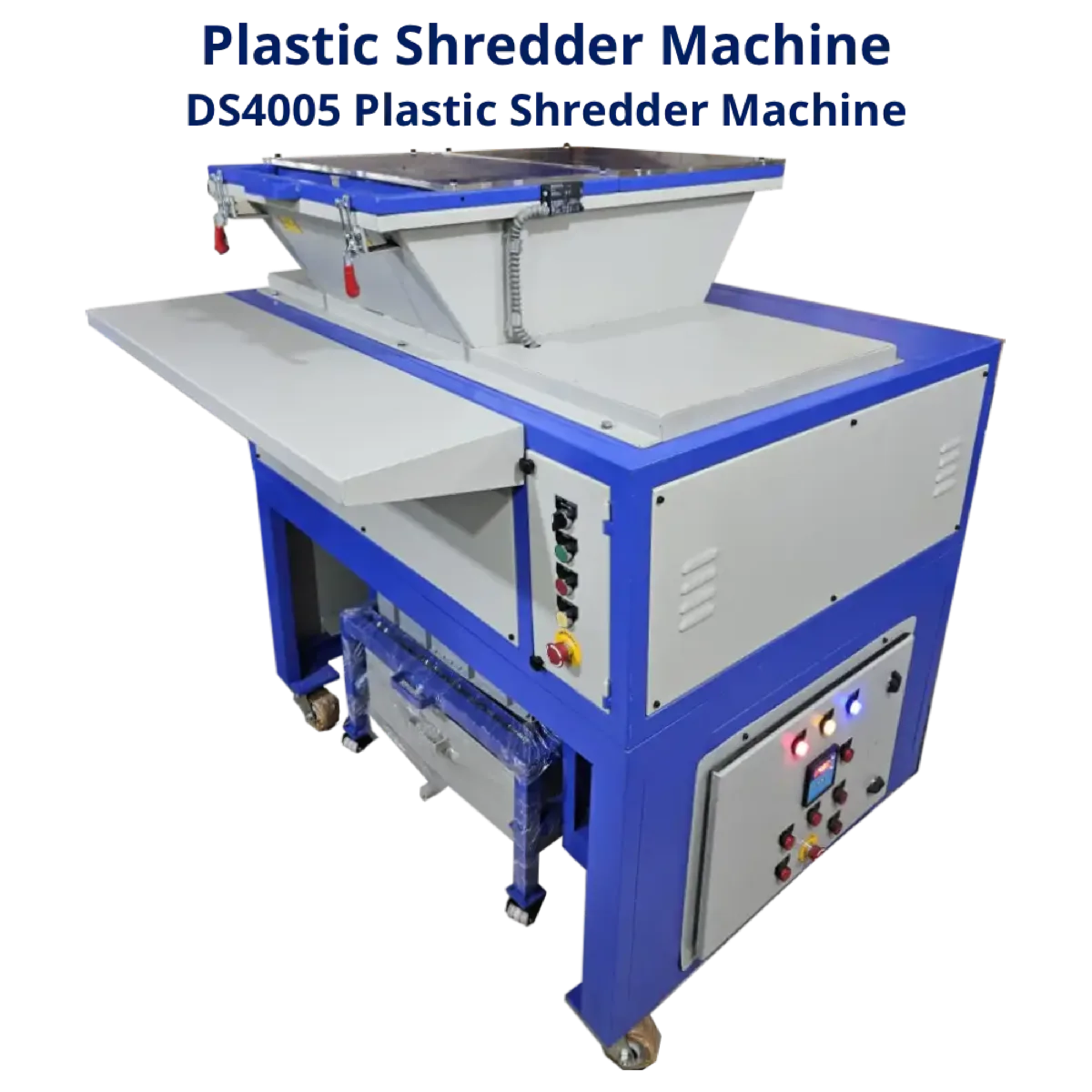
DS5007 Dual-Shaft Shredder
Dual shaft shredder · cement & woven PP bag duty
- Purpose-built for waste plastic cement bags
- Shreds bags to small, recyclable size
- Wrap-resistant high-torque shafts
- Contact us for detailed specifications
Best for: RMC plants, construction sites and cement depots with a daily empty-bag stream.
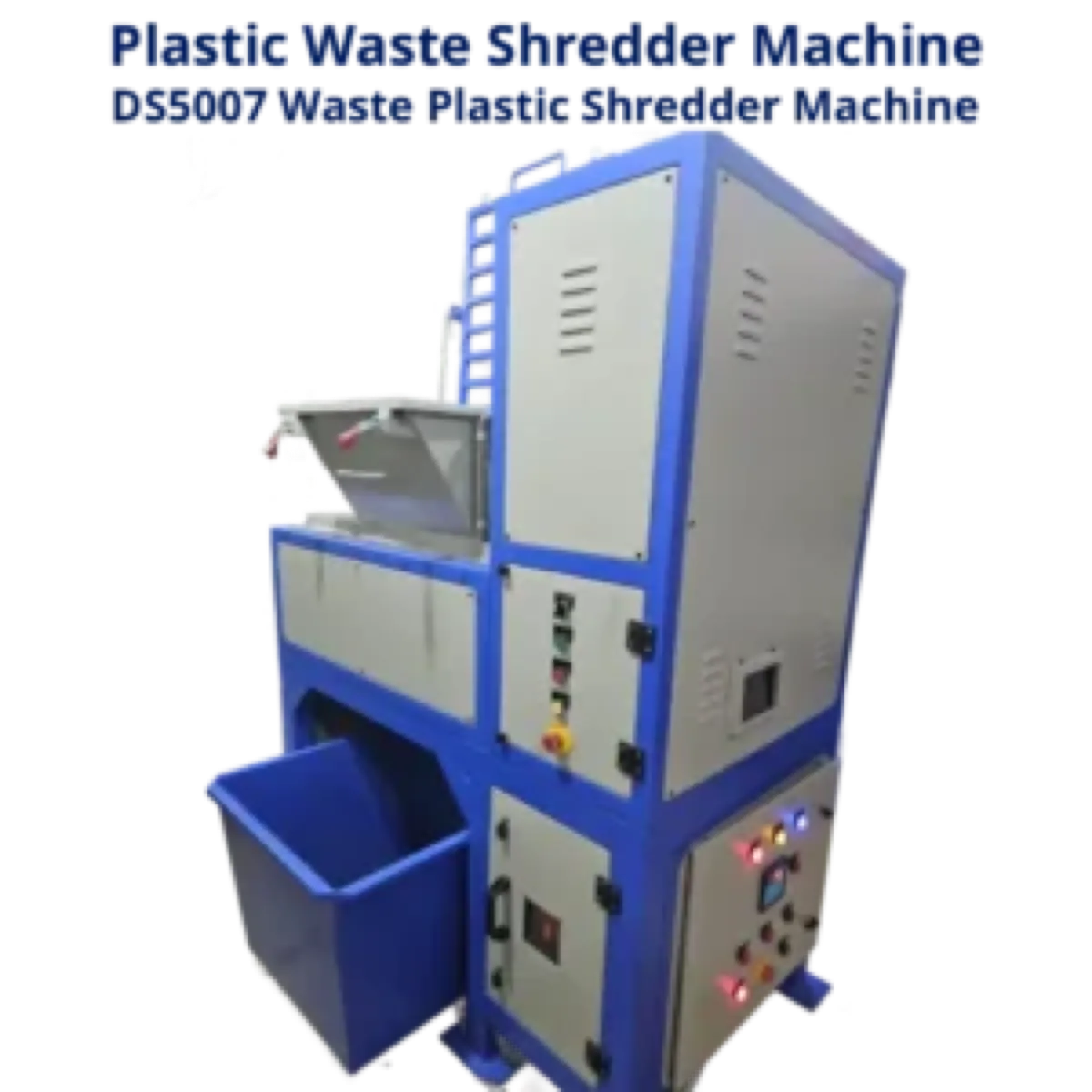
DS5007 — Non-Woven Bag Configuration
Dual shaft shredder · PP bag specialist
- Shreds polypropylene non-woven bags
- Dual shaft, wrap-resistant cutting
- Same PP recycling route as woven sacks
- Contact us for detailed specifications
Best for: operations also handling non-woven PP bags — carry bags, packaging sacks and liners.
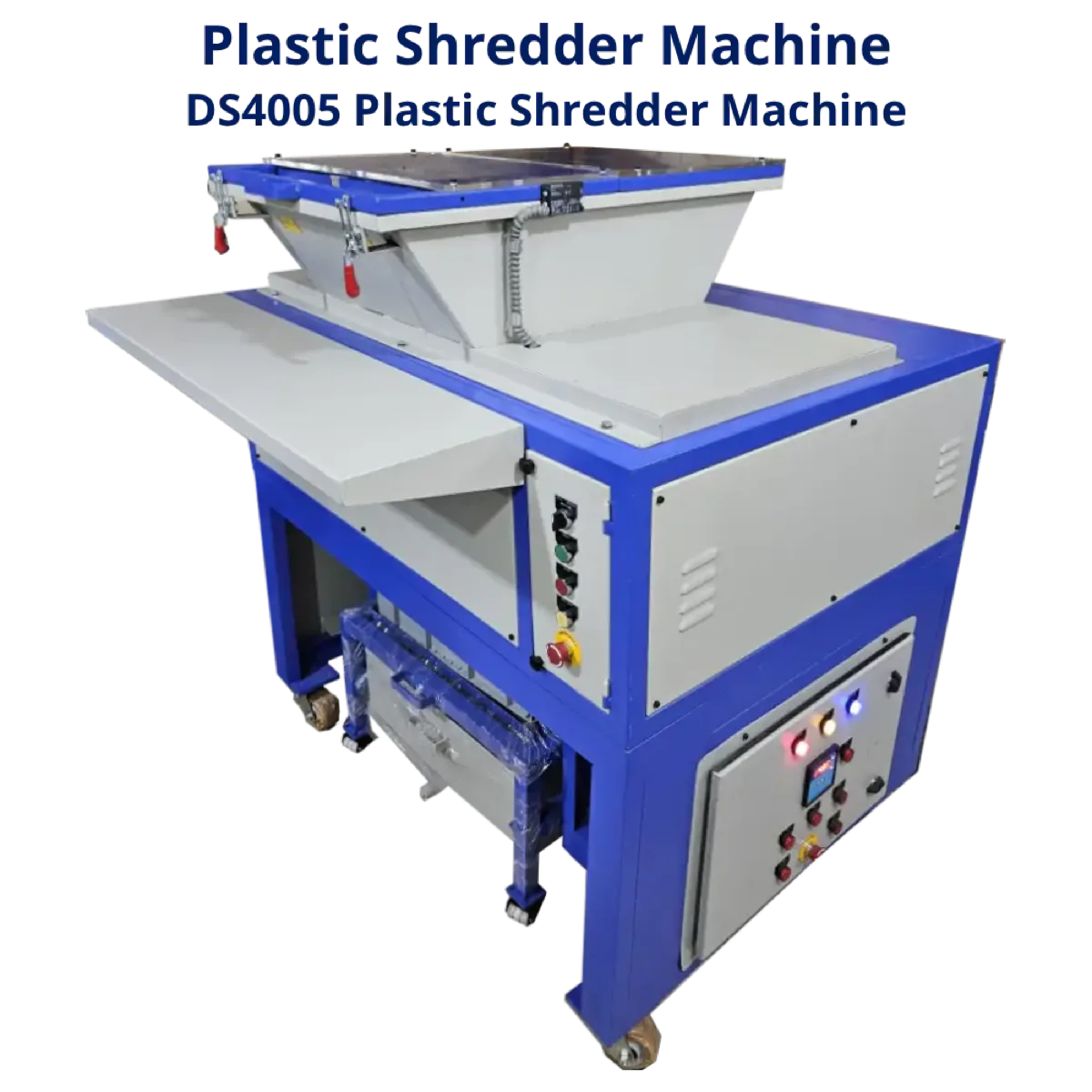
Dual-Shaft Shredder
Dual shaft shredder · 24-hr continuous duty
- Capacity: sized to your stream
- Power: sized to the model
- Shreds all types of plastic scrap
- MS build; SS grade on request
Best for: sites shredding mixed plastic waste — drums, crates and fittings — alongside bags.
Technical Specifications Comparison
| Specification | DS5007 — Cement Bag Duty | DS5007 — Non-Woven Duty | Dual-Shaft Shredder |
|---|---|---|---|
| Machine type | Dual shaft bag shredder | Dual shaft bag shredder | Dual shaft shredder |
| Material | PP woven cement bags | PP non-woven bags | All types of plastic scrap |
| Motor power | Contact us for detailed specifications | Contact us for detailed specifications | Sized to the model |
| Capacity | Contact us for detailed specifications | Contact us for detailed specifications | Sized to your stream |
| Output | Small pieces, ready for recycling | Small pieces, ready for recycling | Coarse, uneven shred |
| Machine weight | Contact us for detailed specifications | Contact us for detailed specifications | By model |
| Best for | Cement bag streams at RMC plants & depots | Non-woven bag streams | Mixed site plastic waste |
| Get Quote → | Get Quote → | Get Quote → |
Drowning in empty cement bags?
Tell our technical team how many bags your plant empties per day — we’ll recommend the right shredder and setup, free.
Why Choose Raj Electricals
A Mumbai machine builder since 1985 — rugged, all-metal machines built for dusty, demanding duty and supported pan-India.






Frequently Asked Questions
Are empty PP woven cement bags recyclable?
Yes. Woven cement sacks are polypropylene tape fabric — the same raffia-grade PP used in woven sacks across industries — and PP recyclers wash and pelletize shredded bag material into reprocessed granules for new woven products and mouldings. The barrier in practice is never the polymer; it is the form. Loose dusty bags are uneconomical to transport and unpleasant to handle, so recyclers want them shredded and compacted first. That is precisely the job the cement bag shredder does at your plant. See our PP plastic shredding solution for the wider polypropylene route.
Does the cement dust in the bags damage the shredder?
Cement dust is abrasive, so it accelerates blade edge wear — that is physics, on any machine. Two things keep it manageable: shake bags out at collection so the bulk of the dust never enters the chamber, and schedule periodic blade sharpening as routine maintenance rather than waiting for output quality to fall. Raj Electricals machines are all-metal construction with no plastic parts, built for exactly this kind of dusty industrial duty, and we support blade service and spares pan-India from Mumbai.
Why not just burn or bury the bags on site like before?
Because both are violations with real consequences. Open burning of plastic is prohibited under air quality and waste management rules, produces visibly toxic smoke, and is one of the easiest violations for an inspector — or a neighbour with a phone — to document. Burying mixes plastic into soil and debris permanently. Meanwhile EPR provisions push cement brands and large consumers to demonstrate recycling routes for plastic packaging. Shredding flips the equation: instead of paying a compliance risk, you produce a material PP recyclers collect and pay for.
How many bags per day justify buying a shredder?
Think in weight and handling cost, not just bag count. Weigh a bundle of your empty bags to get a per-bag figure, multiply by daily consumption, and compare the shredder’s running cost against what the loose mountain costs you today — yard space, housekeeping labour, audit findings and forgone scrap value. Large RMC plants emptying thousands of bags daily justify a dedicated machine easily; smaller sites sometimes share one machine across a cluster or shred in weekly batches. Send your daily bag count via the enquiry form and we will size it honestly — including telling you if a smaller machine is enough.
Can the same machine shred jumbo bags (FIBC) and non-woven bags too?
The dual shaft principle handles the whole PP bag family, but configuration matters: FIBC jumbo bags are much heavier fabric with lifting loops and need to be sized accordingly, while non-woven bags run on the dedicated non-woven bags shredder. If your operation generates a mix — cement sacks, jumbo bags, non-woven packaging — tell us the proportions and we will recommend either one appropriately configured machine or separate machines per stream. Related reading: our jumbo bag shredder solution.
What is the price of a cement bag shredder machine in India?
Every machine is quoted to the job. What moves the number is capacity, throat size, motor rating, MS or SS construction and the automation you add — a blower, a conveyor, a control panel. Our guide to what drives machine cost walks through each of those; send us your material and daily volume and we will size the machine and quote it, usually the same day.
Our site is outside Maharashtra — who installs and services the machine?
We do. Raj Electricals provides installation and maintenance service on site, and machines run at client locations across India with spares dispatched from our Mumbai works. For remote project sites, we recommend ordering a spare blade set with the machine so scheduled sharpening never waits on a courier. Export buyers are covered too — motors are supplied for your country’s voltage and frequency, with sea-freight packing. Contact us with your site location and we will confirm service logistics before you order.
Can we see our own bags shredded before we commit?
Yes — and with bags it is worth doing, because dust levels and bag condition vary site to site. Send a gunny or two of your actual empty bags to our Andheri East works and we will run them through the machine live or on a recorded video trial: you see the feeding rhythm, the shredded output size and how your specific bags behave. It is the quickest way to validate the machine against your material before signing a purchase order. Book a trial slot.
Get a Free Quote for Cement Bag Shredding Machines
Tell us your daily bag count and site location — our technical team responds with a machine recommendation and firm pricing, usually within one working day. No spam, no obligation.
102/103/104, Madhu Industrial Estate, Old Nagardas Road, Mogra Lane, Andheri East, Mumbai – 400069
Mon–Sat, 9:00 AM – 7:00 PM
Related Solutions
Non-Woven Bag Shredder
The other PP bag stream — shred non-woven carry bags and packaging sacks the same way.
Learn more →
FIBC / Jumbo Bag Shredder
Heavy PP raffia in bulk form — shred one-tonne FIBC bags and bulk sacks.
Learn more →
PP Plastic Shredding
Cement bags are polypropylene — the complete PP waste shredding and grinding picture.
Learn more →