DS5007 Dual-Shaft Shredder — 500 mm, 7.5 HP
The all-rounder of the 500 mm family: bottles by the crate at 350–450 kg/hr, PP woven cement bags and non-wovens, and municipal-scale green waste at 1,000–1,200 kg/hr — one 7.5 HP machine, cutter set matched to the duty.
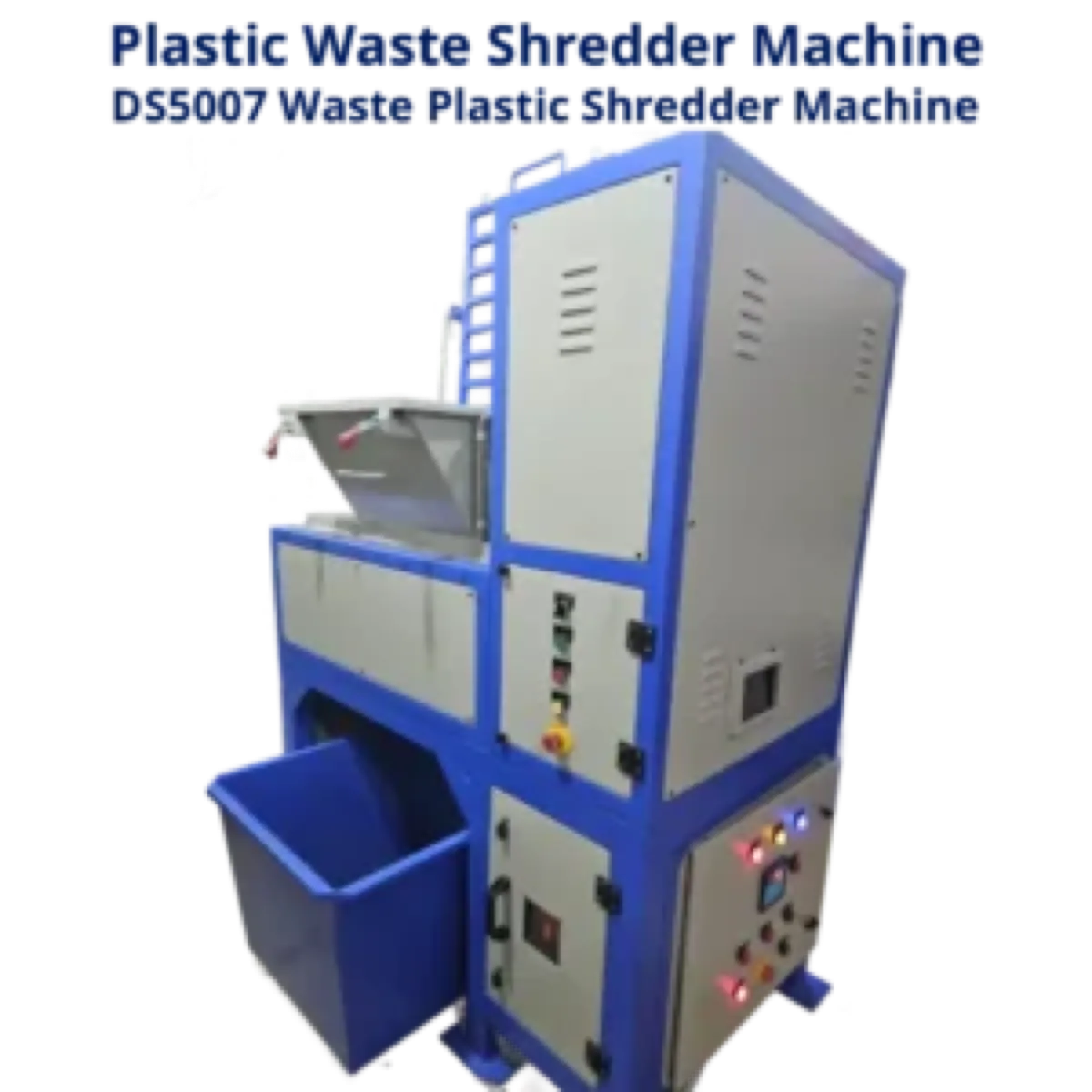
One 500 mm Machine, Four Working Lives
Not every bottle job needs flakes. Beverage plants destroying market returns, customs and excise destroying seized stock, aggregators crushing volume for transport — these duties need bottles gone fast, caps-on, sometimes still filled. On bottle duty the DS5007’s 500 mm feed swallows bottles by the crate, interlocked hardened cutters tear them at 350–450 kg/hr, and liquid from filled rejects drains through rather than stopping the machine.
The same counter-rotating grip is what PP woven and non-woven fabric need. A cement bag is engineered to carry 50 kg without splitting — pull that weave across a single blade and it deflects and slides; feed it between dual shafts and it is gripped and torn apart under controlled force. Cement plants, packers and RMC units run the DS5007 on bag waste at 200 kg/hr, and bag-making units shred non-woven rejects, offcuts and roll ends on the same cutters.
And at ward and municipal scale, the DS5007 is our garden-waste workhorse: 1,000–1,200 kg/hr of leaves, branches and planks, feeding compost windrows instead of bonfires. Same shafts, same gears — cutter set and configuration at order decide the duty. If your buyer wants washed flakes instead of destruction shred, that is honestly a different machine: the RE-series grinders produce screened flake, and plenty of operations run both.
DS5007 Specifications
| Technical specifications | |
|---|---|
| Model | DS5007 |
| Feed opening | 500 mm |
| Motor HP / kW | 7.5 HP / 5.625 kW |
| Voltage | 415 V / 50 Hz / 3-phase (3P + N + E) |
| Output size | Uneven shred size (bag configuration: approx. 25 × 60 mm) |
| Feeding | Manual feeding |
| Machine weight (approx.) | 1,046 kg |
| Machine dimensions (approx.) | L 1350 × W 900 × H 1850 mm |
| Waste collection | Plastic bins provided; output conveyor available |
| Control panel | 24V DC circuit, R-Y-B phase indicators, overload & phase-failure protection, LOTO switch (green-waste configuration) |
| Duty cycle | Continuous — no cooling pauses required |
| Indicative throughput by material | |
| PET / HDPE bottles (destruction) | 350–450 kg/hr |
| PP woven cement bags & non-woven bags | 200 kg/hr |
| Garden & green waste | 1,000–1,200 kg/hr |
Throughput depends on the material and configuration — bottles, woven fabric and green waste load the cutters very differently. Filled-bottle runs should plan liquid collection below the machine. Specifications are subject to change for constant product development.
Key Features
What It Shreds — Plastics Applications
PET Bottle Shredding
Bottles by the tonne — returns, seizures and transport compaction at 350–450 kg/hr.
Learn more →Cement Bag Shredding
PP woven sacks from cement plants, packers and RMC units — torn to recyclable pieces.
Learn more →Non-Woven Bag Shredding
Printing rejects, offcuts and obsolete stock — clean PP back into the recycling loop.
Learn more →FIBC / Jumbo Bags
Bulk bags and PP raffia — the heavier cousins of the cement bag, on the same tearing principle.
Learn more →PP Waste Shredding
Polypropylene in all its forms — woven goods, non-wovens and rigid PP scrap.
Learn more →Plastic Carry Bags
Poly bags and film-based carry bags — lighter flexible waste with its own shredding route.
Learn more →Also Configured For
Garden and green waste at municipal scale. Leaves and pruning waste are bulky beyond reason — a truckload of branches is mostly air, which is why green waste gets burned and why SWM rules push wards and large campuses to process it instead. On green-waste duty the DS5007 clears 1,000–1,200 kg/hr; shredded material composts in weeks instead of seasons, and biogas plants get consistent, dense feed. Campus-scale volumes fit the smaller DS4005.
Disinfected medical disposables. The bag configuration also handles syringes, vials, saline bottles and similar disinfected medical disposables where your CBWTF or authorisation requires size reduction — see the medical waste shredding solution for the compliance context.
Part of the Dual-Shaft Line
One engineering platform sized by feed opening — two counter-rotating shafts with interlocked cutters that grab, pull and tear. The DS5007 is the 500 mm build.
Bottles, bags or green waste by the tonne?
Tell us your material and daily volume — we’ll configure the cutter set and quote within one working day.
DS5007 Dual-Shaft Shredder — Frequently Asked Questions
Shredder or grinder for bottles — which do I need?
Grinder if you sell flakes (screened, washable output on the RE line); this shredder if the job is destruction and volume reduction — returns, seizures, transport compaction. The shredder is faster and cares less about contamination; the grinder earns more per kilo. We will tell you plainly which your operation needs.
Can it shred filled bottles?
Yes — filled market returns are a standard duty. The liquid drains through the chamber; put collection below and plan for the mess honestly. Carbonated stock should be vented first for operator comfort. At 350–450 kg/hr you are clearing tens of thousands of bottles per shift — feeding rate, not the machine, is usually the limit.
Why does a cement bag need a dual shaft shredder?
Because woven PP fabric is flexible and extremely strong in tension — pull it across a single blade and it deflects, stretches and slides rather than cutting. The two counter-rotating shafts grab the bag and pull it down between interlocked blades, which tear the weave apart under controlled force. Bags should be emptied and shaken out first: leftover cement is dead weight and abrasive, and set lumps must stay out.
What happens to shredded bag material?
Shredded PP has established routes in India: washed and pelletised into PP granules for moulded products and lower-grade woven goods, or cement-kiln co-processing as RDF. Under Plastic Waste Management/EPR rules, documented recycling beats stockpiling. Non-woven shred is clean PP with ready buyers — for a bag manufacturer it closes the loop on production waste.
Can one DS5007 cover woven sacks, non-wovens and mixed plastic scrap?
Often, yes — the tearing mechanism covers the whole PP family; the question is sizing and blade configuration, not mechanism. Jumbo bags are much heavier per piece, so tell us your full mix of bag types and dimensions. For mostly rigid mixed scrap, compare the rest of the dual shaft range; describe your stream and we will recommend one machine — or tell you honestly if it needs two.
DS4005 or DS5007 for green waste?
Work from daily tonnage: the DS4005 clears 4–5 tonnes a shift — campus and society scale; the DS5007 clears 8–10 — ward and municipal scale. Sizing up buys headroom for monsoon-season surges, which is when green waste actually peaks.
What is the price of the DS5007?
Every machine is quoted to the job. What moves the number is capacity, throat size, motor rating, MS or SS construction and the automation you add — a blower, a conveyor, a control panel. Our guide to what drives machine cost walks through each of those; send us your material and daily volume and we will size the machine and quote it, usually the same day.
Can we witness a destruction run or trial our bags?
Yes — bring your actual material to our works in Andheri East, Mumbai, and watch it processed before you decide. A trial settles capacity and output questions better than any brochure.
Get a Free Quote for the DS5007
Tell us your material — bottles, bags, green waste or a mix — your daily volume and where the output goes. Our team replies within one working day with the right configuration and a firm price.
Call: +91 98700 12462
WhatsApp: Chat with our team
Email: rajelectricalsmumbai@gmail.com
Address: 102/103/104, Madhu Industrial Estate, Old Nagardas Road, Mogra Lane, Andheri East, Mumbai – 400069
Hours: Mon–Sat, 9:00 AM – 7:00 PM