HDPE Grinder Machine for HDPE and LDPE Recycling
Blow-molded bottles, jerry cans, pipes and thick-wall parts, ground into clean, mold-ready regrind. Our HDPE grinder machine line with blower discharge runs from 20 kg/hr to 700 kg/hr, built by Raj Electricals since 1985.
The HDPE & LDPE Waste Challenge
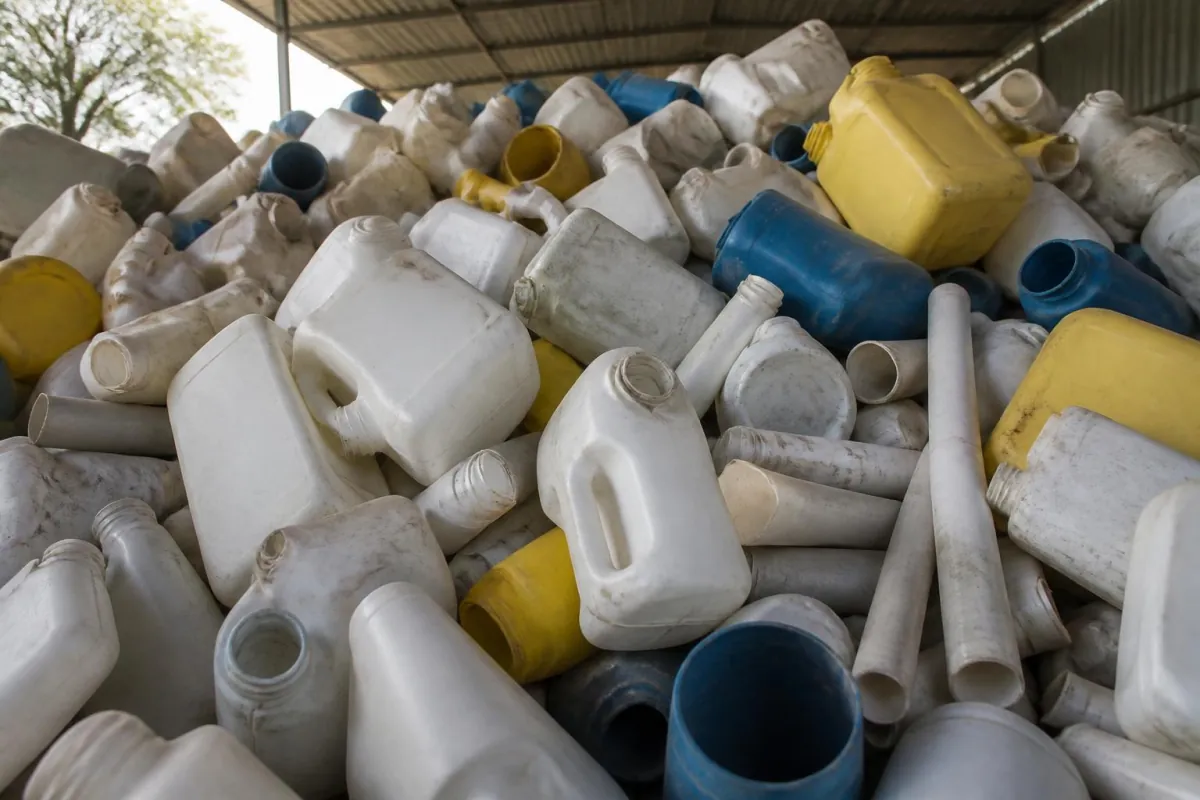
HDPE and LDPE are everywhere in Indian industry: oil and lubricant bottles, shampoo and detergent containers, jerry cans, milk pouches, crates of pipe offcuts from extrusion plants, and thick-wall molded parts. Unlike PET, polyethylene waste is tough and impact-resistant: a blow-molded jerry can flexes instead of cracking, and a thick-wall HDPE pipe section will simply jam a machine that was sized for bottles. The material recycles well, but only if you can get it through a cutting chamber without stalling the rotor, and that is the first job of any HDPE plastic recycling machine.
The economics are compelling and the pressure is real. Clean HDPE regrind feeds straight back into pipe extrusion, blow molding and injection molding, displacing more expensive virgin granule. At the same time, EPR targets under the Plastic Waste Management Rules require brand owners and processors to demonstrate recycling of rigid polyethylene packaging. Plants that landfill or sell PE scrap loose are paying twice, once in lost material value, once in transport for bulky, unground waste. The missing piece is almost always a correctly sized grinder.
Choosing an HDPE Grinding Machine
Polyethylene grinds well on a blade-type grinder: rotating blades cut the material against fixed blades and a screen, 12–15 mm as standard or made to the regrind size your molding or extrusion line needs. Bottles and containers up to 1 litre feed whole into a 12″ machine. 10–20 litre jerry cans need a 16″–20″ throat, and long HDPE pipes are pre-cut into sections that fit the hopper. For thick-wall parts and high volumes, the larger 25″–40″ machines carry the motor power (25–75 HP) to keep cutting without bogging down. The same RE grinders also work as an HDPE PVC grinding machine: rigid PVC pipe scrap grinds on them too, run in separate batches, and our PVC pipe shredder page covers what PVC needs.
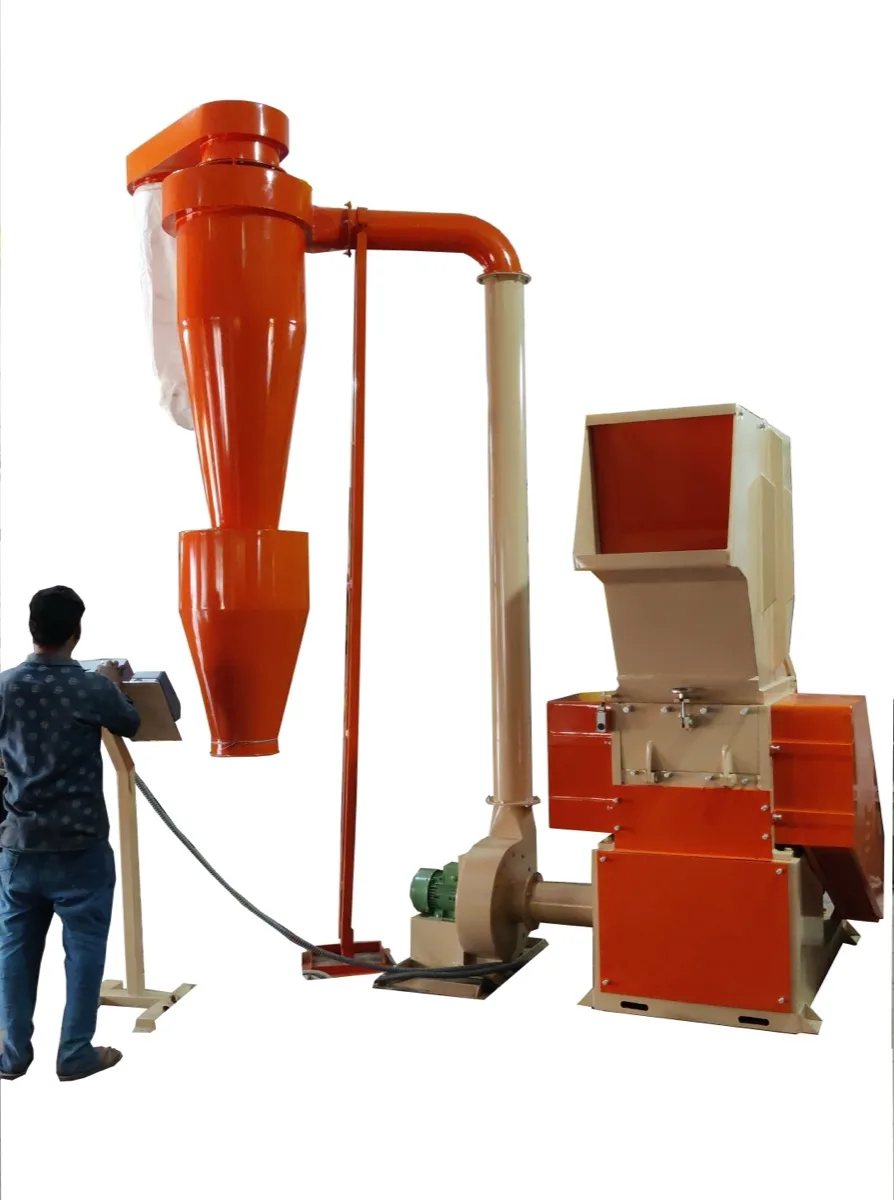
For HDPE and LDPE specifically, we recommend the blower-fitted version of the grinder. PE regrind is light and fluffy. Without a blower it accumulates under the chamber and a worker has to keep clearing it. The blower conveys regrind pneumatically out of the cutting chamber into collection bags the moment it passes the screen. The chamber stays clear, throughput stays consistent across the shift, dust stays in the bag rather than in the air, and one operator can run the machine alone. On light material the blower models are rated from 20 kg/hr (RE8CB) to 700 kg/hr (RE40CB), and denser scrap grinds at base-model rates. Both machine families are MS-built with export-voltage motors available.
HDPE & LDPE Grinding Process, From Scrap to Regrind
- Sorting by polymer & grade HDPE and LDPE are separated from PP and PVC, mixed-polymer regrind sells at a heavy discount
- Pre-cutting oversized items Long pipes and large drums are cut to hopper-sized sections, metal inserts removed
- Grinding The rotor’s blades cut material against fixed blades and a screen, 12–15 mm as standard or made to your requirement
- Blower discharge & collection Regrind is conveyed pneumatically into bags, no manual clearing, no airborne dust
- Washing & drying (post-consumer) Used containers are washed to remove residue and labels before reuse
- Back into production Clean regrind blends with virgin material for pipes, containers and molded parts
Recommended HDPE and LDPE Recycling Machines
Two grinder families, choose blower discharge for light, high-volume PE work. Full spec tables live on each machine page.
RE Series CB Grinders with Blower
Seven models, RE8CB–RE40CB · pneumatic discharge · HDPE/LDPE
- Capacity: 20 to 700 kg/hr across models
- Power: 3 + 0.5 HP up to 75 + 10 HP (grinder + blower)
- Screen: 12–15 mm standard, or to your requirement
- Throat sizes: 8″ × 8″ to 40″ × 40″
Best for: continuous HDPE/LDPE bottle and container grinding where regrind must move straight into bags.
Plastic Grinder, RE Series (RE8–RE40)
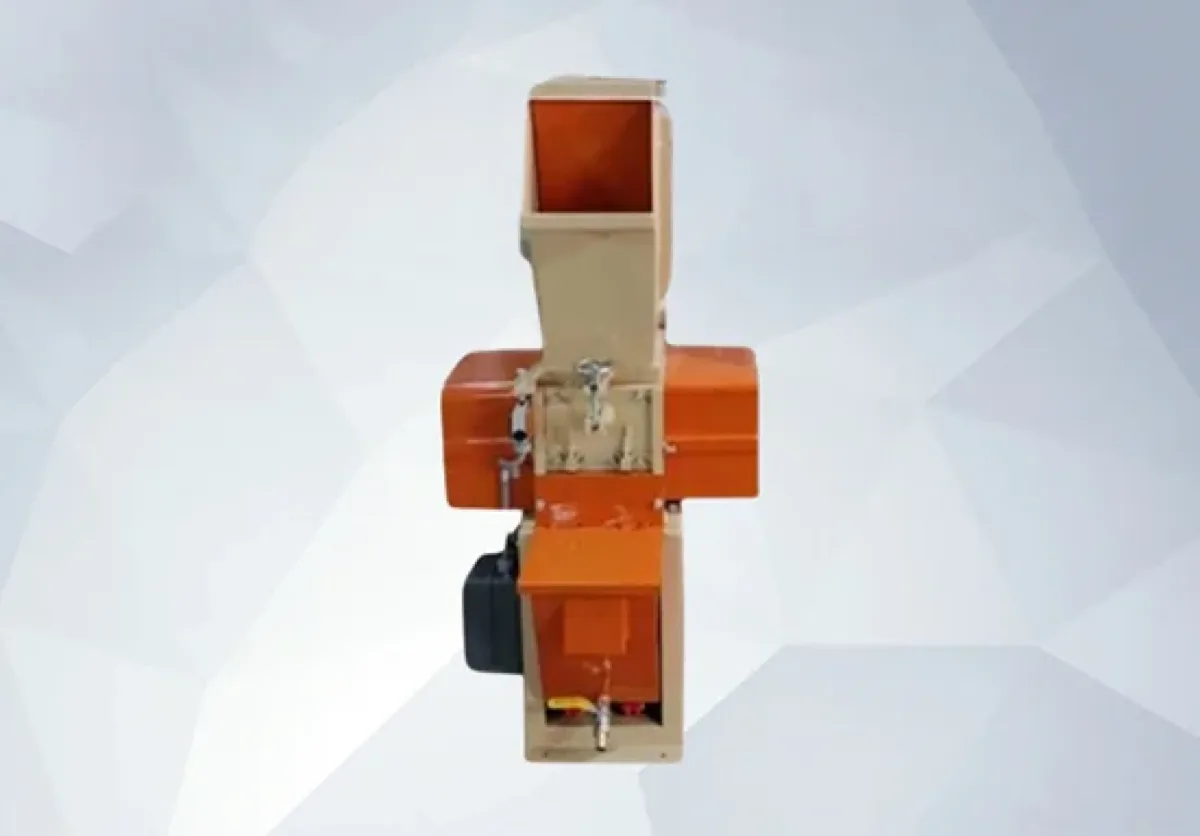
Seven models · gravity discharge · multi-plastic
- Capacity: 35–1,200 kg/hr across models
- Power: 3 HP to 75 HP
- Blades: 3 + 2 (RE8 to RE25), 6 + 4 (RE30), 9 + 6 (RE40)
- Handles jars up to 20 L (RE20), any plastic below 40″ (RE40)
Best for: mixed rigid plastic streams where HDPE is one of several materials crossing the floor.
Technical Specifications Comparison
| Specification | RE Series CB Grinder with Blower | Plastic Grinder (RE Series) |
|---|---|---|
| Models | RE8CB to RE40CB, seven models | RE8 to RE40, seven models |
| Motor power | 3 + 0.5 HP to 75 + 10 HP (grinder + blower) | 3 HP to 75 HP |
| Capacity range | 20 kg/hr to 700 kg/hr | 35 kg/hr to 1,200 kg/hr |
| Discharge | Pneumatic, blower conveys regrind to bags | Gravity, regrind collects below chamber |
| Screen size | 12–15 mm standard, or to your requirement | 12–15 mm standard, or to your requirement |
| Throat sizes | 8″ × 8″ to 40″ × 40″ | 8″ × 8″ to 40″ × 40″ |
| Machine weight | 229–5,100 kg by model | 150–4,700 kg by model |
| Best for | Dedicated PE lines, continuous shifts | Mixed-plastic floors, batch work |
| Get Quote → | Get Quote → |
Where HDPE Grinding Scrap Comes From
Applications and industries for our HDPE recycling machines: what each plant feeds in and what it gets back.
Polyethylene is usually one stream among several. Appliance housings and automotive trim are ABS, not PE, and our ABS plastic shredder page covers them.
Not sure which grinder fits your HDPE scrap?
Tell our technical team what you process (bottles, pipes or thick-wall parts) plus your daily volume, and we’ll size the machine for you, free.
Why Choose Raj Electricals
Grinders and shredders built by Raj Electricals since 1985, for manufacturers who run them round the clock.



Frequently Asked Questions
Can the same grinder handle both HDPE and LDPE?
Yes. HDPE and LDPE are both polyethylenes and cut well on the same blade-and-screen system, and the machine does not care about the density difference. What matters commercially is keeping the regrind streams separate: HDPE regrind goes back into rigid products (pipes, containers), LDPE into films and flexible goods, and a mixed batch fetches less. Most plants run the two materials in separate batches on one machine and simply clear the chamber between runs.
Can HDPE pipes be recycled, and how do they go into the machine?
HDPE pipes recycle very well, and pipe regrind is in steady demand from pipe extruders themselves. The practical question is feeding: a 6-metre pipe does not drop into a grinder hopper. Pipes are pre-cut into sections sized to the machine’s throat (a 20″ × 20″ throat, for example, takes correspondingly sized pieces), and thick-wall sections should go to the higher-HP models so the rotor keeps cutting without stalling. Tell us your pipe diameters and how thick the walls are, and we will specify the right model.
What does the blower actually do, and is it worth it?
The blower conveys regrind pneumatically out of the cutting chamber into collection bags the instant it passes the screen. Without it, light PE regrind piles up under the machine and someone must keep raking and bagging it. With it, the chamber stays clear (steadier throughput), the floor stays clean, fine dust ends up in the bag instead of the air, and one operator runs the whole station. For dedicated HDPE and LDPE work running full shifts, that usually makes the blower worth having. See the RE Series CB Grinder with Blower page for blower motor ratings per model.
What regrind size do molding and extrusion lines need?
Most blow molding and injection molding lines in India accept regrind from a standard screen comfortably, blended with virgin granule. The screen controls output size: 12–15 mm is standard, and we make it to your buyer’s or your own line’s specification. Because the screen is a replaceable part, you can change regrind size later without changing the machine.
How much regrind can I actually blend back into production?
That depends on your product and quality standards. Common practice in Indian blow molding and pipe extrusion is to blend a proportion of clean, single-grade regrind with virgin material, with the ratio set by trial against your product’s strength and finish requirements. The grinder’s job is to give you regrind clean and uniform enough that the blend works: single polymer, consistent size, no overheated or degraded material. Your polymer supplier or our team can advise starting ratios for your application.
What does an HDPE grinder machine cost in India?
Every machine is quoted to the job, so we do not publish prices. What moves the number is the model and its capacity, the material and how thick it is, the motor rating, MS or SS construction, and options such as blower discharge and the screen size. Our guide to what drives machine cost walks through each of those. Send us your material and daily volume and we will size the machine and quote it.
Which RE model do I need for my daily volume?
Convert your scrap to kilograms per day, divide by your working hours, and size against your heaviest material rather than your average, because thick-wall and bulky items grind slower than thin bottles. As a guide, the RE12 is rated at 60–80 kg/hr, the RE16 at 150–250 kg/hr and the RE20 at 250–400 kg/hr. With a blower, the RE25CB is rated at 400 kg/hr and the RE30CB at 550 kg/hr on light material. Our machine selection guide covers this step by step.
Do you offer trials, installation and after-sales support?
Yes on all three. Bring your HDPE or LDPE scrap and we will run a live trial before you buy. We provide installation and maintenance service on site, with service and spares support across India, and blades can be re-sharpened as routine maintenance. For export orders we supply motors matched to your country’s voltage and frequency. Contact us to arrange a trial.
Get a Free Quote for HDPE & LDPE Grinding Machines
Tell us what you grind (bottles, pipes, jerry cans or thick-wall parts) and your daily volume. Our technical team responds with a model recommendation and a quotation.
102/103/104, Madhu Industrial Estate, Old Nagardas Road, Mogra Lane, Andheri East, Mumbai – 400069
9:00 AM – 6:00 PM, all seven days
Related Solutions
PET Bottle Shredding & Crushing
Crush post-consumer PET bottles into clean, washable flakes for washing lines and fibre plants.
Learn more →
PVC Pipe & Profile Shredding
Rigid PVC pipes, profiles and fittings need low-heat processing, a different approach from PE.
Learn more →
Blow Molding Scrap Grinding
Reprocess flash, tails and reject containers inline at the blow molding plant, a major source of HDPE scrap.
Learn more →