Blow Molding Scrap Grinder — Flash, Tails & Reject Recycling
Every bottle and jerry can leaves flash, pinch-off and tails behind — clean HDPE you have already paid for. Grind it beside the line and convey it back towards the hopper with a blow molding scrap grinder, with blower models from 20 to 600 kg/hr.
The Blow Molding Scrap Challenge
Extrusion blow molding is built around deliberate excess. The parison is pinched at the neck and base of every cycle, leaving flash, pinch-off and tails on every single part — for many bottle and jerry-can shapes that trimmed material runs 15–35% of the shot, cycle after cycle. Add start-up parisons while the head stabilises, colour-change scrap, leak-test failures and visual rejects, and an HDPE bottle plant produces a continuous stream of clean scrap from the moment the line starts.
The problem is that the scrap is light and hollow. Loose flash and reject bottles fill gunny bags and floor space at astonishing speed while weighing very little, and material that drags around the shop floor picks up dust and oil that disqualify it from going back into the machine. Sold to a dealer, blow molding waste fetches scrap rates for what is actually near-virgin HDPE or PP bought at full granule price. For lubricant, FMCG and pharma bottle plants in India running on conversion margins, that is recurring money left on the table every shift.
Grind Inline, Convey Back — The Blower Advantage
Blow molding flash is ideal regrind feedstock: single polymer, known grade, your own colour, and barely one heat history. The standard solution is a grinder stationed at the deflashing point — flash, tails and reject bottles go straight into the hopper, the 5-blade rotor (3 rotating, 2 fixed) cuts them against a 12–15 mm mesh (customisable to your requirement), and uniform regrind leaves the chamber ready to blend back with virgin granule at the extruder hopper.
The blower is what makes the loop practical. On the HDPE Grinder with Blower, regrind is conveyed pneumatically out of the cutting chamber and piped to a collection point — typically beside the blender or hopper platform — instead of being shovelled out of a bin under the machine. That keeps the chamber clear at full feed rate, keeps regrind off the floor and out of contamination’s way, and saves an operator trip every few minutes. Plants that prefer to bag and batch their regrind can use the plain RE-series plastic grinder instead; both lines run from 8″ to 30″ throats, and export-voltage motors are available for overseas plants.
Blow Molding Scrap Recycling — Step by Step
- Collect at the deflashing point Flash, pinch-off and tails come off every cycle — capture them clean, before they reach the floor
- Segregate rejects by colour Start-up parisons, leak-test failures and visual rejects are sorted by polymer and colour
- Grind against the mesh The rotor cuts flash and bottles against a 15 mm (customisable) screen for uniform regrind
- Blower conveys the regrind Regrind is piped pneumatically to a collection point near the blender — no bins, no shovelling
- Blend and return to the hopper Regrind is dosed with virgin granule at a set ratio and fed back to the blow molding machine
Recommended Machines for Blow Molding Scrap
Two grinder lines — with or without pneumatic conveying. Pick the throat that swallows your biggest reject container whole.
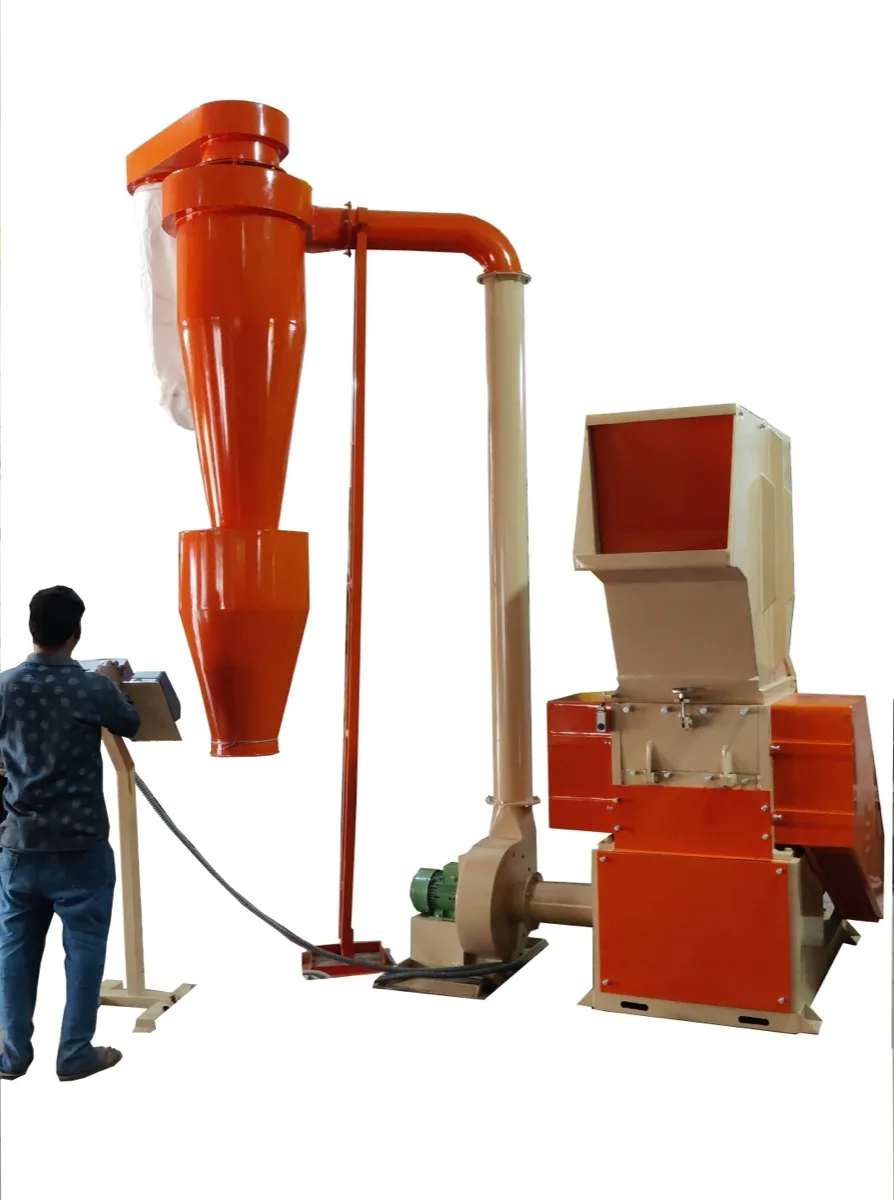
RE Series CB Grinders with Blower — RE8CB–RE40CB
Grinder with pneumatic discharge · 7 models · HDPE scrap
- Capacity: 20 to 700 kg/hr across models
- Power: 3 + 0.5 HP up to 30 + 5 HP (grinder + blower)
- Mesh: 15 mm standard, customisable
- Blower conveys regrind out of the chamber
Best for: HDPE/LDPE bottle plants that want regrind conveyed straight to a collection point near the hopper.
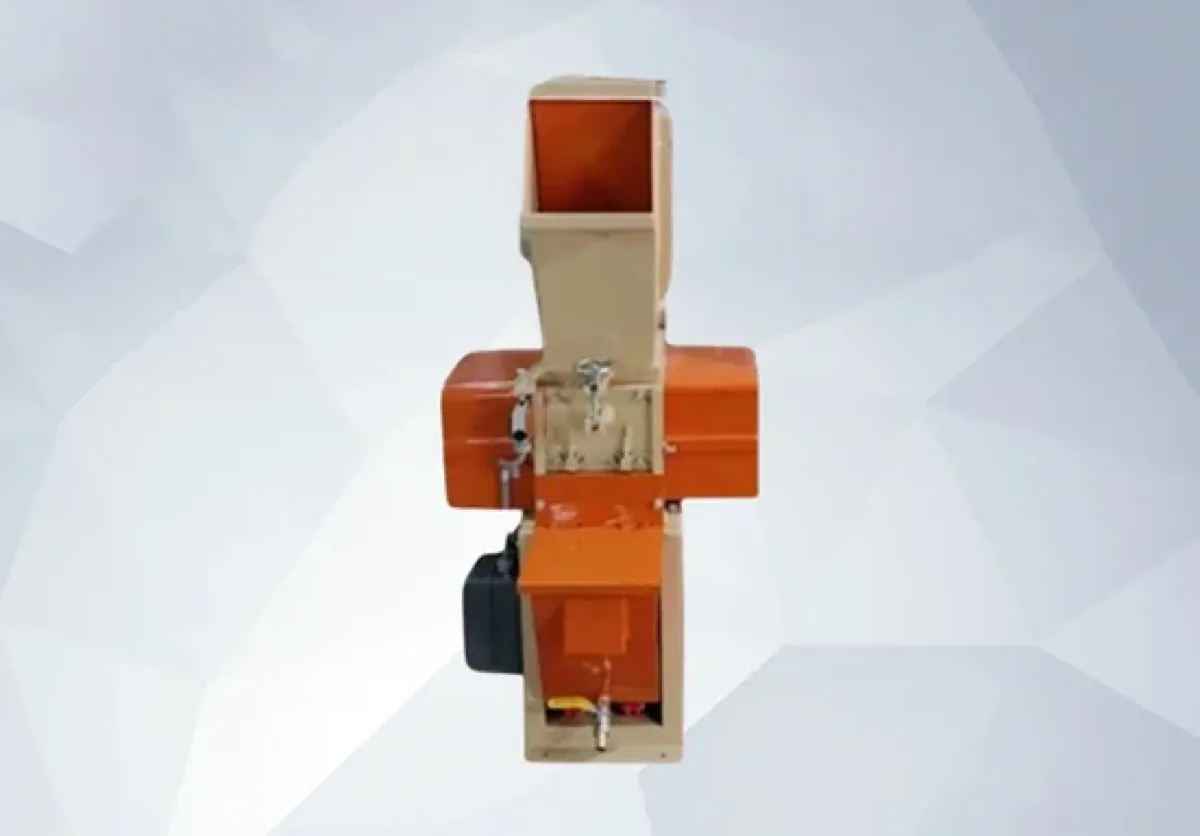
Plastic Grinder — RE Series (RE8–RE40)
Blade-type grinder · bag-and-batch discharge
- Capacity: 35–1,200 kg/hr across models
- Power: 3–30 HP
- Throat sizes: 8″ × 8″ to 30″ × 30″
- 5 blades per set; overload-protection starter
Best for: plants that bag regrind for batch blending, resale or a separate reprocessing line.
Technical Specifications Comparison
| Specification | RE Series CB Grinder with Blower | Plastic Grinder RE Series |
|---|---|---|
| Discharge | Pneumatic — blower conveys regrind to collection point | Gravity — regrind collected at the machine |
| Models | 7 (RE8–RE40) | 7 (RE8–RE40) |
| Motor power | 3 + 0.5 HP to 75 + 10 HP | 3–75 HP |
| Capacity | 20 to 700 kg/hr | 35–1,200 kg/hr |
| Mesh size | 15 mm standard, customisable | As per requirement |
| Throat size | 8″ × 8″ to 30″ × 30″ | 8″ × 8″ to 30″ × 30″ |
| Handles | Bottles up to 20 L jars; any plastic below 25″–30″ on top models | Bottles up to 20 L jars; any plastic below 25″–30″ on top models |
| Best for | Inline loop back to the hopper area | Bag-and-batch regrind handling |
| Get Quote → | Get Quote → |
Not sure which grinder fits your blow molding line?
Tell our technical team your container sizes, flash percentage and shift output — we’ll recommend the right model and discharge setup, free.
Why Choose Raj Electricals
Bottle plants run round the clock — so do our machines. Built in Mumbai since 1985 and supported pan-India with spares and service.





Frequently Asked Questions
How much scrap does a blow molding line generate?
More than most plant owners expect. In extrusion blow molding, flash, pinch-off and tails commonly run 15–35% of shot weight depending on the container shape — handleware and flat bottles sit at the high end. On top of that come start-up parisons during head stabilisation, colour changes, leak-test failures and visual rejects. A line producing 100 kg/hr of good bottles can therefore generate 20–40 kg/hr of clean scrap — which is exactly the number you should use to size your grinder.
Can blow molding flash be reground and reused in the same machine?
Yes — flash is among the cleanest regrind sources in plastics processing: your own polymer, your own colour, trimmed seconds after molding. Reground promptly and kept free of dust and oil, it blends back with virgin granule at a controlled ratio in the same blow molding machine. Two cautions: keep ratios consistent so wall thickness and weight stay stable, and never regrind floor sweepings into production material — contamination shows up as holes and weak pinch lines in blown containers.
Do I really need the blower version, or is a plain grinder enough?
It depends on where the regrind needs to go. A plain grinder drops regrind at the machine — fine if you bag it and carry it to a blending area in batches. The blower version conveys regrind pneumatically out of the cutting chamber and pipes it to a collection point you choose, typically near the blender or hopper platform. On a continuously running bottle line, that removes a recurring manual task and keeps the chamber clear at full feed rate. Compare both on the RE Series CB Grinder with Blower page.
What size grinder do I need for my bottle plant?
Two checks: throat and throughput. The throat must comfortably take your largest reject container whole — RE12 handles bottles up to 1 litre, RE16 up to 10 litre jars, RE20 up to 20 litres. Then match capacity to your scrap rate: blower models run from 20 kg/hr (RE8) through 175 kg/hr (RE20) to 700 kg/hr (RE40). Capacity varies with material density and mesh size, so size with headroom. Send us your container range and shift scrap weight for a free recommendation.
Can the grinder handle multilayer and co-extruded bottles?
Mechanically, yes — a multilayer HDPE bottle grinds exactly like a mono-layer one. The consideration is where the regrind goes: mixed-layer regrind cannot return to a food-contact or barrier-critical layer, so plants typically run it into middle layers, non-critical products or sell it as mixed regrind. If you run co-ex lines, segregate multilayer scrap from mono-material flash so your best regrind stays pure. Our team can advise on segregation practice during your trial visit.
How much does a blow molding scrap grinder cost in India?
Every machine is quoted to the job. What moves the number is capacity, throat size, motor rating, MS or SS construction and the automation you add — a blower, a conveyor, a control panel. Our guide to what drives machine cost walks through each of those; send us your material and daily volume and we will size the machine and quote it, usually the same day.
We export bottles — can you supply machines for our overseas plant?
Yes. For export orders we fit motors built for your destination country’s voltage and frequency, and machines are packed for sea freight. Raj Electricals has exported 50+ machines, including to the Gulf and Africa. Share your power specification (voltage/Hz) with your enquiry and we will quote the export configuration.
Can I trial the grinder on my own flash and reject bottles?
Yes — bring a sample lot of flash, tails and rejects to our works at Andheri East, Mumbai, and we will grind it in front of you so you can check regrind size, throughput and blower discharge on your actual material. Outstation plants can request a video trial. Contact us to book a slot.
Get a Free Quote for a Blow Molding Scrap Grinder
Tell us your container sizes, polymers and shift-wise scrap weight — our technical team responds with a model recommendation and firm pricing, usually within one working day. No spam, no obligation.
102/103/104, Madhu Industrial Estate, Old Nagardas Road, Mogra Lane, Andheri East, Mumbai – 400069
Mon–Sat, 9:00 AM – 7:00 PM
Related Solutions
Injection Molding Scrap Grinding
Sprues, runners and rejects — beside-the-press grinding that puts regrind back into the press the same shift.
Learn more →
Extrusion Scrap & Purge Shredding
Purge lumps and head drainage are too solid for a grinder — two-stage shred-then-grind handles them.
Learn more →
HDPE & LDPE Plastic Grinding
The material side of the story — grinding solutions for HDPE and LDPE bottles, containers and pipes.
Learn more →