Injection Molding Scrap Grinder — Inline Sprue & Runner Recycling
Sprues, runners and rejects are resin you have already paid for. A beside-the-press sprue grinder turns them back into dosable regrind the same shift — RE-series grinders run from compact 35–45 kg/hr units to 1,000–1,200 kg/hr central machines.
The Injection Molding Scrap Challenge
Every cold-runner mold turns part of every shot into non-product. Depending on part size and runner layout, sprues and runners typically account for 15–30% of shot weight — and that is before start-up purge, colour-change scrap, short shots and QC rejects are added. Across a month, a molding shop running commodity PP, ABS, HDPE or nylon can easily find that a fifth of the resin it bought never left the plant as saleable parts.
The economics are brutal because the scrap was bought at virgin granule prices. Sell sprues and runners to a scrap dealer and you recover a fraction of what you paid; let them pile up on the shop floor and they get worse — dust, oil mist and mixed grades destroy reprocessing value, and floor space disappears under gunny bags of runners. For Indian molders working on thin conversion margins, injection molding waste is not a housekeeping problem. It is a material-yield problem, and every kilogram of clean regrind that goes back into the press is a kilogram of virgin resin you do not buy.
Grind It Where It Falls — The Beside-the-Press Approach
Molding scrap is the best recycling feedstock in the plastics industry: known grade, known colour, one heat history, zero contamination — if you grind it before it touches the floor for long. A runner grinder placed beside the press takes sprues and runners straight from the operator or robot, cuts them against a screened chamber, and gives back free-flowing regrind that can be blended with virgin granule at a controlled ratio and run through the same machine that produced it. Many molders run 10–25% regrind on non-appearance parts without changing process settings significantly.
The setup decision is beside-the-press versus centralised. The compact RE8 grinder — 3 HP, 35–45 kg/hr and just 150 kg — sits next to a single press and grinds runners as they fall; the RE12 at 60–80 kg/hr covers a pair of presses or heavier runner systems. Shops with eight or more presses, large rejected moldings, or strict polymer segregation often prefer a central RE20–RE40 grinder (250–1,200 kg/hr) fed in sorted batches. Every RE-series plastic grinder uses a re-sharpenable blade set, a mesh screen sized to your regrind requirement, and a starter with overload protection — and blades are resharpenable, which matters when you run glass-filled grades.
Closing the Loop — From Runner to Regrind to Press
- Segregate at the press Sprues, runners and rejects are kept separate by polymer and colour — mixed scrap is worth a fraction of sorted scrap
- Feed the grinder Operator or robot drops runners straight into the beside-the-press grinder hopper while they are still clean
- Grind to uniform regrind The 5-blade rotor cuts scrap against a mesh screen; only granules that pass the screen leave the chamber
- Blend at a set ratio Regrind is dosed with virgin granule at a consistent percentage — typically 10–25% for non-critical parts
- Mold the same shift The blend goes back into the press hopper — material recovered before it can degrade or pick up contamination
Recommended Machines for Injection Molding Scrap
Size by scrap rate, not press count: weigh a shift’s sprues and runners, then pick the model with comfortable headroom.
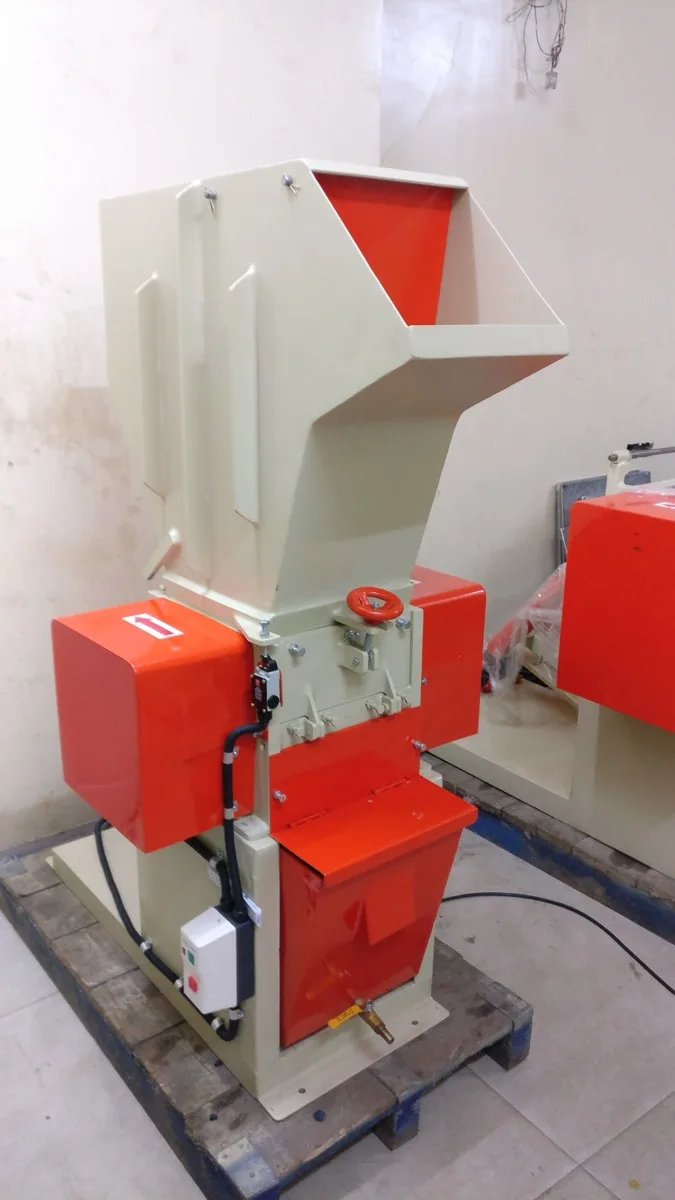
Plastic Grinder — RE8 (Beside-the-Press)
Compact grinder · single-press duty
- Capacity: 35–45 kg/hr
- Power: 3 HP
- Throat: 8″ × 8″
- Weight: just 150 kg — fits beside the press
Best for: one press — grinds sprues and runners as they fall, in the space beside the machine.
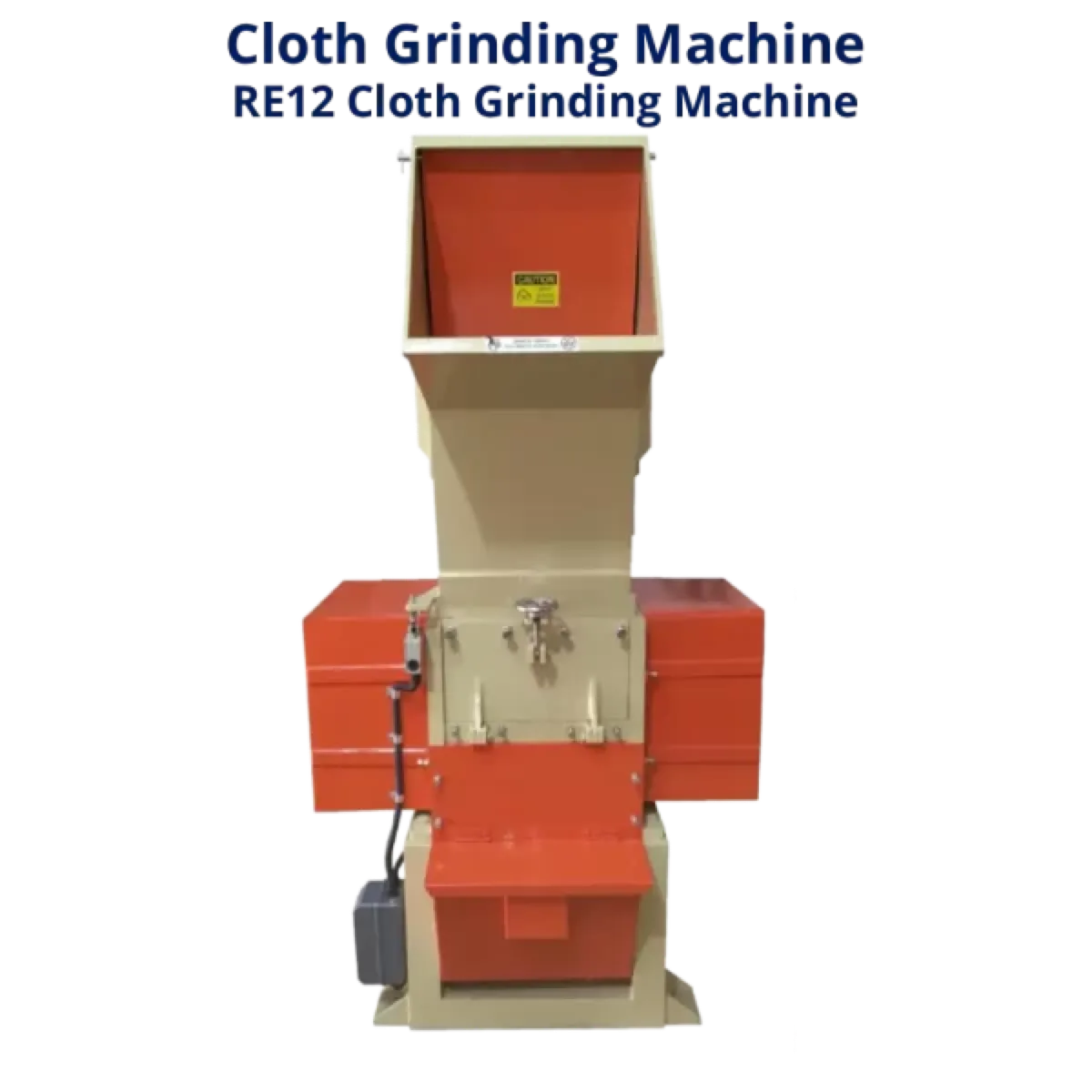
Plastic Grinder — RE12
Runner grinder · small-shop workhorse
- Capacity: 60–80 kg/hr
- Power: 5 HP
- Throat: 12″ × 12″
- Footprint: 1100 × 950 mm · 450 kg
Best for: 2–4 presses sharing one grinder, heavy runner systems and small reject parts.
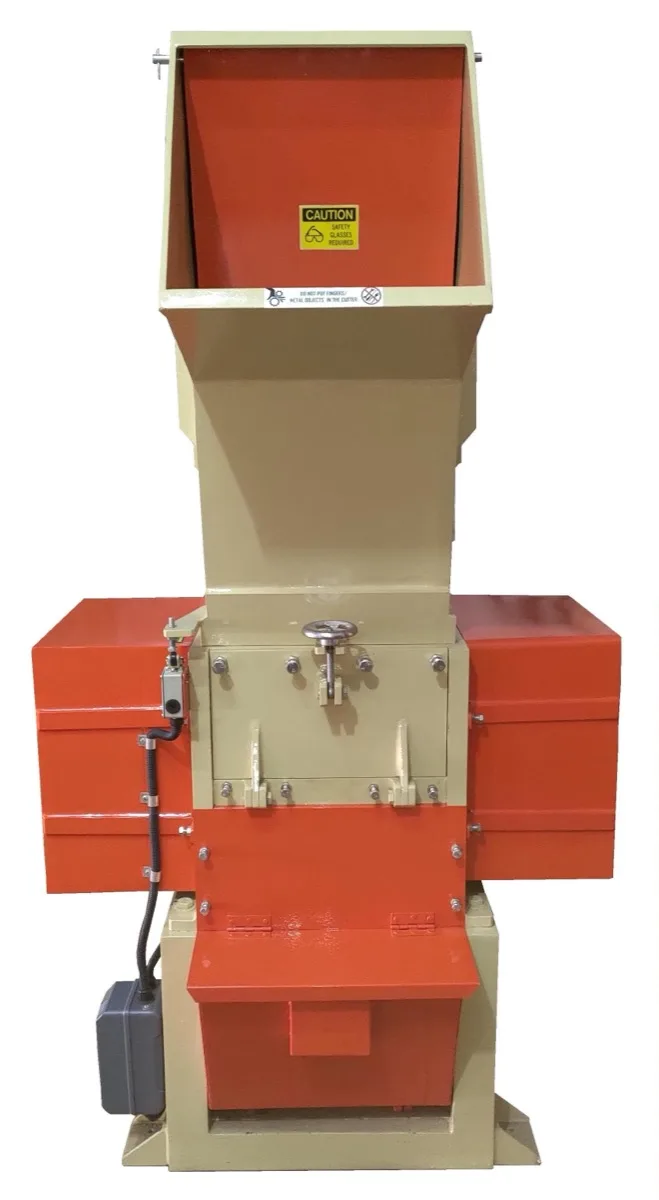
Plastic Grinder — RE20–RE30 (Central)
Central grinding · batch reprocessing
- Capacity: 250–800 kg/hr
- Power: 15–30 HP
- Throat: 20″ × 20″ to 30″ × 30″
- Takes large rejects and bulky moldings
Best for: shops with 8+ presses grinding sorted scrap in batches at a central station.
Technical Specifications Comparison
| Specification | RE8 | RE12 | RE20 | RE30 |
|---|---|---|---|---|
| Motor power | 3 HP | 5 HP | 15 HP | 30 HP |
| Grinding capacity (15 mm screen) | 35–45 kg/hr | 60–80 kg/hr | 250–400 kg/hr | 600–800 kg/hr |
| Throat size | 8″ × 8″ | 12″ × 12″ | 20″ × 20″ | 30″ × 30″ |
| Blades (rotating + fixed) | 3 + 2 | 3 + 2 | 3 + 2 | 6 + 4 |
| Machine weight (approx.) | 150 kg | 360 kg | 1,062 kg | 3,000 kg |
| Best for | Beside one press | 2–4 presses | Central station | High-volume central |
| Get Quote → | Get Quote → | Get Quote → | Get Quote → |
Beside-the-press or central grinding — not sure which fits your shop?
Tell our technical team your press count, polymers and shift-wise scrap weight — we’ll recommend the right grinder setup, free.
Why Choose Raj Electricals
A Mumbai machine builder since 1985 — the grinders running beside presses in molding shops are built in the same Andheri East works that supplies India’s biggest FMCG names.






Frequently Asked Questions
How much scrap does injection molding actually generate?
On cold-runner molds, sprues and runners alone commonly run 15–30% of shot weight, depending on part size and cavity layout — small multi-cavity parts sit at the high end. Add start-up purge, colour-change scrap, short shots and QC rejects, and many shops find 20% or more of purchased resin coming off the press as non-product. Weigh one shift’s scrap per press — that number, in kg/hr, is exactly how you size a grinder.
Is regrind from sprues and runners really as good as virgin granule?
It is the closest thing to virgin you can get from recycling: same grade, same colour, and only one previous heat history. Each pass through the barrel does shave polymer properties slightly, which is why molders blend regrind with virgin at a controlled ratio — commonly 10–25% on non-appearance and non-structural parts — rather than running 100% regrind. The practical rules: grind it clean and fresh, keep polymers and colours strictly separate, store regrind dry, and dose at a consistent percentage so your process stays stable.
Should I put a grinder beside each press or set up one central grinder?
Beside-the-press wins when scrap is continuous and segregation matters: the RE8’s 950 × 650 mm footprint fits next to the machine, runners go straight in, and there is no risk of mixing polymers. Central grinding wins when you run many presses on common materials, have bulky rejects that need a bigger throat, or want one operator handling all reprocessing — an RE20 or RE30 ground batch-wise covers an entire shop. Many plants do both: small grinders on long-running presses, one central machine for everything else. Our machine selection guide covers the trade-offs in detail.
What size grinder do I need for my molding shop?
Work from scrap weight, not press count. A press producing 30 kg/hr of moldings with 20% runner weight generates about 6 kg/hr of scrap — an RE8 at 35–45 kg/hr covers several such presses with ease. The throat matters as much as capacity: the part of the scrap that decides your model is the largest reject you want to feed whole. RE8 and RE12 take sprues, runners and small parts; bigger rejected moldings need the 16″–30″ throats of the larger models. Send us your part weights and scrap estimate for a free sizing recommendation.
Can the grinder handle glass-filled nylon, ABS and polycarbonate?
Yes — RE-series grinders process engineering polymers including ABS, nylon and polycarbonate. Glass-filled grades are abrasive, so expect blades to need resharpening more often than on unfilled PP or PE; the 5-blade set is removable and resharpenable, and spare blade sets are available from Mumbai. Keep one rule absolute: never let metal inserts, screws or tramp metal enter the chamber — metal breaks blades. See our nylon waste shredding page for filled-material specifics.
How much does an injection molding scrap grinder cost in India?
Every machine is quoted to the job. What moves the number is capacity, throat size, motor rating, MS or SS construction and the automation you add — a blower, a conveyor, a control panel. Our guide to what drives machine cost walks through each of those; send us your material and daily volume and we will size the machine and quote it, usually the same day.
What does the grinder cost to run day to day?
Power and blades, essentially. A 3 HP RE8 running beside a press draws very little — a few units per shift — and the 5 HP RE12 not much more; every model ships with an overload-protection starter so a jam trips the motor instead of damaging it. Blade resharpening is the main consumable cost, driven by your running hours and how abrasive your materials are. There are no other consumables, and the all-metal construction is built for continuous shop-floor duty with simple cleaning and lubrication.
Can I trial the grinder on my own sprues and runners before buying?
Yes — bring a sample lot of your actual scrap (runners, rejects, purge pieces) to our works at Andheri East, Mumbai, and we will run it through the machine so you can check regrind size, throughput and how your material behaves. For outstation molders we arrange video trials on your material. Contact us to book a slot — Mon–Sat, 9 AM to 7 PM.
Get a Free Quote for an Injection Molding Scrap Grinder
Tell us your polymers, press count and shift-wise scrap weight — our technical team responds with a model recommendation and firm pricing, usually within one working day. No spam, no obligation.
102/103/104, Madhu Industrial Estate, Old Nagardas Road, Mogra Lane, Andheri East, Mumbai – 400069
Mon–Sat, 9:00 AM – 7:00 PM
Related Solutions
Blow Molding Scrap Grinding
Flash, pinch-off, tails and reject bottles — inline grinding with blower conveying back to the hopper.
Learn more →
Plastic Lumps & Purging Shredding
Barrel purgings and start-up lumps are too solid for a grinder — shred them first with the S3-600.
Learn more →
PP (Polypropylene) Waste Shredding
India’s most-molded commodity polymer — shredding and grinding solutions for PP parts, crates and scrap.
Learn more →