Nylon Shredder & Grinder Machine for PA Waste Recycling
PA6 and PA66 are engineered to resist wear — which is exactly why they fight back at the shredder. Cut gears, bushes, sprues and fibre offcuts down to valuable regrind with hardened blades and slow, high-torque shredding. Built in Mumbai since 1985.
The Nylon Waste Challenge
Nylon — polyamide, in its common PA6 and PA66 grades — turns up wherever parts have to survive friction and load: gears, bushes, bearing cages, rollers, pulleys, cable ties, conveyor components and a long list of automotive under-bonnet parts, many of them glass-filled PA66. Add the fibre side of the family — monofilament, yarn and fibre offcuts from textile and fishing-net units — and nylon waste streams show up across engineering plants, molders and processors all over India.
The processing problem is the material’s own virtue. Nylon is tough, abrasion-resistant and slightly flexible — the very properties that make a good gear make a polymer that resists being cut. Thick solid sections like rejected gears and purgings stall light machines; glass-filled grades sandpaper their way across cutting edges; and fibre waste behaves nothing like solid parts. Meanwhile PA regrind is among the most valuable recycled engineering plastics, so every tonne sold off as mixed scrap — or worse, dumped — is real money lost. The machine choice decides whether nylon waste is a margin or a maintenance bill.
Shredding Nylon Without Killing Your Blades
Tough, thick material wants torque, not speed. The S3-600 single shaft shredder runs its rotor at a slow 80 rpm, driving 26 hardened rotary blades against 2 fixed blades inside a heavy-walled chamber. That combination bites through solid nylon sections — gears, bushes, purge lumps, thick sprues — at 300–500 kg/hr depending on material density, fed through a 600 × 1000 mm side hopper. The machine is all-metal, built for 24-hour continuous duty, and its blades can be removed for sharpening — which matters more with nylon than with any commodity plastic.
For regrind production, shredded nylon passes to an RE-series plastic grinder, where a five-blade rotor cuts it against a replaceable screen into uniform granules; seven models span 3–75 HP and 35–1,200 kg/hr. Two honest notes from experience. First, glass-filled PA66 is abrasive and will dull any blade set faster than unfilled material — plan a sharpening cycle rather than discovering one. Second, soft nylon fibre and yarn waste cuts differently from solid parts; we recommend a trial on your actual offcuts before committing, and for predominantly fibre streams our synthetic textile shredding solution may be the better fit. Machines are built in MS (SS-grade available) with export-voltage motors on request.
Nylon Waste Shredding Process — From Tough Parts to Regrind
- Segregation by grade PA6, PA66 and glass-filled lots are kept separate — mixed lots lose regrind value
- Metal check Bearings, bushes with metal sleeves and fasteners are removed — metal breaks blades
- Primary shredding Solid nylon parts and lumps go through the S3-600 at slow, high-torque 80 rpm
- Grinding to size Shred is reduced to screen-controlled granules in an RE-series grinder
- Drying & bagging Nylon absorbs moisture — regrind is dried and sealed in bags before remelting or sale
Recommended Machines for Nylon Waste Shredding
High-torque shredding for the tough sections, screen-controlled grinding for the regrind. Full spec tables live on each machine page.
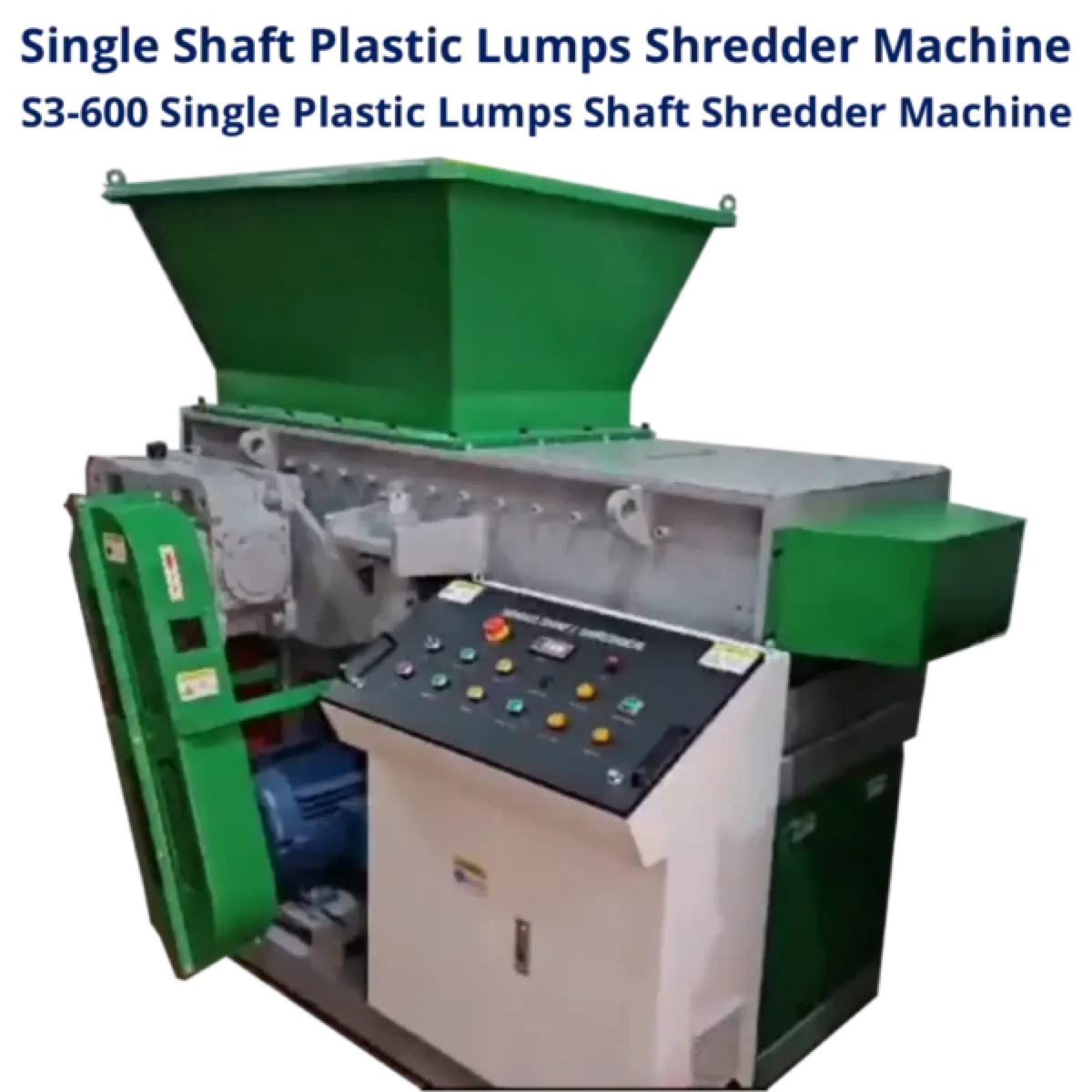
Single Shaft Shredder — S3-600
Heavy-duty single shaft · 24-hour continuous duty
- Capacity: 300–500 kg/hr (depending on material density)
- Drive: 22 kW, 415 V, 3 phase · 80 rpm rotor
- 26 rotary + 2 fixed hardened blades
- Feed: 600 × 1000 mm side feeding hopper
Best for: solid PA parts — gears, bushes, rollers, purge lumps and thick sprues that stall lighter machines.
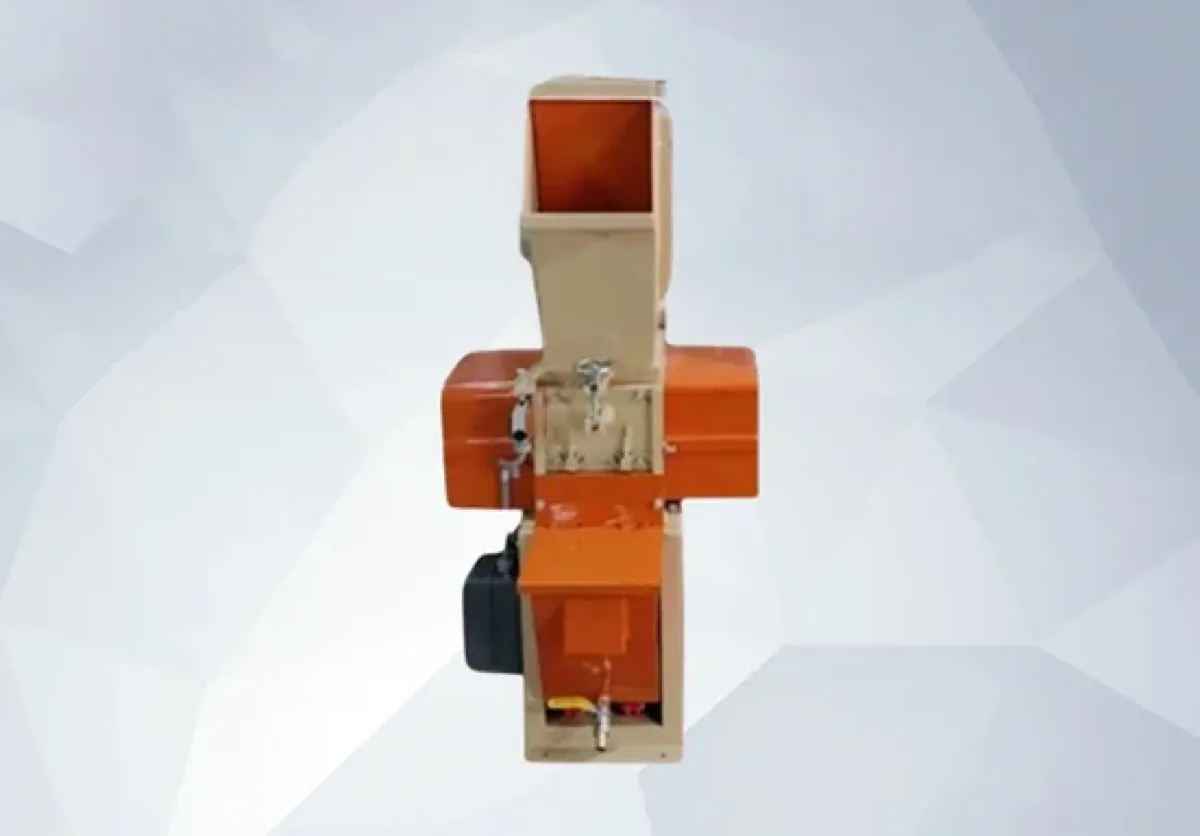
Plastic Grinder — RE Series (RE8–RE40)
Six grinder models · screen-controlled regrind
- Capacity: 35–1,200 kg/hr across models
- Power: 3–30 HP
- Throat sizes: 8″ × 8″ to 30″ × 30″
- 5-blade set; blades removable for sharpening
Best for: converting shredded nylon — or small sprues and offcuts directly — into uniform PA regrind.
Technical Specifications Comparison
| Specification | S3-600 Single Shaft Shredder | Plastic Grinder RE Series |
|---|---|---|
| Machine type | Single shaft shredder, side-feeding hopper | Blade-type grinder, 7 models |
| Motor power | 22 kW, 415 V, 50 Hz, 3 phase | 3–75 HP by model |
| Capacity | 300–500 kg/hr (depending on material density) | 35–1,200 kg/hr by model |
| Cutting speed | 80 rpm — slow, high-torque | High-speed rotor against screen |
| Blades | 26 rotary + 2 fixed, hardened | 5-blade set (3 rotating, 2 fixed) |
| Output | Primary shred for regrinding | Uniform, screen-controlled granules |
| Role in the nylon line | Stage 1 — thick gears, bushes, lumps, purgings | Stage 2 — regrind (or stage 1 for small sprues/offcuts) |
| Get Quote → | Get Quote → |
Not sure your nylon will behave in a standard machine?
Glass-filled, fibre, thick purgings — nylon streams vary. Tell our technical team what you have and we’ll recommend the right setup, free.
Why Choose Raj Electricals
A Mumbai machine builder since 1985 — supplying engineering, automotive and pharma names with machines that keep running.






Frequently Asked Questions
Can nylon waste be recycled, and is PA regrind worth anything?
Yes. PA6 and PA66 are thermoplastics — shredded, ground and dried, they remelt into usable material, and PA regrind is among the better-paying recycled engineering plastics in India. Compounders buy sorted nylon regrind for filled and unfilled compounds, and many engineering molders blend regrind back into non-critical parts. Value depends on discipline: grade-pure lots (PA6 separate from PA66, filled separate from unfilled), metal-free, and dry. Mixed or damp lots get traded down to near-commodity rates.
Why is nylon harder on shredding machines than other plastics?
Three reasons. First, toughness: nylon absorbs impact and resists cutting instead of cracking like brittle plastics — the cutter has to push through, which demands torque. Second, abrasion: glass-filled PA66 carries up to a third glass fibre, which works like sandpaper on cutting edges. Third, geometry: nylon waste is often thick, solid sections — gears, purge lumps — with no hollow space to collapse. The answer is a slow, high-torque machine with hardened blades, which is exactly what the S3-600’s 80 rpm rotor and hardened blade set provide.
How fast will glass-filled nylon wear out the blades?
Faster than unfilled material — that is honest physics, and any supplier who promises otherwise should be questioned. What you can control is the response: the S3-600’s blades and the grinder’s 5-blade set are removable for periodic sharpening, so the right practice is a planned sharpening cycle based on your running hours and the share of filled material in your stream. We support machines pan-India with spares, blades and sharpening guidance from Mumbai, so a blade change is a maintenance event, not a breakdown.
Can these machines shred nylon fibre, yarn and monofilament offcuts?
Soft fibre behaves very differently from solid parts — it can wrap and pad instead of presenting a solid face to the blades. We are straightforward about this: bring your actual fibre offcuts for a trial before you buy, because behaviour varies with denier, baling and moisture. For waste streams that are mostly yarn, fabric or net, our synthetic textile shredding solution is usually the better starting point; for mixed streams the trial decides.
Does nylon regrind really need drying before reuse?
Yes. Polyamides are hygroscopic — they absorb moisture from the air, and moist regrind processed at melt temperature gives degraded, brittle parts and visible defects. Standard practice is to dry regrind before remolding and store it in sealed bags. This is a downstream step (dryers are standard molding-shop equipment), but it affects how you store and sell regrind: dry, sealed lots command better prices from buyers who know the material.
How much does a nylon shredder machine cost in India?
Every machine is quoted to the job. What moves the number is capacity, throat size, motor rating, MS or SS construction and the automation you add — a blower, a conveyor, a control panel. Our guide to what drives machine cost walks through each of those; send us your material and daily volume and we will size the machine and quote it, usually the same day.
What capacity do I need for my nylon waste volume?
Work in kilograms per day. An 8-hour shift on the S3-600 at 300–500 kg/hr covers roughly 2.4–4 tonnes of solid nylon a day — more than most engineering units generate — while the RE-series grinders scale from 35 kg/hr upwards for smaller streams. Because nylon density and part geometry swing throughput, size with headroom and verify with a trial on your material. Our machine selection guide walks through the calculation, or send us your numbers for a free recommendation.
Can I trial my nylon parts on the machine before buying?
Yes — with nylon we insist on it more than with any commodity plastic, because grade, fill and geometry change everything. Bring a representative lot of your gears, bushes, purgings or offcuts to our works at Andheri East, Mumbai, and watch the machine run your material; outstation buyers can get a video trial. Export orders are supplied with motors matched to your country’s voltage and frequency. Contact us to book a slot.
Get a Free Quote for Nylon Waste Shredding Machines
Tell us your nylon grades, part types and daily volume — our technical team responds with a model recommendation and firm pricing, usually within one working day. No spam, no obligation.
102/103/104, Madhu Industrial Estate, Old Nagardas Road, Mogra Lane, Andheri East, Mumbai – 400069
Mon–Sat, 9:00 AM – 7:00 PM
Related Solutions
ABS Plastic Shredding
Appliance housings, automotive trim and electronics enclosures — the other engineering plastic worth regrinding.
Learn more →
Polycarbonate Grinding
PC sheets, 19-litre jars and glazing — impact-resistant material ground into clean, high-value regrind.
Learn more →
Synthetic Textile Shredding
Yarn, fabric and net waste — the right route when your nylon stream is fibre rather than solid parts.
Learn more →