Polycarbonate Shredder & PC Plastic Grinder for Recycling
PC is built to take a hammer blow — so it doesn’t give up at the shredder either. Grind 19-litre water jars, roofing sheets and glazing offcuts into clean, high-value regrind on machines built in Mumbai since 1985.
The Polycarbonate Waste Challenge
Polycarbonate shows up in three big Indian waste streams. First, sheets: roofing and skylight panels, machine guards, canopies and glazing offcuts from fabricators. Second, jars: the 19–20 litre water jars that every packaged-water plant retires by the thousands once they scratch, cloud or fail inspection. Third, technical parts: automotive glazing, headlamp lenses, electrical covers and appliance components. All of it shares one property — PC is one of the most impact-resistant transparent plastics made, which is why a jar can survive years of rough handling and why the same jar will not simply crack apart in a light machine.
The commercial side is compelling: clean, colour-sorted PC regrind is high-value material, prized by compounders and sheet extruders precisely because virgin PC is expensive. But that value survives only if the regrind stays clean — free of metal, free of other polymers, and sorted clear versus tinted. A water plant or sheet fabricator that grinds its own PC scrap captures engineering-plastic rates; one that sells whole jars and offcuts as mixed scrap collects commodity rates for the same kilograms.
The Right Grinding Approach for Polycarbonate
For jars and parts that fit a grinder throat, single-stage grinding is the efficient route. The RE-series plastic grinder cuts PC against a replaceable screen with a five-blade rotor (3 rotating, 2 fixed), so the regrind size is consistent and set by the mesh. Model selection follows the application chart: the RE16 handles bottles and jars up to 10 litres, and the RE20 handles jars up to 20 litres — which is exactly where the 19-litre water jar lands. Larger RE25–RE40 models accept any plastic part below 25″–40″ for mixed PC scrap, with capacities across the range from 35 to 1,200 kg/hr.
For thick sheet stacks, long glazing offcuts and bulky mouldings that exceed a grinder throat, shred first: the S3-600 single shaft shredder takes them through its 600 × 1000 mm side hopper at a slow, high-torque 80 rpm — 26 hardened blades against 2 fixed — at 300–500 kg/hr depending on density, then the grinder finishes the job. To protect regrind value, keep clear and tinted PC separate, strip gaskets, caps and metal fittings before feeding, and bag the output dry: like nylon, PC absorbs moisture and buyers pay for dry, sealed lots. Machines are built in MS with SS-grade contact parts available — worth considering where food-grade jar regrind is the goal — and export-voltage motors are supplied on request.
Polycarbonate Grinding Process — From Jar and Sheet to Clean Regrind
- Collection & sorting Clear PC is separated from tinted; PC is kept apart from acrylic and other look-alike sheets
- Stripping contaminants Caps, gaskets, labels, metal fittings and frames come off — metal breaks blades, mixed polymer kills value
- Primary shredding (sheets & bulky parts) Oversize sheet stacks and mouldings go through the S3-600 single shaft shredder first
- Grinding to regrind Jars feed the right-size RE grinder whole; shred and small parts grind to screen-controlled size
- Inspection, drying & bagging Regrind is checked, kept dry and sealed by colour lot — ready for compounders, extruders or reuse
Recommended Machines for Polycarbonate Grinding
Grinder for jars and parts, single shaft shredder for sheets and oversize mouldings. Full spec tables live on each machine page.
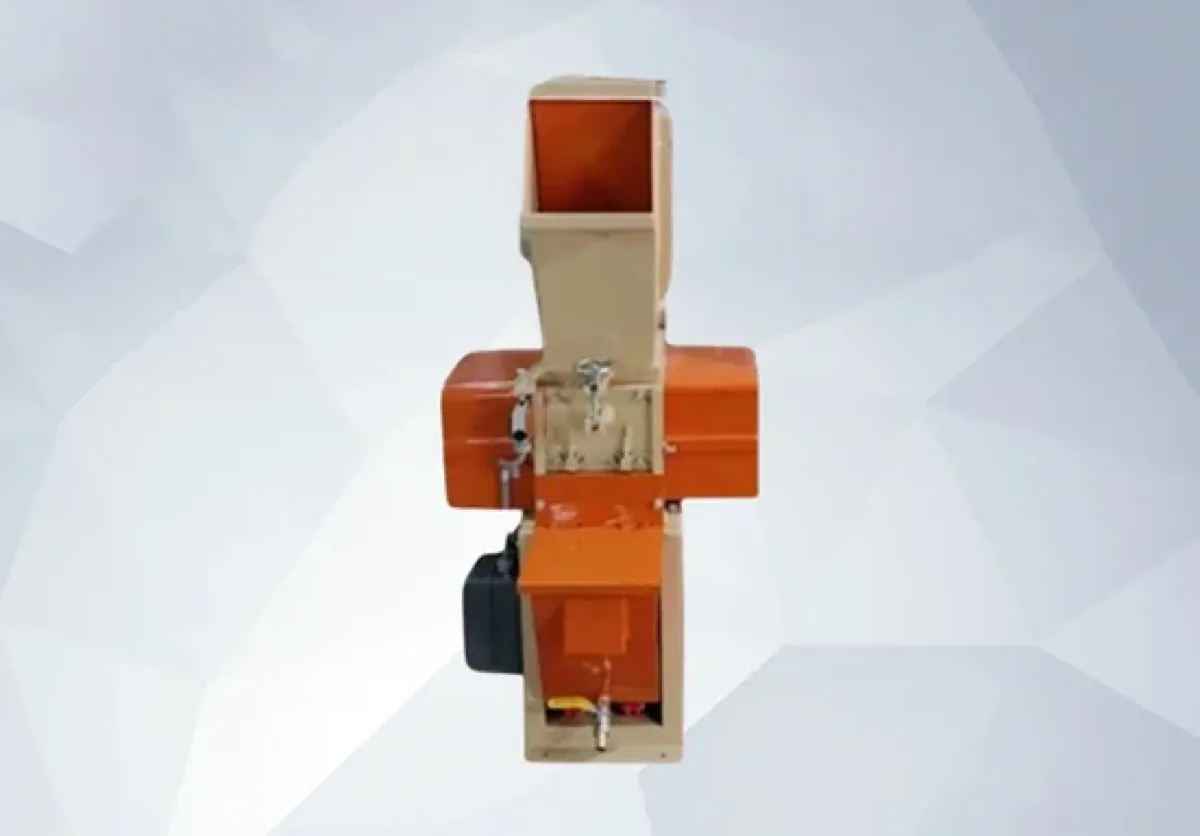
Plastic Grinder — RE Series (RE8–RE40)
Six grinder models · screen-controlled regrind
- Capacity: 35–1,200 kg/hr across models
- Power: 3–30 HP · throat 8″ × 8″ to 30″ × 30″
- RE16″ takes jars up to 10 L; RE20″ up to 20 L
- 5-blade set; overload-protection starter
Best for: 19-litre water jar fleets, PC bottles and parts that fit the throat — single-stage regrind production.
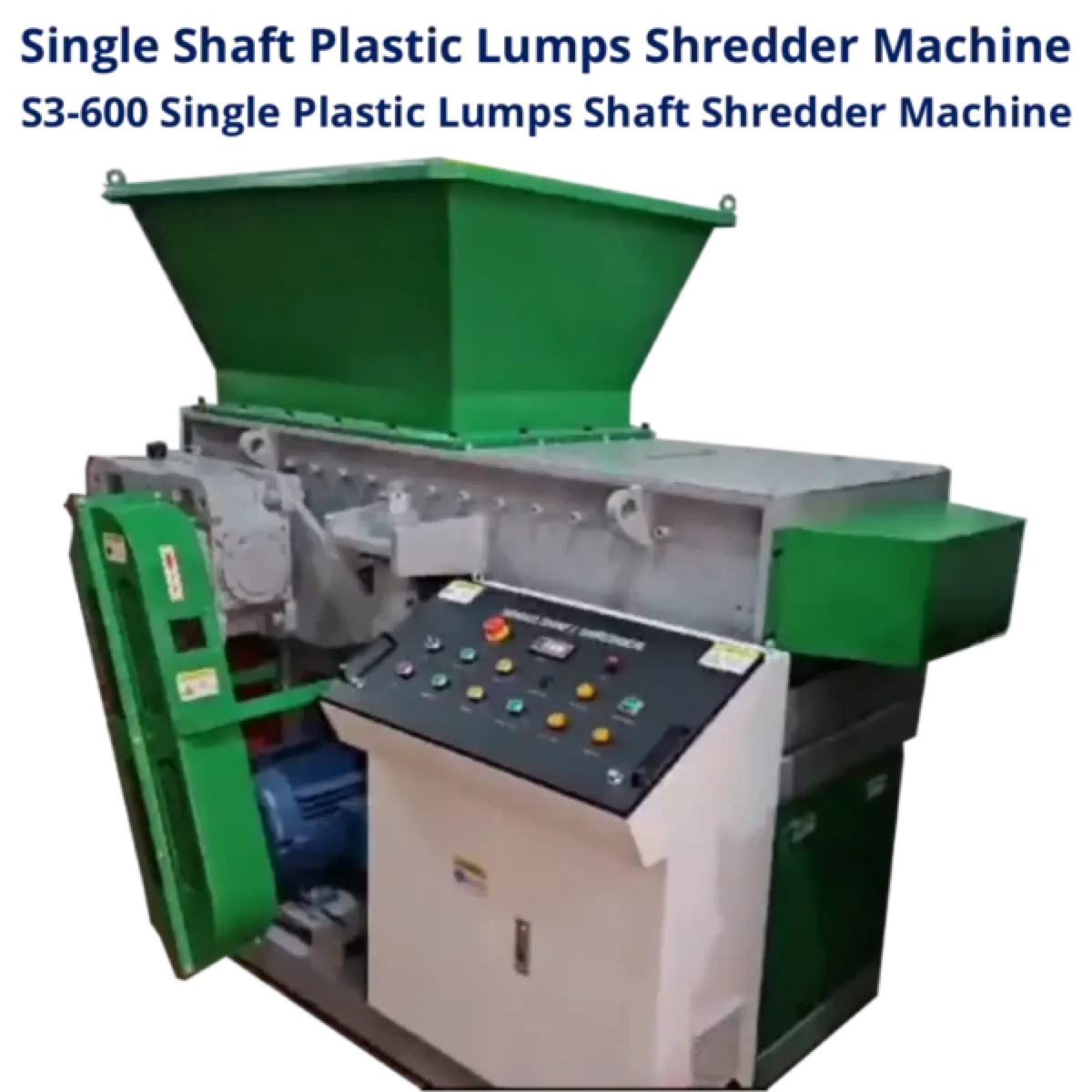
Single Shaft Shredder — S3-600
Heavy-duty single shaft · 24-hour continuous duty
- Capacity: 300–500 kg/hr (depending on material density)
- Drive: 22 kW, 415 V, 3 phase · 80 rpm rotor
- Feed: 600 × 1000 mm side feeding hopper
- 26 rotary + 2 fixed hardened blades
Best for: PC roofing sheets, glazing offcuts and bulky mouldings too large for a grinder throat.
Technical Specifications Comparison
| Specification | Plastic Grinder RE Series | S3-600 Single Shaft Shredder |
|---|---|---|
| Machine type | Blade-type grinder, 7 models | Single shaft shredder, side-feeding hopper |
| Motor power | 3–75 HP by model | 22 kW, 415 V, 50 Hz, 3 phase |
| Capacity | 35–1,200 kg/hr by model | 300–500 kg/hr (depending on material density) |
| Feed opening | Throat 8″ × 8″ to 30″ × 30″ | 600 × 1000 mm side feeding hopper |
| Handles | Jars up to 10 L (RE16″) / 20 L (RE20″); parts below 25″–30″ on top models | Sheet stacks, glazing offcuts, bulky mouldings, lumps |
| Output | Uniform, screen-controlled regrind | Primary shred for regrinding |
| Best for | Water jar fleets & PC parts — single-stage regrind | PC sheets & oversize parts — stage 1 before grinding |
| Get Quote → | Get Quote → |
Not sure which machine fits your polycarbonate scrap?
Jars, sheets or technical parts — tell our team what you generate and the regrind your buyer wants, and we’ll recommend the right model, free.
Why Choose Raj Electricals
A Mumbai machine builder since 1985 — supplying machines to India’s biggest FMCG, automotive and institutional names.






Frequently Asked Questions
Can polycarbonate be recycled, and who buys PC regrind?
Yes — PC is a thermoplastic and recycles well mechanically. Clean PC regrind is bought by compounders (often for PC-ABS blends), sheet extruders and molders making non-optical parts, and it commands engineering-plastic rates precisely because virgin polycarbonate is expensive. The price you get tracks the quality you deliver: clear, colour-sorted, metal-free, dry regrind earns the premium; mixed, dirty lots get commodity treatment. That quality is decided at your grinding stage, not at the buyer’s gate.
Can your grinder really take 19-litre water jars whole?
The RE-series application chart covers this directly: the RE16 model handles bottles and jars up to 10 litres, and the RE20 handles jars up to 20 litres — which includes the standard 19-litre water jar. Feed the jar whole, and the five-blade rotor cuts it against the screen into regrind. If your jars come with caps and label sleeves, plan to strip them first to keep the lot pure. We recommend a trial with your actual jars at our Mumbai works so you can verify throughput and regrind size yourself — see the Plastic Grinder page for the full model table.
What about PC roofing sheets and glazing offcuts — grinder or shredder?
Size decides. Offcuts that fit the grinder throat (up to 30″ × 30″ on the largest model) can grind directly. Full-length roofing sheets, bundled offcuts and thick multiwall stacks are better shredded first on the S3-600, whose 600 × 1000 mm side hopper and slow 80 rpm, high-torque rotor are made for bulky rigid material; the shred then grinds to final size. Running oversize sheet through an undersized throat wastes labour on pre-cutting — buy for the largest piece you actually generate.
Why is polycarbonate considered hard to shred in the first place?
Because PC’s defining property is impact resistance — it is the material chosen for machine guards and security glazing precisely because it deforms rather than shatters. Brittle plastics crack and surrender to the blades; PC pushes back and demands genuine cutting force. That is why thick PC favours slow, high-torque shredding (the S3-600 approach) and sharp, hardened blade sets rather than light, high-speed machines that stall or overheat on tough sections.
How do I keep PC regrind clean enough for reuse?
Four disciplines. Sort by colour — clear and tinted PC are separate products. Keep PC apart from acrylic and other transparent look-alikes, because one wrong sheet contaminates a lot. Strip caps, gaskets, silicone seals, metal frames and fittings before feeding — metal breaks blades and even small foreign-polymer fractions hurt pricing. And bag the regrind dry in sealed sacks, since PC absorbs moisture. Buyers who pay top rates will audit exactly these four things.
How much does a polycarbonate grinder machine cost in India?
Every machine is quoted to the job. What moves the number is capacity, throat size, motor rating, MS or SS construction and the automation you add — a blower, a conveyor, a control panel. Our guide to what drives machine cost walks through each of those; send us your material and daily volume and we will size the machine and quote it, usually the same day.
Can I trial my PC jars or sheets before purchasing?
Yes — bring a representative lot (jars, sheet offcuts or technical parts) to our works at Andheri East, Mumbai, and we will run it live so you can check throughput, regrind size and output cleanliness before committing. Outstation buyers can request a video trial on their material. Contact us to book a slot.
What maintenance and after-sales support should I expect?
Routine care is blade sharpening and lubrication — the grinder’s 5-blade set and the S3-600’s blades are removable for periodic sharpening, and an overload-protection starter guards the grinder motor. Keep metal out of the chamber and the blades last far longer. We provide installation and on-site maintenance service, support machines pan-India with spares from Mumbai, and for export orders we fit motors matched to your country’s voltage and frequency.
Get a Free Quote for Polycarbonate Grinding Machines
Tell us what PC you generate — jars, sheets or parts — plus your daily volume and target regrind size. Our technical team responds with a model recommendation and firm pricing, usually within one working day. No spam, no obligation.
102/103/104, Madhu Industrial Estate, Old Nagardas Road, Mogra Lane, Andheri East, Mumbai – 400069
Mon–Sat, 9:00 AM – 7:00 PM
Related Solutions
ABS Plastic Shredding
Appliance housings and electronics enclosures — often processed alongside PC, and just as valuable as regrind.
Learn more →
Nylon Waste Shredding
PA6/PA66 gears, bushes and offcuts — another tough engineering plastic that rewards proper shredding.
Learn more →
Automobile Plastic Shredding
Headlamp lenses, glazing, bumpers and trim — the full automotive plastic stream in one solution.
Learn more →