S3-600 Single Shaft Shredder, 650 x 600 mm Chamber, 30 HP
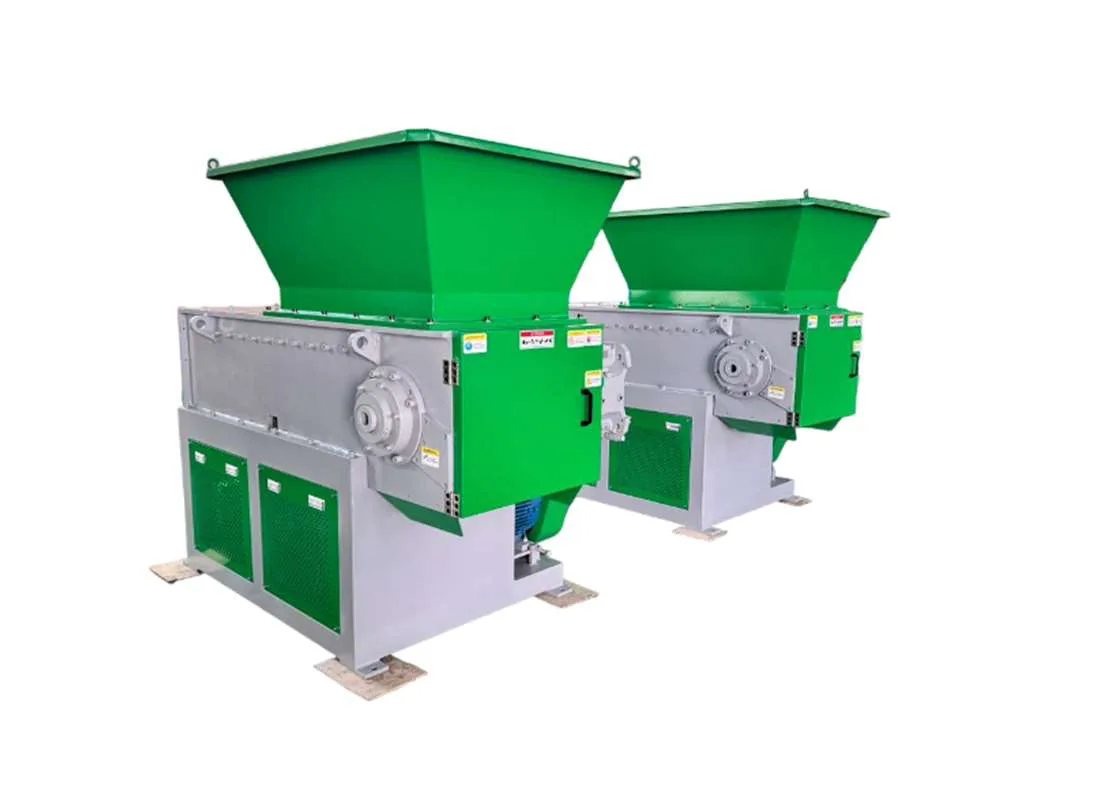
The compact entry point into the S3 line: one machine that pares plastic lumps, purgings, FRP sheets and wooden pallets into recyclable pieces at 300–500 kg/hr. A 280 mm rotor turning at 80 rpm, 26 hardened blades, a hydraulic pusher and a 30 HP (22.07 kW) drive rated for 24-hour continuous duty.
The Machine for Material Nothing Else Will Take
Every plant accumulates the awkward pile: purgings and dead-heads from machine start-up, solidified barrel waste, rejected blocks of plastic, FRP sheet offcuts, broken pallets. All of it is too hard, too thick or too big to drop into a grinder throat, and too valuable, or too bulky, to keep sending out as low-grade scrap.
The S3-600 single shaft shredder is built for exactly this material. Pieces go in whole through a 600 x 1000 mm side feeding hopper. Inside the 650 x 600 mm chamber, walled in 20 mm plate, a hydraulic pusher presses the material onto a 280 mm welded rotor turning at a deliberate 80 rpm, and 26 rotary blades hardened to HRC 55–60 shear slices off it against 2 fixed blades. Slow speed and high torque mean dense, solid mass is pared down pass by pass instead of shock-loading the drive, with less heat, dust and noise than high-speed machines.
A Siemens PLC runs the machine, with automatic start and stop and reverse sensing that protect it against overloading and jamming. Output passes a 40 mm screen as coarse, consistent shred sized for the next stage. An RE-series grinder takes it down to extruder-ready regrind, or it ships to your recycler at a fraction of the original volume. All-metal construction with no plastic parts, easy cleaning and lubrication, and a 24-hour continuous duty rating keep the machine in service year after year.
S3-600 Technical Specifications
| Performance | |
|---|---|
| Production capacity | 300–500 kg/hr (material-dependent) |
| Feeding & cutting | |
| Feed opening | 600 x 1000 mm, side feeding hopper |
| Cutting chamber | 650 x 600 mm (L x W) |
| Rotor diameter | 280 mm |
| Rotor speed | 80 rpm |
| Rotary blades | 26, welded roto-type |
| Fixed blades | 2 |
| Blade hardness | HRC 55–60 |
| Screen | 40 mm hole size, 10 mm mesh plate thickness |
| Drive & control | |
| Motor | 30 HP / 22.07 kW, 415 V / 50 Hz / 3-phase |
| Motor protection | TP44 (thermal protection) |
| Noise level | Less than 75 dB |
| Control | Siemens PLC, Schneider contactor/relay, proximity switch protection |
| Hydraulic pusher | |
| Oil pump motor | 2.2 kW |
| Max. system pressure | 10 MPa |
| Cylinder diameter | 60 mm |
| Pusher stroke | 600 mm |
| Build | |
| Chamber wall thickness | 20 mm |
| Machine weight (approx.) | 2,300 kg |
Capacity varies with material density and feed rate. Specifications are subject to change for constant product development. Keep bulk metal objects out of the cutting chamber. Incidental nails in timber are tolerated but accelerate blade wear.
Inside the S3-600
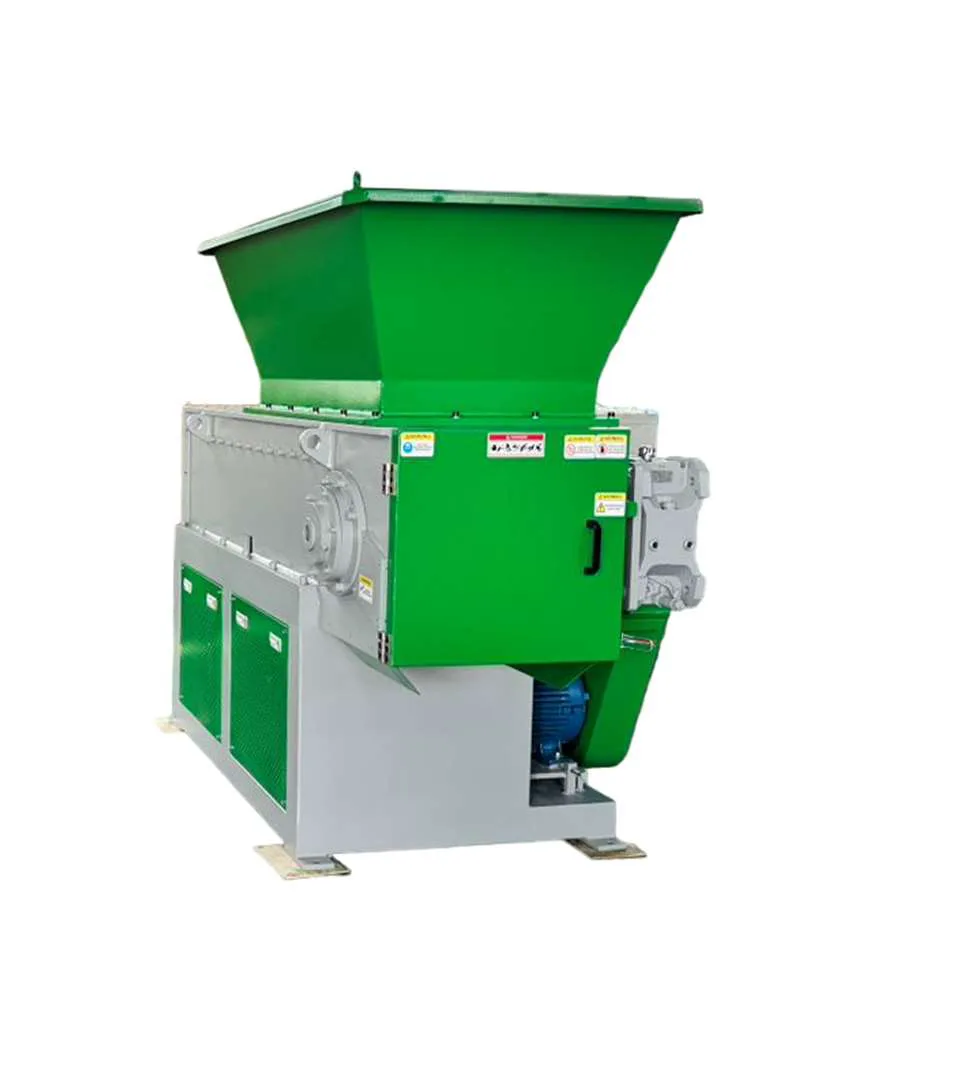
The Machine
Side feeding hopper over the 650 x 600 mm chamber, guarded drive and a 2,300 kg all-metal frame.
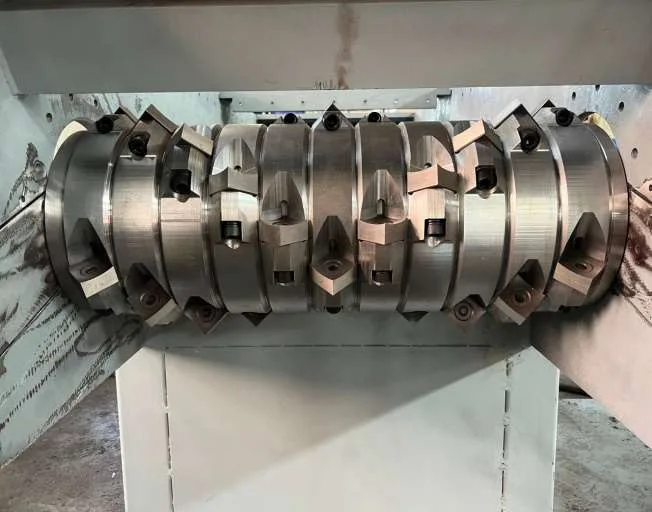
Welded Rotor
The 280 mm welded rotor carries 26 rotary blades and turns at 80 rpm.
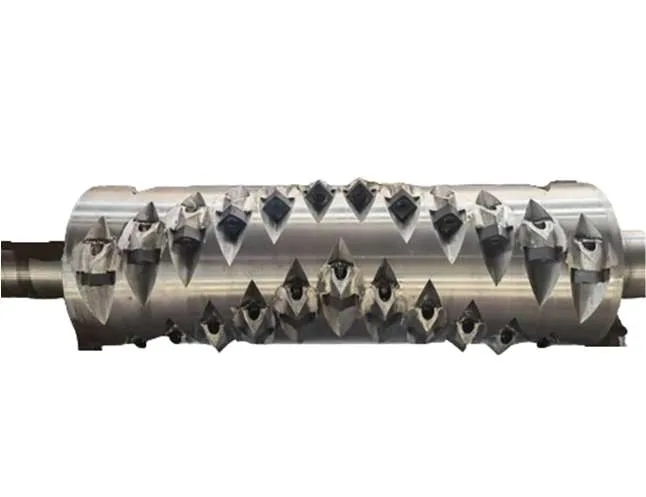
Staggered Blades
Blades hardened to HRC 55–60 are set in staggered rows along the rotor.
Key Features
What It Shreds, Plastics Applications
One machine, every hard plastics stream on the floor. Each application below has its own guide with the process, output values and line setup.
Plastic Lumps & Blocks
Purgings, dead-heads and solidified barrel waste, the two-stage shred-then-grind route back to saleable regrind.
Learn more →FRP / Fibreglass Waste
Sheets, decorative panels, bars, boards and rejected FRP products shredded for recycling, ground finer, an additive for brick and cement making.
Learn more →Rotomoulding Scrap
Thick-walled tank rejects and moulding scrap reduced to manageable pieces for recycling.
Learn more →Extrusion Scrap & Purge
Purge blobs, pipe trims and start-up waste from extrusion lines, cut down to a size your grinder accepts.
Learn more →Injection Moulding Scrap
Start-up lumps, colour-change purgings and rejected mouldings from injection shops, recovered in-house.
Learn more →Automobile Plastic & Composites
Bumpers, panels and composite automotive components shredded for recycling or scrap recovery.
Learn more →Also Configured For
Wood and pallets. The same slow-turning rotor that pares plastic lumps shears broken pallets, packaging timber, planks and joinery offcuts, dense, nailed and awkward material that high-speed machines bounce off or blunt on. Planks and half-pallets feed whole through the hopper. Incidental nails pass through at the honest cost of faster blade wear, and output chips go to biomass fuel, board plants or composting bulk.
Bulk paper. Piles of waste paper and mixed paper waste shred alongside the tougher streams, so one machine covers all the bulky material on your floor. Plants that generate mixed tough waste, FRP offcuts plus wooden pallets plus solid plastic lumps, often justify the S3-600 across all of those streams rather than any single one.
Is the S3-600 the right machine for your waste?
Tell our technical team what your material is, what the pieces weigh and how much you generate a day, we’ll confirm the fit honestly, or point you to the dual-shaft or grinder that suits better. Free.
S3-600 Single Shaft Shredder, Frequently Asked Questions
How big a piece can the S3-600 accept?
The side-feeding hopper opening is 600 × 1000 mm and the cutting chamber measures 650 × 600 mm, so most purgings, dead-heads, FRP sheets and planks go in whole, without pre-breaking. Whole large pallets are halved first, a minute’s work with a saw. If your pieces are unusually large, full-barrel purges from very big presses, for example. Send us photos with rough dimensions and weight, or bring a sample to our Mumbai works for a trial run before you decide.
Why a single-shaft shredder instead of a dual-shaft?
Density. A solid lump or thick FRP board has no edge for dual-shaft blades to grip and tear, the way a drum or a bag does. The single-shaft design works differently: the slow 80 rpm rotor presses the material against fixed blades and shaves it down pass by pass, which suits dense, solid mass. Raj Electricals supplies both single and dual shaft machines, so the recommendation is honest. For hard lumps, composites and timber, the S3-600 is the machine we put forward, and for higher volumes of rigid engineering plastics, the S3-800 and S3-1000 take 400–600 and 600–800 kg/hr.
Will I still need a grinder after the shredder?
If you want extruder-ready regrind, yes. The S3-600 is the first stage: it turns pieces no grinder can swallow into smaller ones. An RE-series grinder then reduces those to uniform regrind sized by mesh. Many plants run the pair as a line, shredder feeding grinder, and convert lump waste back into material they can reuse or sell at regrind rates instead of lump-scrap rates.
Isn’t fibreglass too abrasive for a shredder?
Glass fibre is hard on cutting tools. That is precisely why this machine is specified the way it is. The blades are hardened to HRC 55–60, the chamber walls are 20 mm plate, and the rotor turns at a slow 80 rpm so the blades shear the laminate rather than smashing through it. Like any machine on abrasive duty, blades need periodic attention. The S3-600 is designed for easy cleaning and lubrication, and we provide installation and maintenance service on site.
Can it shred nailed pallets and timber?
Yes, incidental nails and staples pass through, at the honest cost of faster blade wear. Plan sharpening accordingly. Strip bulk hardware like hinges and brackets first, and keep other metal objects out of the cutting chamber. Output chip is good for biomass boilers, particle-board feedstock and composting bulk carbon.
How many hours a day can it run, and what maintenance does it need?
The S3-600 is rated for continuous 24-hour operation. Construction is all metal with no plastic parts, the chamber walls are 20 mm plate, and the blades are hardened to HRC 55–60. Maintenance is mainly blade care and lubrication. Both designed to be easy, which is what keeps a continuously-run shredder healthy over the years. We provide installation and on-site maintenance service across India.
What is the S3-600 single-shaft shredder price in India?
Every machine is quoted to the job. What moves the number is capacity, throat size, motor rating, MS or SS construction and the automation you add, a blower, a conveyor, a control panel. Our guide to what drives machine cost walks through each of those. Send us your material and daily volume and we will size the machine and quote it, usually the same day.
What power supply does it need? Do you supply export voltages?
The standard drive is a 30 HP (22.07 kW) motor on 415 V, 50 Hz, 3-phase supply, normal Indian industrial power, with TP44 thermal protection. The hydraulic pusher adds a 2.2 kW oil pump motor. For export orders we provide a motor built for your country’s specific voltage and frequency, and we pack the machine for sea or air freight. Raj Electricals machines already run in Dubai, the UK, Egypt, Mauritius, Nigeria and Kenya. And before any purchase, you can bring your actual material to our Andheri East works and watch it processed.
Get a Free Quote for the S3-600
Tell us what material you shred (lumps, FRP, wood or a mix) with typical piece sizes and daily volume. Our technical team replies within one working day with a firm price, delivery time and an honest answer on whether the S3-600 fits.
Call: +91 98700 12462
WhatsApp: Chat with our team
Email: rajelectricalsmumbai@gmail.com
Address: 102/103/104, Madhu Industrial Estate, Old Nagardas Road, Mogra Lane, Andheri East, Mumbai – 400069
Hours: 9:00 AM – 6:00 PM, all seven days
Related Machines
Dual-Shaft Shredder
The dual-shaft workhorse for drums, crates and mixed plastic scrap, when volume matters more than density.
Learn more →RE40 Plastic Grinder
The heavy-duty grinder that pairs with the S3-600, shredded pieces down to uniform, extruder-ready regrind.
Learn more →Size Up: S3-800
800 x 800 mm chamber, 55 kW and 400–600 kg/hr for higher volumes of rigid engineering plastics.
Learn more →