Plastic Lumps Shredder & Crusher — Purgings, Blocks & Start-Up Lumps
Purgings, start-up lumps and solid molded blocks are the hardest scrap a plastics plant produces — and the S3-600 single shaft plastic lumps shredder is built for exactly that: 22 kW of slow-speed torque shredding 300–500 kg/hr through a 600 × 1000 mm side-feed hopper.
The Plastic Lumps Challenge
Every melt-processing plant makes lumps. Injection molders purge the barrel at every colour and material change; extruders drain the head at start-up and shutdown; blow molders dump parisons while the line stabilises. The molten polymer cools into dense, irregular blocks — purgings — that can weigh anywhere from two kilograms to several tens of kilograms each. Add failed solid moldings, blocks from tryouts, and lumps bought as scrap by reprocessors, and “plastic lumps” becomes one of the largest single waste categories in Indian plastics processing.
They are also the least processable. A lump is too thick for any blade granulator — feeding one into a high-speed grinder chips or breaks the blades — and too heavy and irregular to handle efficiently by hand. So purgings accumulate in a corner of the plant for months, tying up working capital as dead stock, until a dealer buys them at deep lump-rate discounts. The material inside is often perfectly good polymer with a single heat history. What is missing is the machine that can take the first bite.
Slow, Strong and Side-Fed — How the S3-600 Handles Lumps
The S3-600 single shaft shredder works on the opposite principle to a granulator. Instead of fast blades cutting thin material, the rotor turns at just 80 rpm with high torque, carrying 26 welded, hardened rotary blades against two fixed blades. The rotor takes small, progressive bites out of the lump — dense blocks that would destroy a granulator simply get chewed down inside a heavy-walled chamber. The 22 kW, 415 V drive shreds 300–500 kg/hr depending on material density, and the all-metal machine is built to run continuously for 24 hours.
Feeding is the practical difference. Lumps are loaded through a 600 × 1000 mm side-feeding hopper — wide and low enough to load heavy purgings by trolley or by hand without lifting them over the top of a machine. From there gravity and the rotor do the work. The output is coarse shred that a downstream RE-series plastic grinder can safely reduce to uniform, mesh-screened regrind for reuse or sale — the standard two-stage path for hard scrap. The same S3-600 platform also shreds paper, wood and FRP waste, so one machine covers a mixed industrial waste stream, run material by material.
From Dead-Stock Lumps to Saleable Regrind
- Sort the lump stock Purgings and blocks are separated by polymer where known — and checked for embedded metal
- Load the side hopper Lumps go into the 600 × 1000 mm side-feeding hopper by trolley or hand — no overhead lifting
- Shred at 80 rpm The high-torque rotor and 26 hardened blades chew dense blocks into coarse shred at 300–500 kg/hr
- Grind the shred An RE-series plastic grinder reduces the shred to uniform, mesh-screened regrind
- Reuse or sell Sorted regrind goes back into production at a controlled ratio or sells at far better rates than lumps
Recommended Machines for Plastic Lumps
The shredder does the heavy first stage; add the grinder when you want extruder-ready regrind instead of coarse shred.
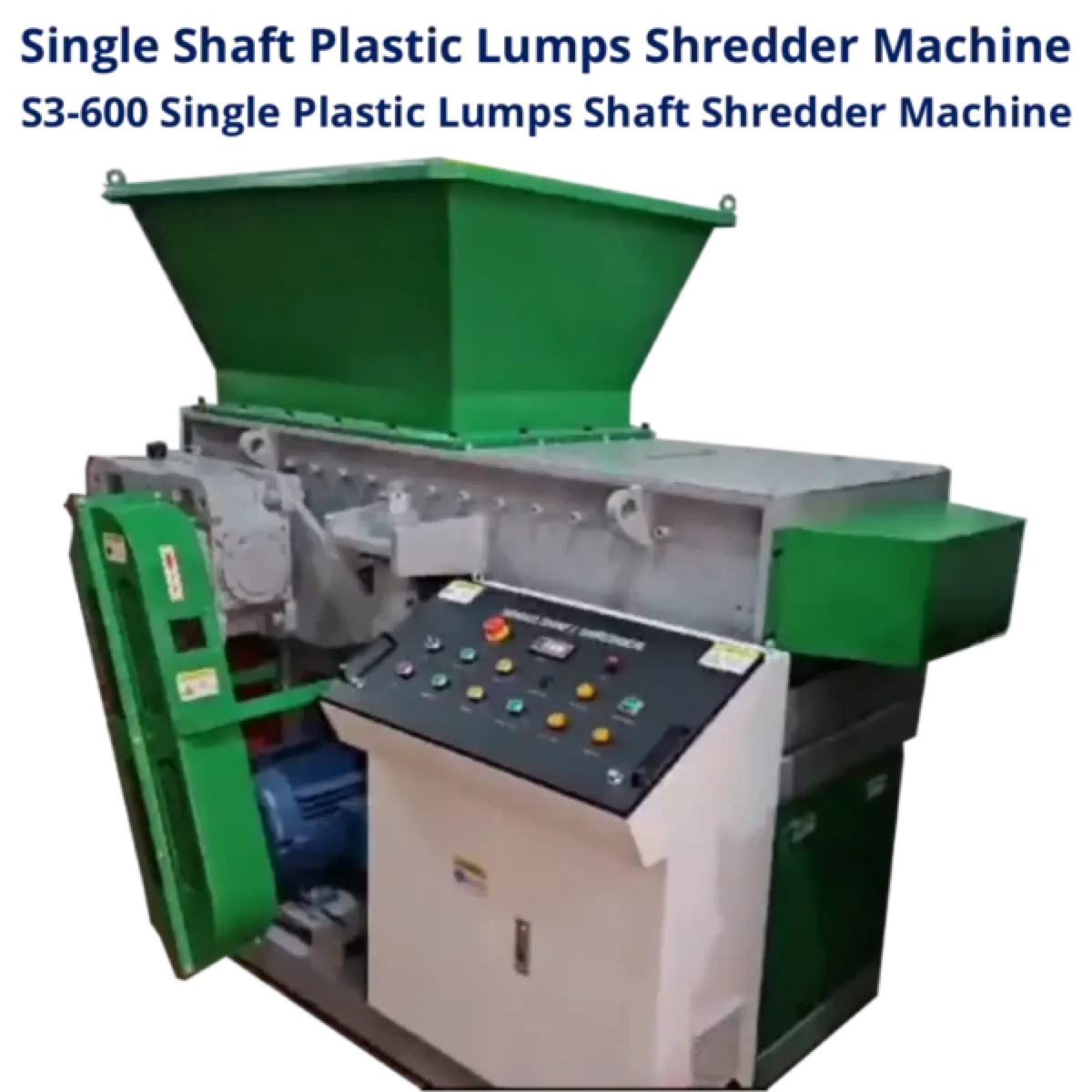
S3-600 Single Shaft Shredder
Single shaft · 24-hour continuous duty · lumps & purgings
- Capacity: 300–500 kg/hr (by material density)
- Drive: 22 kW, 415 V, 50 Hz, 3 phase
- Feed: 600 × 1000 mm side-feeding hopper
- 26 hardened rotary blades + 2 fixed
Best for: purgings, start-up lumps, molded blocks and any scrap too solid for a granulator.
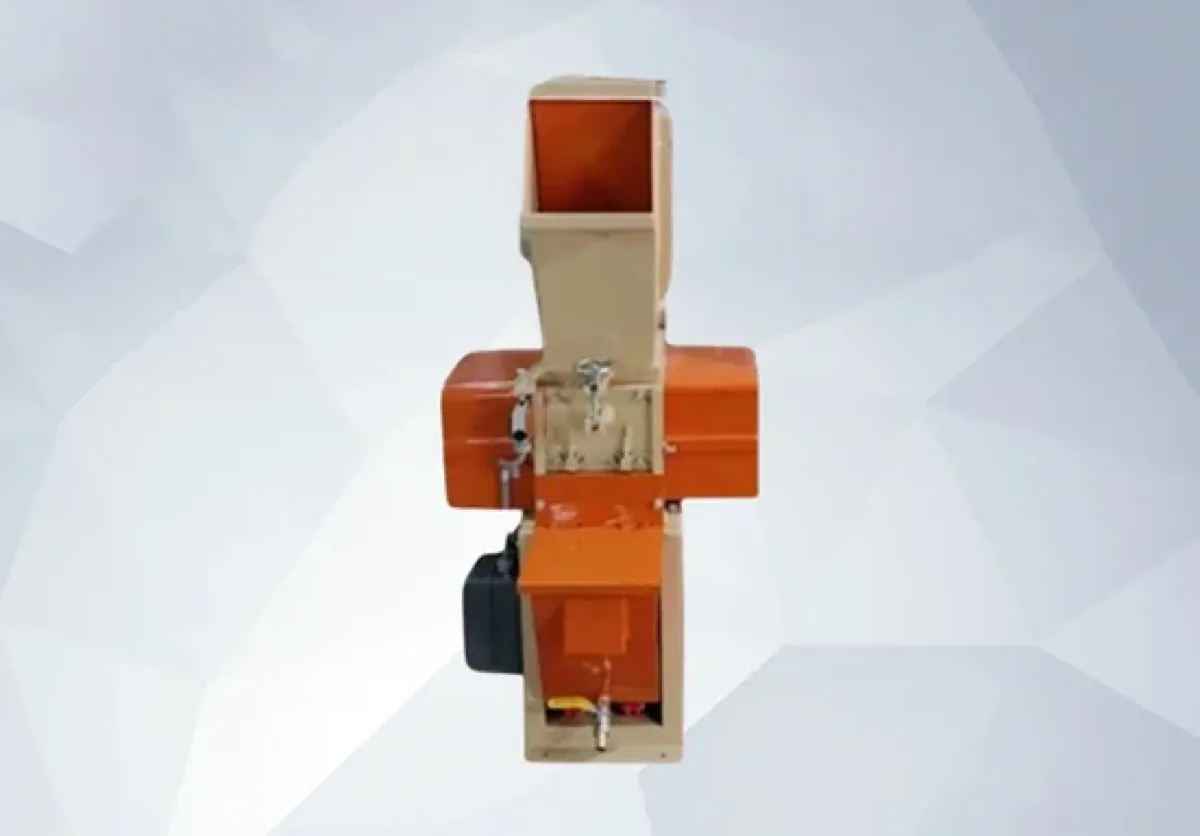
Plastic Grinder — RE Series (Downstream)
Blade-type grinder · uniform regrind output
- Capacity: 35–1,200 kg/hr across 7 models
- Power: 3–30 HP
- Throat sizes: 8″ × 8″ to 30″ × 30″
- Mesh screen sized to your regrind spec
Best for: converting S3-600 shred into dosable regrind for in-house reuse or better-priced resale.
S3-600 Plastic Lumps Shredder — Full Technical Specifications
| Capacity & Drive | |
|---|---|
| Model | S3-600 |
| Capacity | 300–500 kg/hr (depending on material density) |
| Drive motor power | 22 kW, 415 V, 50 Hz, 3 phase |
| Cutting System | |
| Rotor speed | 80 rpm |
| Rotary blades | 26 (welded rotor) |
| Fixed blades | 2 |
| Feeding & Construction | |
| Feeding size | 600 × 1000 mm side-feeding hopper |
| Chamber size | 650 × 600 mm (L × W) |
| Materials shredded | Plastic and plastic lumps; also shreds paper, wood and FRP waste |
Sitting on a stock of purgings and lumps?
Tell our technical team your lump sizes, polymers and monthly volume — we’ll confirm machine fit and quote a complete shred-and-grind setup, free.
Why Choose Raj Electricals
Lump shredding punishes weak machines — ours are all-metal, heavy-fabricated and built in Mumbai since 1985 to run around the clock.





Frequently Asked Questions
What exactly counts as “plastic lumps” — and where do they come from?
Any solid, thick mass of cooled polymer: barrel purgings from injection molding machines, head drainage and start-up dumps from extruders and blow molders, failed thick-section moldings, tryout blocks, and the mixed lumps that reprocessors buy by the tonne. They share two traits — high material value, since most lumps are single-grade polymer with one heat history, and zero processability on a standard granulator. That combination is exactly what a single shaft lumps shredder exists to solve.
Why does a slow 80 rpm rotor work where a fast granulator fails?
Cutting physics. A granulator’s blades pass at high speed and rely on the material being thin enough to shear in one strike — a dense lump instead delivers a shock load that chips the blade edge or stalls the rotor. The S3-600’s rotor turns at 80 rpm with the full torque of a 22 kW drive behind it, so each of the 26 hardened blade tips removes a small bite per pass and the lump is reduced progressively. Slower speed, higher force, no shock loads — which is also why the machine can run 24 hours continuously.
How big a lump can I feed, and how does loading work?
The side-feeding hopper opening is 600 × 1000 mm with a 650 × 600 mm cutting chamber — sized for the purge blocks a typical molding or extrusion plant produces. Side feeding is the practical advantage: heavy lumps slide in from a trolley at working height instead of being hoisted over the top of the machine. Oversized blocks are occasionally sawn once before feeding. If you are unsure about your largest lumps, send photos with dimensions or bring them for a trial at our works.
What does the shredded output look like, and what happens next?
The S3-600 produces coarse, irregular shred — big-size lumps reduced to pieces ready for second-stage processing. For most buyers the next step is an RE-series plastic grinder, which cuts the shred against a mesh screen into uniform regrind sized to your specification. Reground, polymer-sorted material commands far better prices than lumps and can be dosed back into your own production at a controlled ratio. If you only need volume reduction for transport or resale to a reprocessor, the shredder alone does the job.
Can purged material with mixed colours or grades still be reused?
Yes, with realistic expectations. A purging made during a colour change is internally mixed, so its regrind will not match any single colour — such material typically goes into dark-coloured, non-appearance products, inner layers, or is sold as mixed regrind. Purgings of a single known grade are worth much more: keep them segregated from the start and label the bags. Either way the material recovers far more value as regrind than as lump-rate scrap sold from the plant corner.
How much does a plastic lumps shredder cost in India?
Every machine is quoted to the job. What moves the number is capacity, throat size, motor rating, MS or SS construction and the automation you add — a blower, a conveyor, a control panel. Our guide to what drives machine cost walks through each of those; send us your material and daily volume and we will size the machine and quote it, usually the same day.
Can the same machine shred other waste besides plastic lumps?
Yes — the S3-600 platform also shreds paper piles, wood logs and FRP waste, so plants with mixed industrial scrap can run one shredder across streams (one material at a time, with a clean-down between them if the output is to be recycled). For dedicated FRP volumes see our FRP waste shredding page. If your waste is mostly hollow containers rather than solid lumps, a different machine may suit better — ask us before you buy.
Can I see my own lumps shredded before purchasing?
Yes — and for lumps we strongly recommend it, because density and size vary so much between plants. Bring a representative lot of your purgings to our works at Andheri East, Mumbai; we will shred them, show you the throughput on your material and the shred output, and demonstrate second-stage grinding if you want regrind. Outstation buyers can request a video trial. Book a slot — Mon–Sat, 9 AM to 7 PM.
Get a Free Quote for a Plastic Lumps Shredder
Tell us your lump sizes, polymers and monthly volume — our technical team responds with a machine recommendation and firm pricing, usually within one working day. No spam, no obligation.
102/103/104, Madhu Industrial Estate, Old Nagardas Road, Mogra Lane, Andheri East, Mumbai – 400069
Mon–Sat, 9:00 AM – 7:00 PM
Related Solutions
Extrusion Scrap & Purge Shredding
Pipe trims, off-spec product and purge from extrusion lines — the complete two-stage system.
Learn more →
Injection Molding Scrap Grinding
Your purgings come from somewhere — close the loop on sprues, runners and rejects at the press too.
Learn more →
HDPE & LDPE Plastic Grinding
Most purgings are polyethylene — material-side guidance on grinding HDPE and LDPE scrap.
Learn more →