Plastic Crate & Pallet Shredder Machine for Waste Recycling
Broken milk crates, bottle shells, vegetable crates and warehouse pallets are premium PP/HDPE regrind waiting to happen. Shred them with a dual shaft machine, then grind to flake your moulder can reuse. Built in Mumbai since 1985.
The Broken Crate Problem in Dairy, Beverage and Logistics
Every dairy, brewery, soft-drink bottler, fishery and warehouse runs on returnable plastic: milk crates, bottle shells, vegetable and bakery crates, tote bins and pallets. They circulate for years, but every cycle retires a few — cracked corners, broken ribs, UV-brittled walls, snapped pallet decks. At fleet scale that trickle becomes a mountain: yards stacked with broken crates that can no longer carry load but still occupy paid space, attract pilferage and look terrible in an audit.
Selling them off whole is the worst answer. Company-marked crates and shells leak into the grey market, where they carry someone else’s product under your branding — dairies and breweries spend real money recovering exactly these assets. Meanwhile the material itself is valuable: crates are injection-moulded PP or HDPE, among the cleanest single-polymer scrap streams there is, and moulders pay well for uniform regrind from a known source. With EPR under the Plastic Waste Management Rules pushing companies to account for rigid plastic packaging, the sensible route is controlled shredding: destroy the branding, recover the polymer, document the disposal.
The Right Shredding Approach for Crates and Pallets
Crates are rigid, ribbed and awkward — they resist crushing but tear cleanly under torque. That makes a dual shaft shredder the right primary machine: two counter-rotating blade shafts grab the crate wall and rip it into coarse pieces without jamming on the ribs and corners. Our dual shaft shredders are documented for plastic crates alongside drums, cans and jars, run at a throughput set by the model and your material, and are built to run continuously for 24 hours. Bottle shells and most standard crates feed whole; oversized pallets are typically cut into sections first, and any steel reinforcement bars inside reinforced pallets must be removed before shredding — metal in the chamber breaks blades.
If the regrind is going back into moulding — your own crate supplier will often buy it back — add a second stage. An RE-series plastic grinder takes the coarse shred and regrinds it against a mesh screen into uniform flake; the RE25 and RE30 models are rated for any plastic material below 25″ and 30″ respectively, so larger crate pieces can also go straight into the big grinders. For very high single-stream volumes, the S3-600 single shaft shredder offers 300–500 kg/hr with a 600 × 1000 mm side-feeding hopper. All machines are MS-built with SS-grade construction on request, and customized shredders can hold shred size from 1 mm to 30 mm or more via mesh selection.
Crate Shredding Process — From Retired Fleet to Reusable Regrind
- Fleet audit & segregation Retired crates, shells and pallets are counted and segregated by polymer and colour where possible
- Metal & label removal Steel reinforcement bars, strapping, nails and large labels are stripped out before feeding
- Pre-sizing oversized pallets Standard crates feed whole; large pallets are cut into sections sized to the feed opening
- Primary dual shaft shredding The dual shaft shredder rips crates and shells into coarse pieces
- Secondary grinding An RE-series grinder converts shred into uniform flake sized by mesh screen
- Regrind back to moulding Clean single-polymer flake returns to crate moulders or sells to PP/HDPE reprocessors
Recommended Machines for Crate & Pallet Shredding
A documented crate shredder, a high-volume single shaft, and the grinder that closes the loop. Full spec tables live on each machine page.
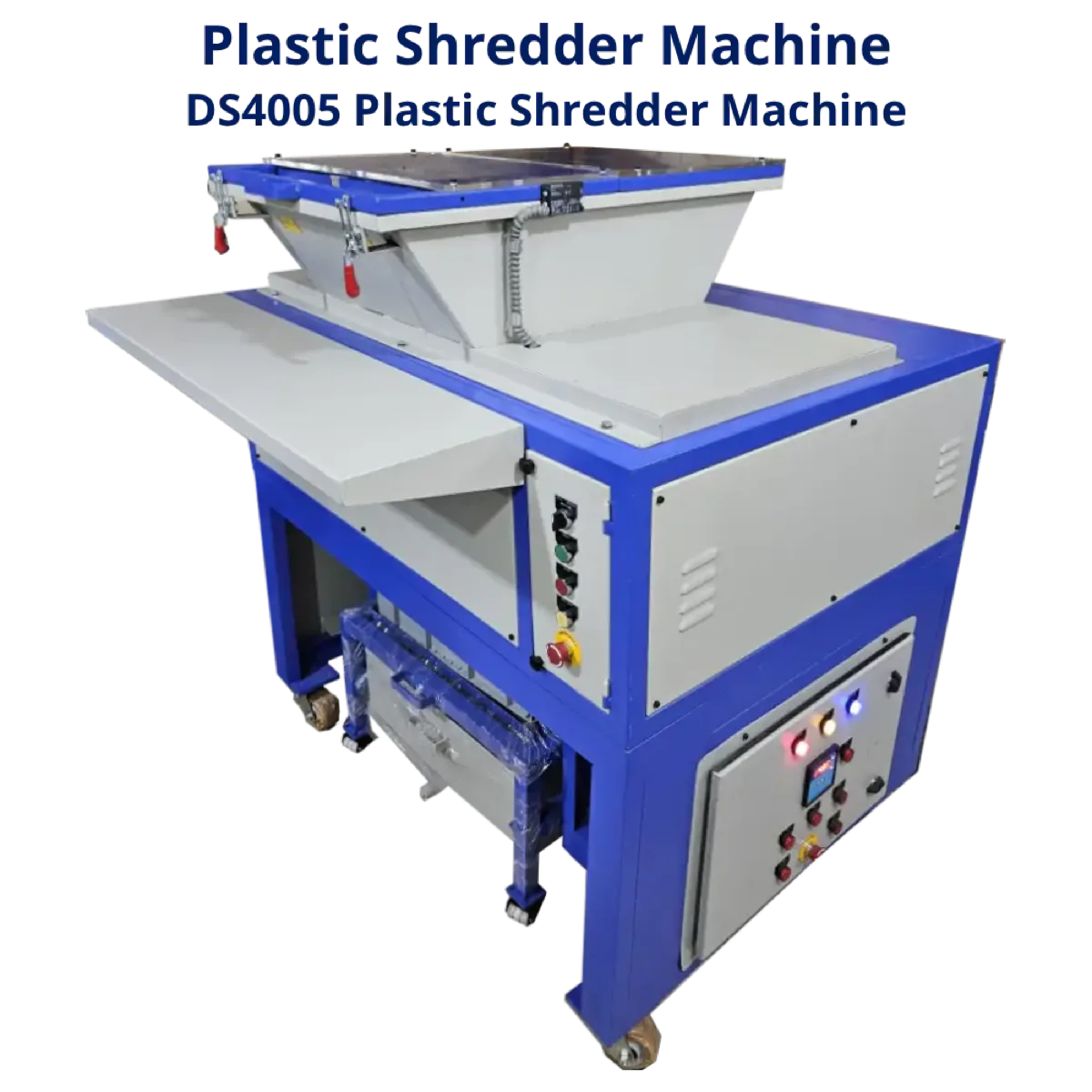
Dual-Shaft Shredder
Dual shaft shredder · 24-hr continuous duty
- Capacity: sized to your stream
- Power: sized to the model
- Documented for crates, drums, jars & cans
- MS build; SS grade on request
Best for: dairies, bottlers and logistics parks destroying branded crates and shells in-house.
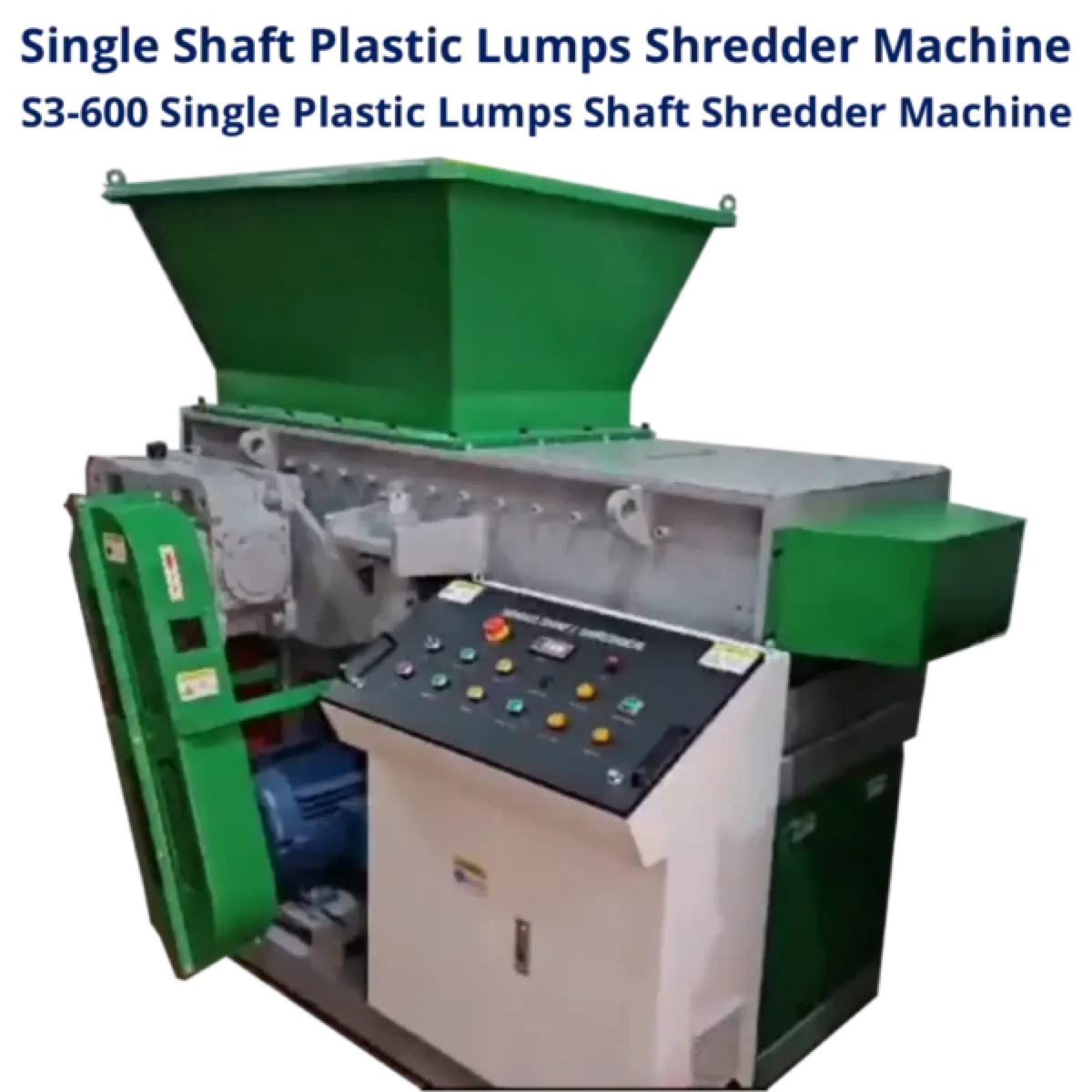
S3-600 Single Shaft Shredder
Single shaft · low-speed 80 rpm rotor
- Capacity: 300–500 kg/hr
- Power: 22 kW, 415 V 3-phase
- 600 × 1000 mm side-feeding hopper
- Heavy-plate chamber, all-metal build
Best for: high-volume recyclers shredding thick pallet sections and bulky rigid plastic.
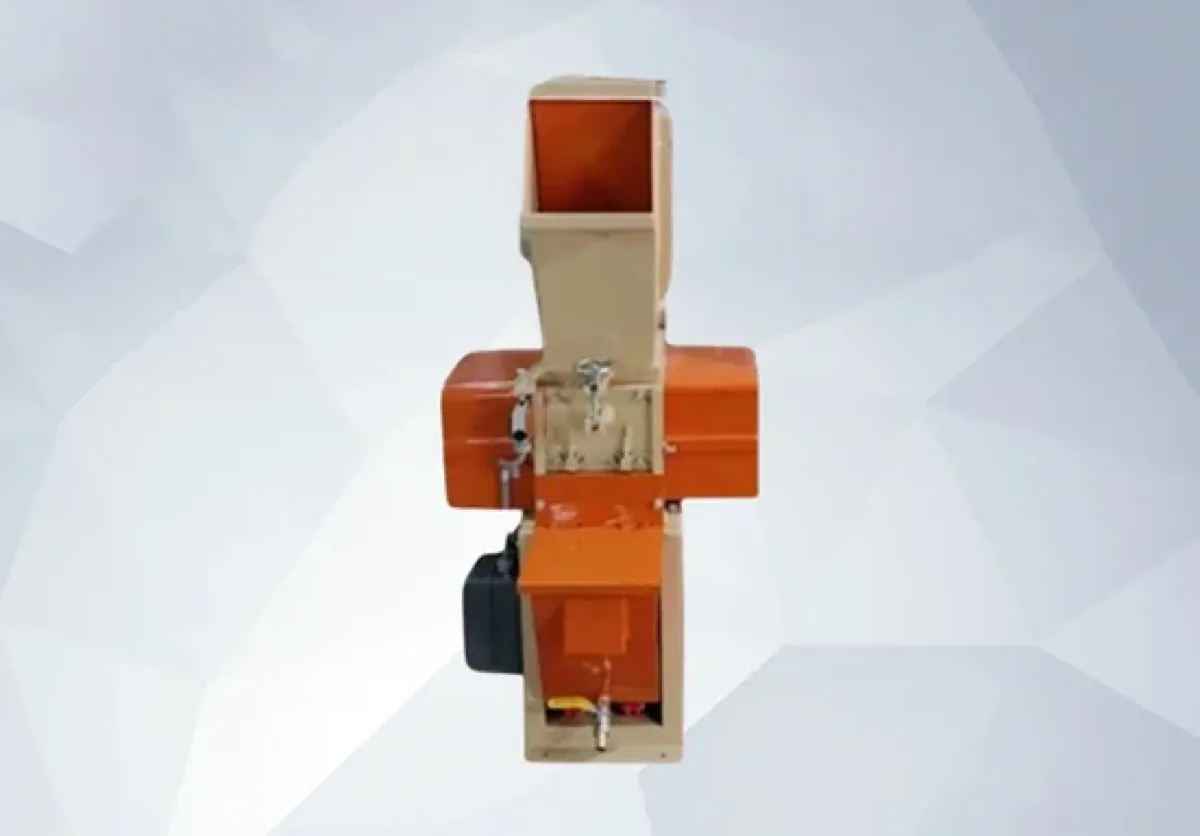
Plastic Grinder — RE Series (RE8–RE40)
Crate grinder duty · six models
- Capacity: 35–1,200 kg/hr across models
- Power: 3–30 HP
- Throat sizes: 8″ × 8″ to 30″ × 30″
- RE25/RE30 take any plastic below 25″/30″
Best for: producing uniform PP/HDPE flake that goes straight back to injection moulders.
Technical Specifications Comparison
| Specification | Dual-Shaft Shredder | S3-600 Single Shaft Shredder | Plastic Grinder RE Series |
|---|---|---|---|
| Machine type | Dual shaft shredder | Single shaft shredder | Blade-type grinder, 7 models |
| Motor power | Sized to the model | 22 kW, 415 V 50 Hz 3-phase | 3–75 HP |
| Capacity | Sized to your stream | 300–500 kg/hr | 35–1,200 kg/hr |
| Feed opening | Manual feeding hopper | 600 × 1000 mm side-feeding hopper | Throat 8″ × 8″ to 30″ × 30″ |
| Output | Coarse, uneven shred | Coarse pieces, ready for grinding | Uniform flake via mesh screen |
| Machine weight | By model | Contact us for detailed specifications | 150–4,700 kg by model |
| Best for | Branded crate & shell destruction | Pallet sections, bulk volumes | Moulder-grade regrind |
| Get Quote → | Get Quote → | Get Quote → |
Not sure which machine fits your crate volumes?
Tell our technical team what you retire each month — crates, shells or pallets — and we’ll recommend the right machine and line setup, free.
Why Choose Raj Electricals
A Mumbai machine builder since 1985 — trusted by the dairy, beverage and FMCG names whose returnable fleets never stop moving.






Frequently Asked Questions
Can shredded plastic crates be turned into new crates?
Largely yes. Crates are injection-moulded from PP or HDPE — single-polymer, well-identified material — so the regrind from a shredded crate is among the most reusable plastic scrap there is. Moulders blend crate regrind with virgin granule when moulding new crates and other industrial products; the exact blend ratio is the moulder’s call based on the application. Because the material’s history is known (your own fleet), it commands better prices than mixed-origin scrap. Many crate suppliers will buy regrind back against new crate orders — ask yours.
We currently sell old crates to a scrap dealer — why change?
Because whole branded crates rarely die in a scrap yard — they get repaired, repainted and re-enter circulation carrying your branding, which is exactly how grey-market crate fleets are built. Dairies and breweries lose real money to this. Shredding before the material leaves your premises guarantees destruction, and ground PP/HDPE typically sells for more per kilogram than whole-crate scrap anyway, because the buyer skips a processing step. You also get a clean paper trail for EPR and asset write-off purposes.
Can plastic pallets with steel reinforcement be shredded?
Only after the steel comes out. Many heavy-duty plastic pallets carry steel reinforcement bars in the deck or runners, and steel entering the cutting chamber will break blades — on any shredder, not just ours. Check your pallet construction first: unreinforced pallets can be cut into sections and shredded normally, while reinforced ones need the bars stripped out during pre-sizing. If you are unsure what is inside your pallets, send us the pallet type with your enquiry or bring one to a trial and we will assess it together.
What size machine does a dairy or bottling plant typically need?
Work from weight, not crate count: weigh one retired crate, multiply by the number you retire per month, and spread that over your planned shredding hours. Most dairies and bottlers find crate retirement is a batch job — a few hundred crates accumulated per quarter — so a mid-range dual shaft machine clears a backlog in days and then handles the trickle easily. Continuous recyclers buying crate scrap from many sources usually step up to the S3-600 at 300–500 kg/hr. Our machine selection guide covers the sizing arithmetic.
What output size will I get, and can I control it?
The dual shaft stage produces a coarse, uneven shred — ideal for volume reduction and destruction, and perfectly saleable as-is to reprocessors who do their own grinding. If you want uniform flake, add an RE-series grinder: flake size is set by the mesh screen and is customisable, and on customized shredder builds the shred size can be defined from 1 mm to 30 mm or more. Decide based on what your buyer pays for — coarse shred moves fast, uniform flake earns more.
What does a plastic crate shredder or crate grinder cost in India?
Every machine is quoted to the job. What moves the number is capacity, throat size, motor rating, MS or SS construction and the automation you add — a blower, a conveyor, a control panel. Our guide to what drives machine cost walks through each of those; send us your material and daily volume and we will size the machine and quote it, usually the same day.
Can you demonstrate the machine on our own crates first?
Yes. Bring a sample of your retired crates, shells or pallet sections to our works in Andheri East, Mumbai, and we will run them through the machine while you watch — you judge the shred, the speed and the handling of your thickest items. Outstation buyers can get a recorded video trial on material they courier to us. Book a trial before you compare quotes; it is the fastest way to separate spec-sheet claims from real performance.
Who installs the machine and what happens when blades wear?
We provide installation and maintenance service on site, and support machines pan-India with spares from Mumbai. Crate duty is abrasive on edges over time — periodic blade sharpening is normal maintenance, and the blade sets are designed to be removed and re-fitted without specialist tools. Keep feeding steady, keep metal out of the chamber, and the machines run for years; our oldest installations have been in service for decades. Ask about spare blade sets with your initial order to avoid downtime later.
Get a Free Quote for Crate & Pallet Shredding Machines
Tell us what you retire — crates, bottle shells or pallets — and roughly how many per month. Our technical team responds with a machine recommendation and firm pricing, usually within one working day.
102/103/104, Madhu Industrial Estate, Old Nagardas Road, Mogra Lane, Andheri East, Mumbai – 400069
Mon–Sat, 9:00 AM – 7:00 PM
Related Solutions
Plastic Drum & Barrel Shredder
The same dual shaft line also destroys HDPE drums, barrels and jerry cans from 20 to 220 litres.
Learn more →
PP Plastic Shredding
Crates are mostly polypropylene — see the full PP waste shredding and grinding solution.
Learn more →
Injection Molding Scrap
Crates are injection moulded — moulders can grind reject crates, sprues and runners inline.
Learn more →