RE16 Plastic Grinder — 16″×16″ Granulator, 10 HP
A 10 HP granulator that processes bottles and jars of all shapes up to 10 litres at 150–250 kg/hr — the step where bottle recycling turns from side work into production.
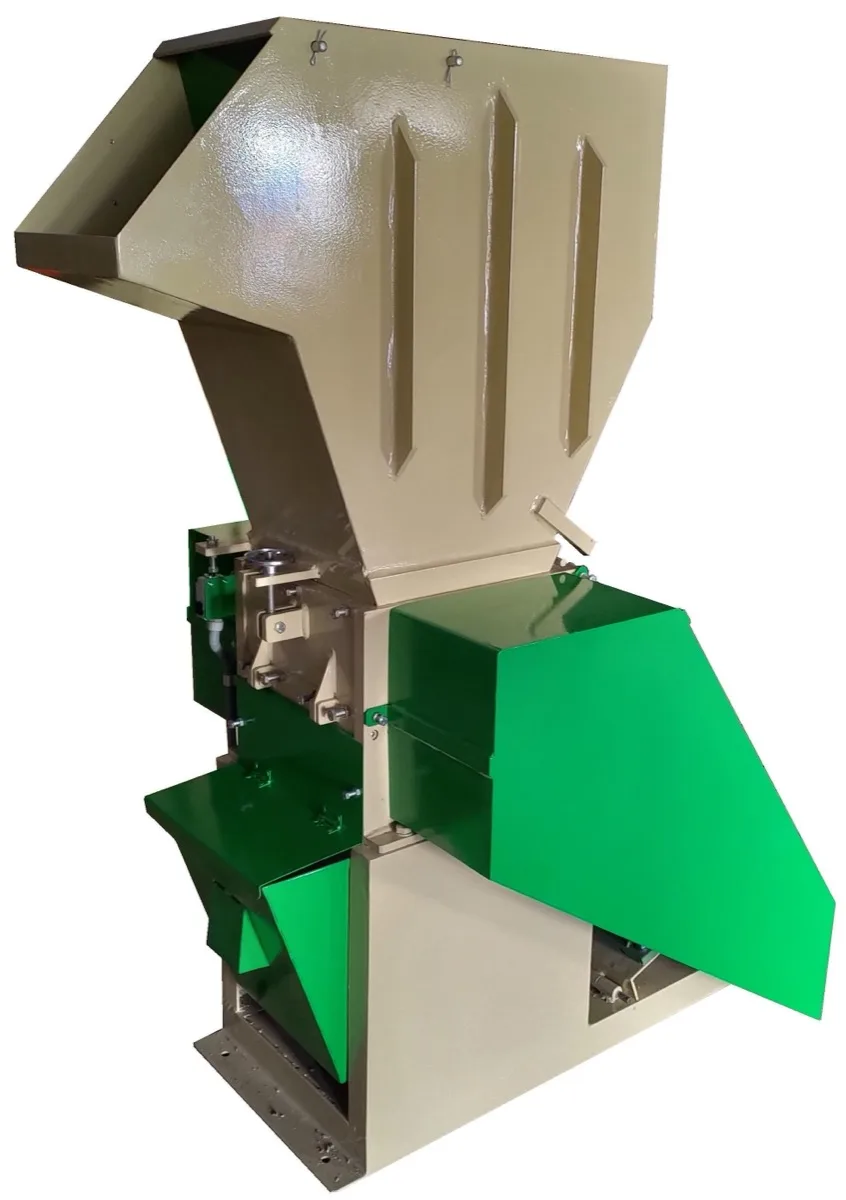
Built for India’s Bottle Stream
The RE16 is built for one of India’s biggest waste streams: bottles. Water bottles, oil bottles, juice jars, handled containers — everything up to 10-litre jars feeds whole through the 16″ × 16″ throat, meets the 3+2 hardened blade set driven by a 10 HP motor, and leaves as screen-sized regrind ready for the next stage of recycling.
At 150–250 kg/hr — roughly 1.2 to 2 tonnes across an 8-hour shift — it is the step between the compact RE12 and the 250–400 kg/hr RE20: the right size for bottle collection centres that have outgrown manual baling, recycling units feeding a washing line, and institutions processing their own bottle waste under EPR obligations.
Like every machine we build, the RE16 is manufactured from high-quality raw material at our Mumbai works — a 950 kg all-metal machine with no plastic parts, designed for daily duty with easy cleaning and lubrication. A cyclone-blower version, the RE16CB, bags the output automatically for continuous-line duty.
RE16 Plastic Grinder — Full Specifications
| Technical specifications | |
|---|---|
| Base model | RE16 |
| Throat size | 16″ × 16″ |
| Motor HP / kW | 10 HP / 7.36 kW |
| Throughput (15 mm screen) | 150–250 kg/hr |
| Output size | As per screen size |
| Screen size | 12–15 mm standard / as per customer requirement |
| Blades (rotating + fixed) | 3 + 2 |
| Can grind | PET bottle/jar up to 10 litres |
| Voltage | 415 V / 50 Hz / 3-phase (3P + N + E) |
| Feeding | Manual feeding |
| Machine weight (approx.) | 950 kg |
Throughput is for a 15 mm screen and varies with feeding speed, material and bulk density; a finer screen lowers output. Keep metal objects out of the cutting area — they will break the blades. All specifications are subject to change for constant product development.
Key Features
What It Grinds — Plastics Applications
The RE16’s plastics duties, each covered in full on its solution page.
PET Bottle Recycling
Used PET bottles shredded by the tonne for flake production and rPET recycling.
Learn more →HDPE & LDPE Bottles
Milk, oil, shampoo and detergent bottles ground on the same blade set.
Learn more →FMCG & Bottling Rejects
Rejected and expired bottled stock destroyed in-house so branded packaging can’t be misused.
Learn more →Platform Siblings in the RE Series
Step down, step up, or switch between base and blower — the same cutting geometry runs across all 14 machines.
RE12 Plastic Grinder
One size down — 5 HP · 60–80 kg/hr · 12″ × 12″ throat.
Learn more →RE20 Plastic Grinder
One size up — 15 HP · 250–400 kg/hr · 20″ × 20″ throat.
Learn more →RE16CB Grinder with Blower
The same machine with cyclone-blower discharge — 10 + 2 HP · 90 kg/hr on light material.
Learn more →Not sure between the RE12, RE16 and RE20?
The right answer depends on your bottle sizes and daily volume. Describe both to our technical team and get a straight recommendation — plus a trial with your own bottles at our Mumbai works.
RE16 Plastic Grinder — Frequently Asked Questions
What is the largest bottle the RE16 can grind?
Bottles and jars up to 10 litres pass through the 16″ × 16″ throat whole — that covers water jars, edible-oil jars and most institutional containers. For 15–20-litre jars, step up to the RE20, which takes jars up to 20 litres at 250–400 kg/hr.
Do bottles need washing or label removal before grinding?
No — bottles grind as collected, with labels, caps and residue. Unwashed regrind sells at a lower rate; if you run a washing line, the standard sequence is grind first, then wash the flakes — labels and PP caps separate in the float tank because PET sinks and PP floats. Rinsing out heavy residue before feeding keeps the machine and your shed cleaner.
What happens to caps and neck rings?
They grind along with the bottle — the blades make no distinction. The result is mixed PET and PP/HDPE regrind, normal and accepted at the unwashed grade. Buyers producing food-grade rPET separate polymers downstream by float-sink; de-capping first is a sorting decision, not a machine limitation.
Is a blower-discharge version available?
Yes — the RE16CB adds a 2 HP cyclone blower that conveys output pneumatically to bagging instead of dropping it below the machine. Choose it when the machine feeds a continuous line rather than a bagging station.
What can I do with the ground output?
Three routes: sell it — shredded, sorted bottle plastic trades at a clear premium over loose bottles; wash and pelletise it yourself for a bigger margin; or, if you are a bottler destroying rejects, dispose of a fraction of the original volume. Most RE16 buyers start by selling regrind and add washing equipment once volumes justify it.
What is the price of the RE16?
A 10 HP machine like the RE16 sits in the lower-middle band of our range — see the plastic shredder machine price guide for capacity-wise figures, then send us your requirement for an exact quote.
Can I see my own bottles ground before buying?
Yes — bring your actual material to our works in Andheri East, Mumbai, and watch it processed on this machine before you decide. A trial settles throughput and output-size questions better than any brochure.
Get a Free Quote for the RE16 Plastic Grinder
Tell us your bottle sizes, weekly volume and whether you need the blower version. Our technical team replies within one working day with a recommendation and a firm price.
Call: +91 98700 12462
WhatsApp: Chat with our team
Email: rajelectricalsmumbai@gmail.com
Address: 102/103/104, Madhu Industrial Estate, Old Nagardas Road, Mogra Lane, Andheri East, Mumbai – 400069
Hours: Mon–Sat, 9:00 AM – 7:00 PM