Plastic Film Shredder for LDPE & BOPP Film Recycling
Film is the material that wraps itself around ordinary shredders. Our dual shaft shredder grips and tears LDPE stretch wrap, BOPP film and baled packaging film — without the winding, jamming and downtime. Built in Mumbai since 1985.
The Plastic Film Waste Challenge
Film is everywhere goods move: LDPE stretch wrap and shrink film from warehouses and pallet lines, packing film offcuts from converters, BOPP label and tape film, printing and lamination roll waste, and poly bags by the tonne. It is light, it is voluminous, and loose film is nearly impossible to handle economically — which is why it moves in compressed bales. With carry-bag thickness rules and EPR obligations tightening around flexible packaging, generators and recyclers alike are under pressure to process film rather than dump it.
The machine problem is wrapping. Feed film into a high-speed rotor and it does not cut — it winds. Layer after layer wraps around the shaft, packs tight behind the blades, heats up, and eventually stalls the machine; the operator then spends an hour cutting cooked film off the rotor with a knife. Grinders built for bottles and rigid parts meet their match here, because film never presents a solid face for the blade to bite. Film needs a machine that grips and tears rather than slices at speed.
Why a Dual Shaft Shredder Handles Film Better
A dual shaft shredder is built around two parallel, counter-rotating shafts with interlocked blades. The shafts turn slowly with high torque, and the hooked blade edges grab whatever sits between them and pull it through, tearing it apart in the gap. For film this geometry is decisive: instead of spinning free and winding around a single fast rotor, the film is gripped from both sides and ripped through the cutting zone. Low speed also means low heat — no melted film welding itself to the shaft.
Our recommended machine is a dual shaft shredder on 415 V three-phase power, with the drive and feed opening sized to your daily volume and manual feeding into the hopper. Baled film is handled by slicing the bale into slabs and feeding them steadily — the shafts pull the material down without the operator forcing it. The output is an uneven shred (that is the nature of dual-shaft tearing), which is exactly what film recyclers need as feedstock for the next stage: agglomeration or densification, then pelletizing. The machine body is MS with SS-grade construction available, it is built to run continuously for 24 hours, and the old Raj Electricals works has documented demonstrations of polyester film and laminated pouch shredding on its dual shaft machines. Customized models with conveyor feeding and other arrangements are built to order.
Plastic Film Shredding Process — From Bale to Pellet-Ready Shred
- Collection & baling Loose film is baled at source — the only economical way film travels
- De-baling & sorting Bales are opened into slabs; metal clips, roll cores and rigid contaminants are removed
- Steady feeding Film slabs are fed into the hopper; the counter-rotating shafts pull material down on their own
- Dual-shaft shredding Interlocked blades grip and tear film at low speed — no wrapping, no heat build-up
- Bagging or baling shred Torn film shred is compacted into bags or mini-bales for storage and transport
- Agglomeration & pelletizing Downstream, shred is densified in an agglomerator and extruded into granules for film and molding plants
Recommended Machines for Plastic Film Shredding
The proven dual shaft model — and built-to-order configurations when your film stream needs more. Full spec tables live on each machine page.
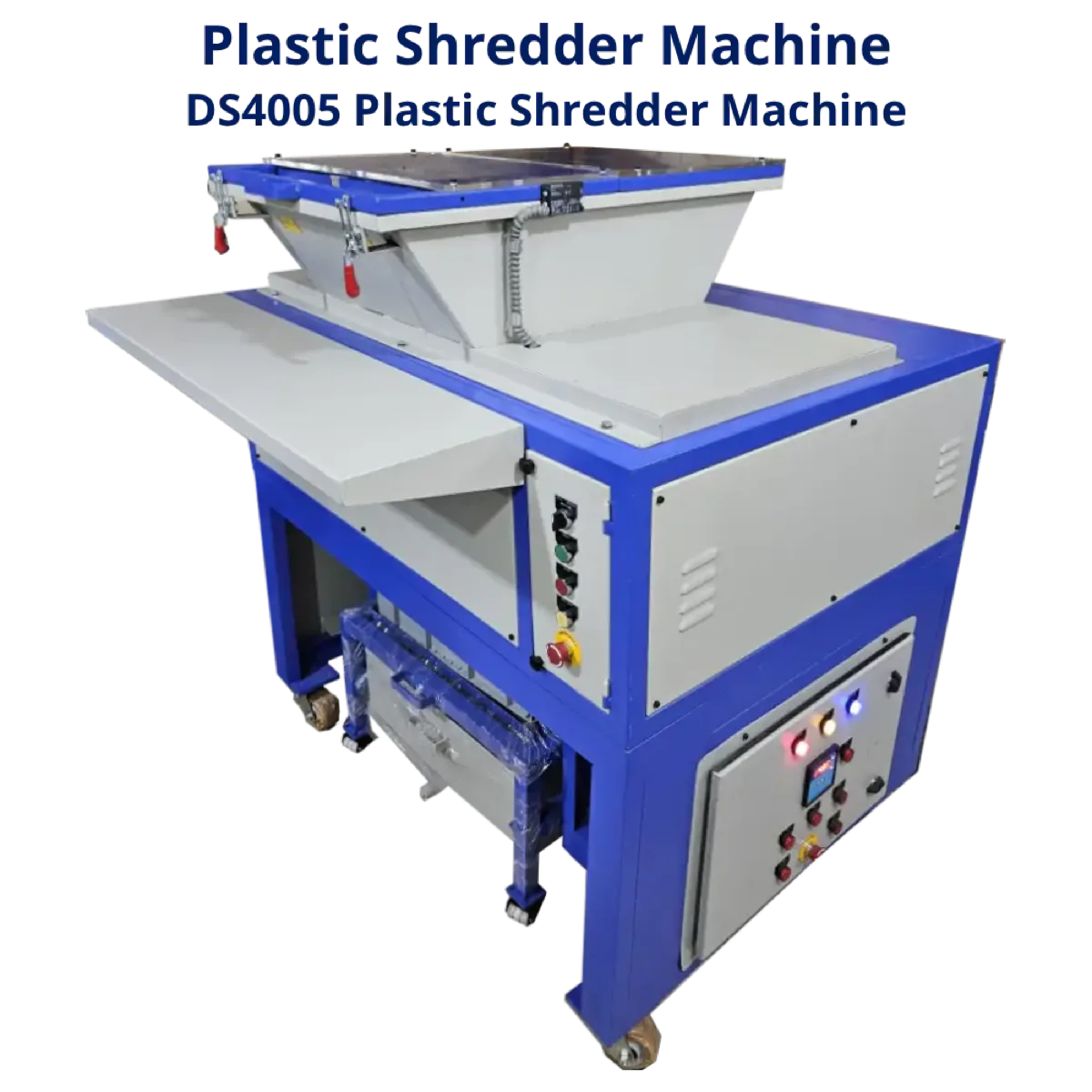
Dual Shaft Shredder
Counter-rotating shafts · 24-hour continuous duty
- Capacity: sized to your stream
- Motor: sized to the model, 415 V, 3 phase
- MS build; SS-grade construction available
Best for: LDPE stretch wrap, BOPP film, poly bags and baled packaging film at converter or recycler scale.
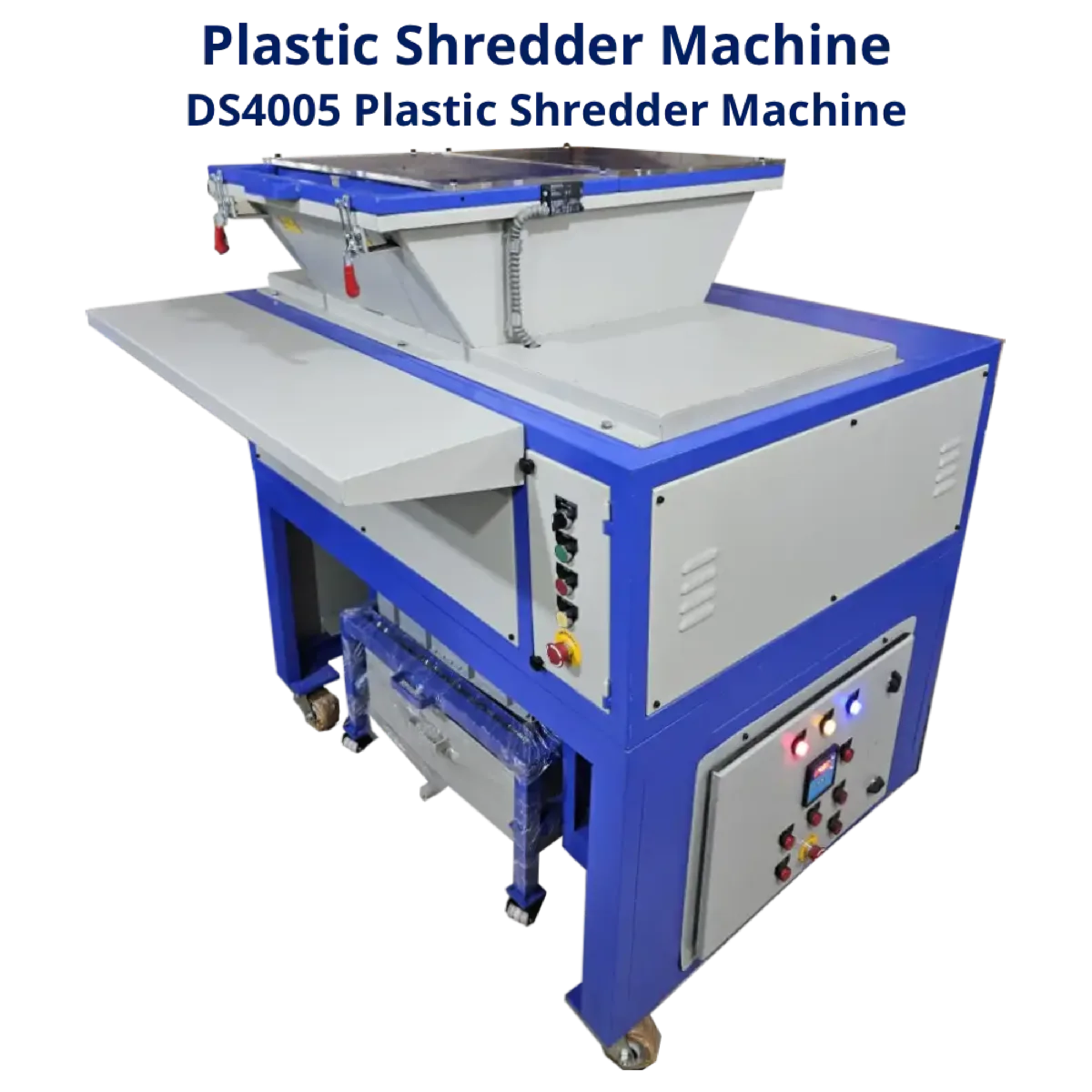
Customised Dual Shaft Models
Built to order · conveyor feeding available
- Customized machines built to client requirements
- Input conveyor configurations for continuous feeding
- Export orders: motor voltage/frequency to your country’s spec
- Capacity & hopper size: contact us for detailed specifications
Best for: high-volume film recyclers and converters who need feeding, capacity or output handling beyond the standard model.
Dual Shaft Shredder vs High-Speed Grinder for Film
| Consideration | Dual-Shaft Shredder | High-speed blade grinder |
|---|---|---|
| Cutting action | Two counter-rotating shafts with interlocked blades — grips and tears at low speed | High-speed rotor cuts material against a screen |
| Motor power | Sized to the model | 3–75 HP by model |
| Capacity | Sized to your stream | 35–1,200 kg/hr on rigid plastics |
| Behaviour with film | Film is gripped from both sides and torn through — no wrapping | Film tends to wind around the rotor, pack and stall the machine |
| Output | Uneven shred — correct feedstock for agglomeration | Screen-sized regrind (rigid materials) |
| Verdict for LDPE/BOPP film | Recommended — built for film, bags and flexible packaging | Not recommended for film; keep it for your bottles and rigid scrap |
| Get Quote → | See rigid plastic grinding → |
Tired of cutting film off a jammed rotor?
Tell our technical team what film you handle — LDPE, BOPP, laminates — and your weekly volume. We’ll recommend the right dual shaft setup, free.
Why Choose Raj Electricals
A Mumbai machine builder since 1985 — the workshop behind shredders running in India’s printing, packaging and FMCG plants.






Frequently Asked Questions
Can LDPE and BOPP film actually be recycled?
Yes — both are widely recycled in India. LDPE film shred is agglomerated and pelletized into granules used for new film, pipes and molded products; BOPP recovers similarly within the polypropylene stream. The economics depend on densification: loose film is air, so it must be shredded and agglomerated before any extruder will take it. With EPR placing recycled-content obligations on flexible packaging, organised demand for recovered film material is growing — the recyclers who profit are the ones who can process film without their machines choking on it.
Why does film jam ordinary shredders and grinders?
Film has no rigidity, so it never presents a solid face for a blade to bite. In a high-speed machine it slips around the rotor and winds — layer over layer, packing tighter behind the blades, building friction heat until the film half-melts onto the shaft and the motor stalls. Clearing it means knife work and lost hours. A dual shaft shredder avoids the failure mode entirely: two counter-rotating shafts grip the film from both sides and tear it through the gap at low rpm, so there is nothing to wind around and minimal heat.
Can I feed baled film directly into the shredder?
Feeding is manual: the practical method is to open the bale, slice it into slabs and feed them steadily into the hopper — the shafts pull material down on their own, so the operator paces the feed rather than forcing it. Whether your specific bale slabs feed comfortably depends on bale density and size, which is exactly the kind of thing a trial settles in ten minutes. Bring a bale to our Mumbai works, or ask us about customized models with input conveyors for continuous bale feeding.
What does the output look like — can it go straight to a pelletizer?
Dual-shaft output is an uneven torn shred — that is inherent to grip-and-tear cutting, and it is the correct feedstock for the next stage. Film shred is too fluffy to feed an extruder directly, so film recyclers run it through an agglomerator (densifier) first, which compacts it into semi-dense crumb; that crumb then extrudes into granules. If your buyer is an agglomerator operator or a film recycler, shredded film is exactly what they want delivered — denser to transport and ready for their line.
Can the same machine shred metallised BOPP and laminated pouches?
Dual shaft machines from Raj Electricals have demonstrated shredding of polyester films and laminated pouches, and metallised film is mechanically similar to plain film at the shredder. Two cautions: multilayer laminates are harder to sell as recyclate because of mixed polymers, and any film with heavy print or foil content should be trialled first so you can judge output and confirm your buyer accepts it. For predominantly laminate streams, see our dedicated laminates and lamitube shredding solution.
What is the power cost of running a film shredder?
Dual shaft drives are modest for industrial shredders — one reason these machines suit continuous film duty. Actual units consumed depend on load and feed pattern; we give you the motor rating for your selected model so you can estimate against your electricity tariff. The machine is built to run 24 hours continuously, so a single-shift or double-shift operation is well within its duty envelope.
How much does a plastic film shredder machine cost in India?
Every machine is quoted to the job. What moves the number is capacity, throat size, motor rating, MS or SS construction and the automation you add — a blower, a conveyor, a control panel. Our guide to what drives machine cost walks through each of those; send us your material and daily volume and we will size the machine and quote it, usually the same day.
Can I see the machine shred my own film before buying?
Yes — and with film we actively encourage it, because gauge, bale density and contamination change machine behaviour more than any spec sheet shows. Bring a sample bale of your LDPE, BOPP or mixed film to our works at Andheri East, Mumbai, for a live trial; outstation buyers can request a video trial on their material. Export orders are supplied with motors matched to your country’s voltage and frequency. Contact us to book a slot.
Get a Free Quote for Plastic Film Shredding Machines
Tell us your film types (LDPE, BOPP, laminates), whether it arrives baled, and your weekly volume — our technical team responds with a recommendation and firm pricing, usually within one working day. No spam, no obligation.
102/103/104, Madhu Industrial Estate, Old Nagardas Road, Mogra Lane, Andheri East, Mumbai – 400069
Mon–Sat, 9:00 AM – 7:00 PM
Related Solutions
HDPE & LDPE Grinding
Bottles, containers and pipes from the same polyethylene family — ground to size on blower-fitted grinders.
Learn more →
PP Plastic Shredding
BOPP is polypropylene — see the full PP solution for crates, caps, woven sacks and furniture too.
Learn more →
Plastic Carry Bag Shredding
Poly bags and carry bags — the same wrapping problem, solved with the same dual shaft approach.
Learn more →