E Waste Shredder Machine for Electronic Plastic Recycling
TV cabinets, monitor shells, appliance bodies and printer housings — shred the plastic side of e-waste into recyclable regrind, with machines from a Mumbai builder whose legacy line includes e-waste, PCB and hard drive shredders.
The E-Waste Plastic Challenge
India is among the world’s largest generators of electronic waste, and a large share of it by weight is plastic: TV and monitor cabinets, washing-machine and refrigerator panels, printer and set-top-box housings, keyboards, mixers and the casing of practically every appliance that reaches a dismantler. The metals and circuit boards get the attention because they carry the precious-metal value — but the plastic fraction has to move too, and a registered recycler who cannot process housings efficiently ends up storing mountains of awkward, bulky shells.
The regulatory frame has tightened. The E-Waste (Management) Rules route electronics through registered dismantlers and recyclers, with EPR obligations on producers and documentation down the chain — so formal-sector recyclers are receiving growing volumes and must demonstrate genuine processing, not just aggregation. The plastic itself is workable: housings are mostly ABS, HIPS and PC blends that compounders buy as sorted regrind. The obstacles are bulk (a TV shell is mostly air), embedded metal — screws, inserts, shielding — and the sorting needed to keep polymer streams and flame-retardant grades separate so the output stays saleable.
The Right Shredding Approach for E-Waste Plastics
E-waste shredding is familiar ground for Raj Electricals — we build e-waste shredders, board shredders, and shredders for memory cards, SIM cards and hard drives supplied to recyclers, banks and institutions. For the plastic housing stream, the working sequence is dismantle first, shred second: boards, wiring, motors and transformers come out at the dismantling table (they go to separate recovery streams), and the stripped plastic shells go to the shredder.
A dual shaft shredder is the primary machine: housings and casings torn into compact shred, with the model sized to your daily volume. Large, rigid cabinets and appliance bodies can instead run through the S3-600 single shaft shredder, which takes dense, bulky material at 300–500 kg/hr through its 600 × 1000 mm side hopper — confirm your specific housing mix at a trial. Where compounders want uniform granules rather than shred, an RE-series plastic grinder provides the second stage — with the firm rule that grinder feed must be metal-free, because stray screws break grinder blades. Sort ABS from HIPS, keep visibly flame-retardant grades separate, and the regrind earns compounder prices instead of mixed-plastic rates.
E-Waste Plastic Shredding Process — From Housing to Regrind
- Collection & channelization E-waste reaches the registered dismantler/recycler with the documentation the E-Waste Rules require
- Manual dismantling Boards, wiring, motors, CRTs and batteries are separated into their own recovery streams
- Metal stripping & sorting Screws, inserts and shielding are removed; housings are sorted by polymer and flame-retardant grade
- Primary shredding Stripped housings are shredded — dual shaft for mixed casings, single shaft for bulky cabinets
- Secondary grinding Metal-free shred is ground through a screened mesh into uniform granules where buyers require it
- Regrind dispatch Polymer-sorted ABS/HIPS regrind goes to compounders for new molded products
Recommended Machines for E-Waste Plastic Shredding
A dual shaft for housings, a single shaft for bulky cabinets, and a grinder for compounder-grade granules.
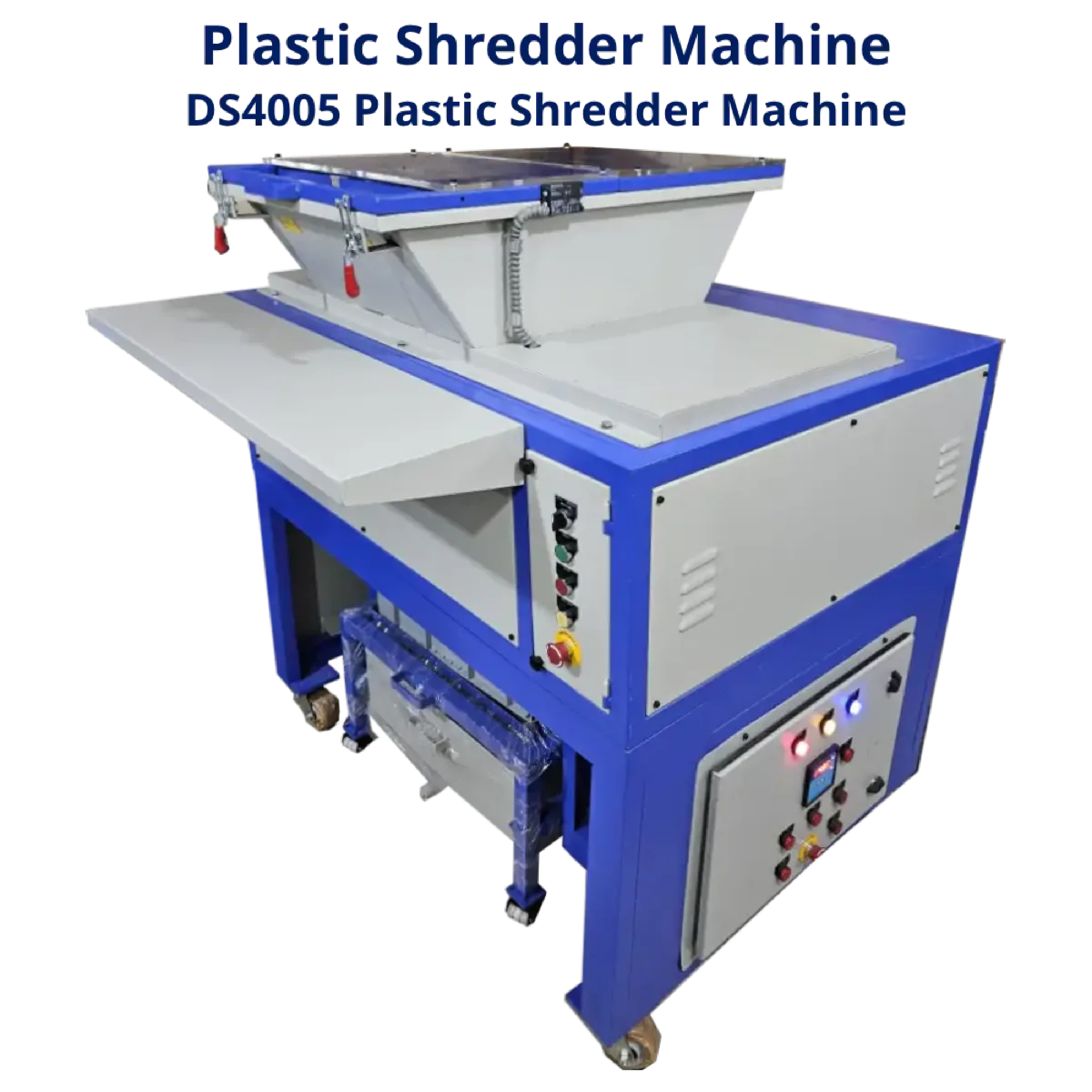
Dual-Shaft Shredder
Dual shaft shredder · housing workhorse
- Capacity: sized to your stream
- Power: sized to the model
- MS build; SS-grade option available
Best for: stripped housings and casings at registered e-waste recycling units.
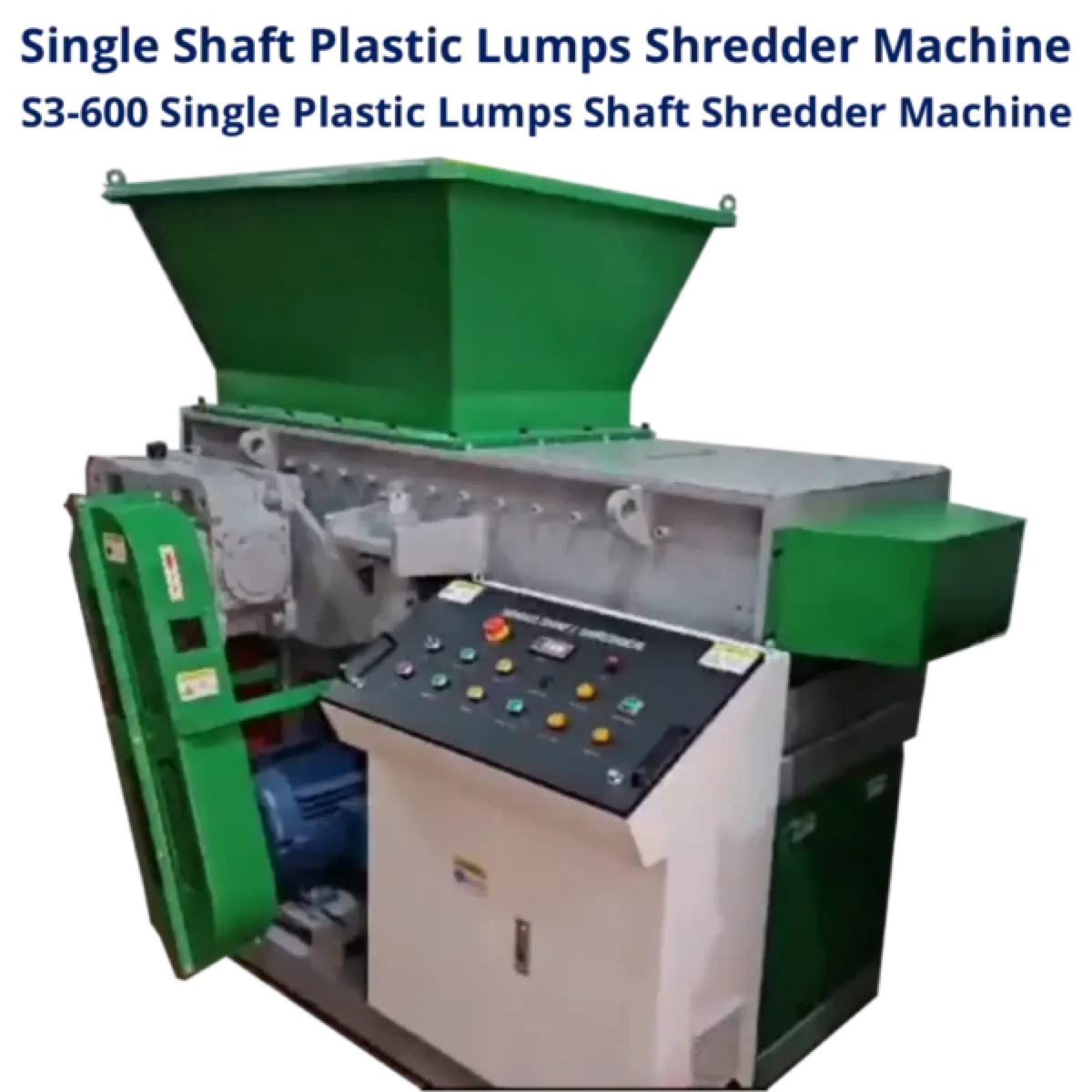
Single Shaft Shredder — S3-600
Single shaft shredder · 24-hr continuous duty
- Capacity: 300–500 kg/hr (material-density dependent)
- Drive: 22 kW, 415 V, 3 phase
- Feeding: 600 × 1000 mm side hopper
- 26 rotary + 2 fixed hardened blades
Best for: bulky TV cabinets, monitor shells and appliance bodies — confirm your housing mix at a trial.
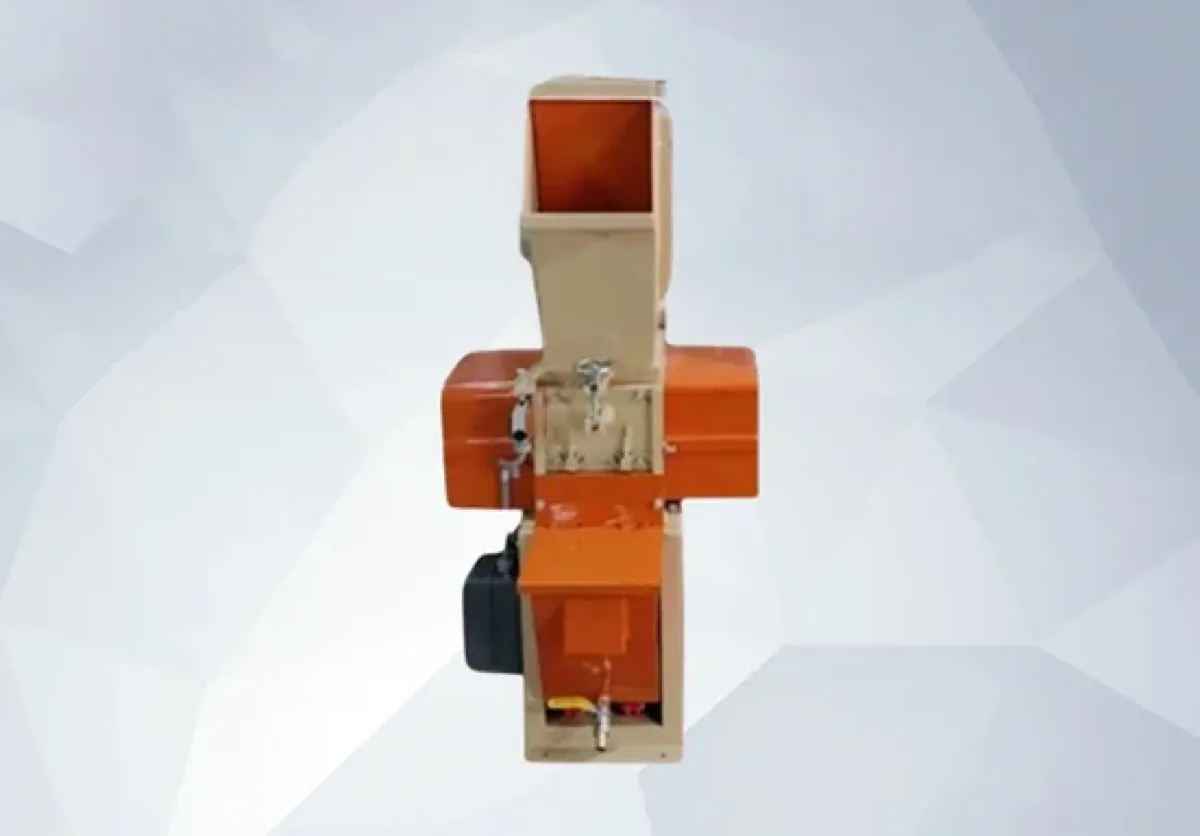
Plastic Grinder — RE Series (RE8–RE40)
Blade-type grinder · metal-free feed only
- Capacity: 35–1,200 kg/hr across seven models
- Power: 3–30 HP
- Throat sizes: 8″ × 8″ to 30″ × 30″
- 5 blades per set; overload-protection starter
Best for: grinding metal-free shredded housings into uniform granules compounders buy.
Technical Specifications Comparison
| Specification | Dual-Shaft Shredder | S3-600 Single Shaft Shredder | Plastic Grinder RE Series |
|---|---|---|---|
| Machine type | Dual shaft shredder | Single shaft shredder | Blade-type grinder, 7 models |
| Motor power | Sized to the model | 22 kW, 415 V, 3 phase | 3–75 HP |
| Capacity | Sized to your stream | 300–500 kg/hr | 35–1,200 kg/hr |
| Feed / throat | Manual feeding, top hopper | 600 × 1000 mm side hopper | 8″ × 8″ to 30″ × 30″ throat |
| Handles | Stripped housings, casings, keyboards | Bulky cabinets and appliance bodies | Metal-free shred and rigid scrap |
| Output | Uneven shred size | Shredded pieces for grinding | Uniform regrind via mesh |
| Best for | Day-to-day housing streams | High-volume bulky shells | Compounder-grade granules |
| Get Quote → | Get Quote → | Get Quote → |
Not sure which machine fits your e-waste line?
Tell our technical team what you dismantle, your monthly plastic tonnage and what your regrind buyer wants — we’ll recommend the right setup, free.
Why Choose Raj Electricals
A Mumbai machine builder since 1985 — our dual shaft range covers e-waste shredding, board shredding and card and hard drive destruction supplied to banks and institutions.






Frequently Asked Questions
What do the E-Waste Management Rules mean for a recycler’s machinery?
The Rules channel e-waste to registered dismantlers and recyclers and require demonstrable processing capacity — authorities assess what equipment you actually run when granting and renewing registration. In practice that means a recycler handling appliance and electronics plastic needs genuine size-reduction machinery on the floor, not just a collection yard. A shredding line also strengthens your EPR-credit documentation, since processed output is far easier to account for than stored whole units. For the specifics of your state board’s expectations, confirm with your consultant — we supply the machinery side.
Which plastics come out of e-waste, and what are they worth?
Mostly ABS and HIPS — TV and monitor cabinets, printer bodies, appliance panels — with PC and PC/ABS blends in chargers and premium housings, and PP in some white-goods parts. Sorted, metal-free ABS regrind is one of the better-priced recycled plastics in India because compounders reuse it directly in new molded products. Mixed, unsorted shred sells at a steep discount, which is why the sorting table earns its keep. Housings with flame-retardant additives should be kept as a separate lot — buyers treat them as a distinct grade.
Do screws and metal inserts have to come out before shredding?
Before grinding, absolutely; before shredding, as far as practical. The dual shaft shredder tolerates the odd small screw far better than a blade grinder does — but every piece of metal that enters the line dulls or breaks cutting edges and ends up in your regrind, where buyers penalise it heavily. The economical practice: strip visible metal at dismantling, shred, then pass the shred under a magnet before the grinder stage. Never feed metal into an RE-series grinder — broken blades are the guaranteed result.
Can the same line shred circuit boards and hard drives too?
Not the same machine — the same manufacturer. Boards and storage media are dense, abrasive, metal-bearing streams that need their own configurations: Raj Electricals configures dual shaft builds for exactly these streams — boards and storage media alike. Plastic housings run on the plastic-configured machines this page covers. If your unit processes boards, drives and housings, tell us the volumes of each — see our hard drive shredder solution for the data-destruction side.
What capacity does a registered e-waste recycling unit need?
Match the machine to your dismantling output, not your collection licence. A dismantling line stripping appliances and electronics all day typically yields a few hundred kilograms to a couple of tonnes of plastic housings per shift. A dual shaft shredder covers that range once sized to your shift tonnage; high-volume units running bulky cabinets move to the S3-600 at 300–500 kg/hr. Plan headroom for collection-drive surges, when months of stored e-waste arrive in a week. Send us your tonnage and we will size it precisely.
How much does an e waste shredder machine cost in India?
Every machine is quoted to the job. What moves the number is capacity, throat size, motor rating, MS or SS construction and the automation you add — a blower, a conveyor, a control panel. Our guide to what drives machine cost walks through each of those; send us your material and daily volume and we will size the machine and quote it, usually the same day.
Can we trial the machine on our dismantled housings before buying?
Yes. E-waste housing mixes vary by what you dismantle — a TV-heavy stream behaves differently from a printer-and-keyboard stream — so we run your actual stripped housings at our Andheri East, Mumbai works before recommending a configuration. You see feeding, throughput and output size on your own material, and OEM or PRO partners requiring documentation can have the trial recorded. Contact us to book a trial slot.
Get a Free Quote for an E-Waste Plastic Shredder
Tell us what you dismantle, your monthly plastic tonnage and the output your buyer wants — our technical team responds with a machine recommendation and firm pricing, usually within one working day. No spam, no obligation.
102/103/104, Madhu Industrial Estate, Old Nagardas Road, Mogra Lane, Andheri East, Mumbai – 400069
Mon–Sat, 9:00 AM – 7:00 PM
Related Solutions
Hard Drive & Data Destruction Shredder
The secure-destruction side of e-waste — shred HDDs, SSDs, tapes and pendrives completely.
Learn more →
Automobile Plastic Shredder
Bumpers, dashboards and trims — the other big dismantler stream of tough ABS and PP parts.
Learn more →
ABS Plastic Shredding
The polymer behind most housings — ABS shredding, grinding and regrind quality in depth.
Learn more →