Rotomolding Scrap Shredder — Reject Water Tanks & Large LLDPE Parts
One reject water tank can hold 20–100 kg of good LLDPE and a small godown’s worth of floor space. A rotomolding scrap shredder — dual shaft or single shaft — turns pre-cut tank sections into dense shred at 200–500 kg/hr, ready for grinding and reuse.
The Rotomolding Scrap Challenge
Rotomolding makes the biggest plastic parts in Indian industry — water storage tanks from 500 to 5,000 litres, septic tanks, road barriers, planters, insulated boxes — and when one fails inspection, the plant inherits a problem the size of the product. A tank rejected for pinholes, warpage, poor wall distribution or impact failure is a hollow LLDPE shell weighing anywhere from 20 to over 100 kilograms and occupying cubic metres of yard space. A season’s rejects, plus kiss-off trimmings, vent spigots and fit-out cutouts, becomes a hill of material no granulator can accept.
The material itself is valuable. Rotomolding grades of LLDPE are premium polymer, bought as powder at prices above ordinary granule once pulverising cost is counted — and a reject tank has been through only one gentle, low-shear heat cycle. Scrap dealers know this and still pay a fraction of resin value, because uncut tanks are brutal to transport: a truck filled with hollow tanks carries mostly air. The plant that shreds its own rejects keeps the margin instead — as dense, saleable shred or as regrind routed back into its own material stream.
Pre-Cut, Shred, Grind — Handling Oversize Hollow Parts
No shredder on the market swallows a 1,000-litre tank whole, so the workflow starts with a saw or cutter: reject tanks are cut into panels sized to the shredder’s feed opening — minutes of work per tank. From there, two machine routes. A dual shaft shredder feeds panels through twin counter-rotating shafts whose interlocked blades grip and rip the rubbery LLDPE — the dual shaft action is well suited to flexible wall sections that resist a single cutting edge. For higher volumes or thicker sections, the S3-600 single shaft shredder takes panels through its 600 × 1000 mm side-feed hopper and shreds 300–500 kg/hr with a slow, high-torque rotor.
What happens after shredding depends on where the material is headed. Rotomolding itself feeds on pulverised powder, so shred destined back into rotomolding goes through grinding and then pulverising — most plants route reground reject material into non-critical products, inner layers of multi-layer tanks, or dark colours. Alternatively, sorted LLDPE regrind sells readily to injection and extrusion processors as premium polyethylene. Either way, an RE-series plastic grinder downstream of the shredder converts coarse shred into the uniform regrind both paths require.
From Reject Tank to Reusable Material
- Drain and clean Test-water is drained and tanks are checked — fittings, metal inserts and lids are removed first
- Cut into panels Tanks are sawn into sections sized to the shredder’s feed opening — minutes per tank
- Shred the sections Dual shaft or single shaft (300–500 kg/hr) reduces panels to dense shred
- Grind to regrind An RE-series grinder cuts the shred against a mesh screen into uniform LLDPE regrind
- Pulverise or sell Regrind is pulverised to powder for rotomolding reuse, or sold to injection and extrusion processors
Recommended Machines for Rotomolding Scrap
Two shredder routes sized by your reject volume, plus the grinder that makes the output saleable.
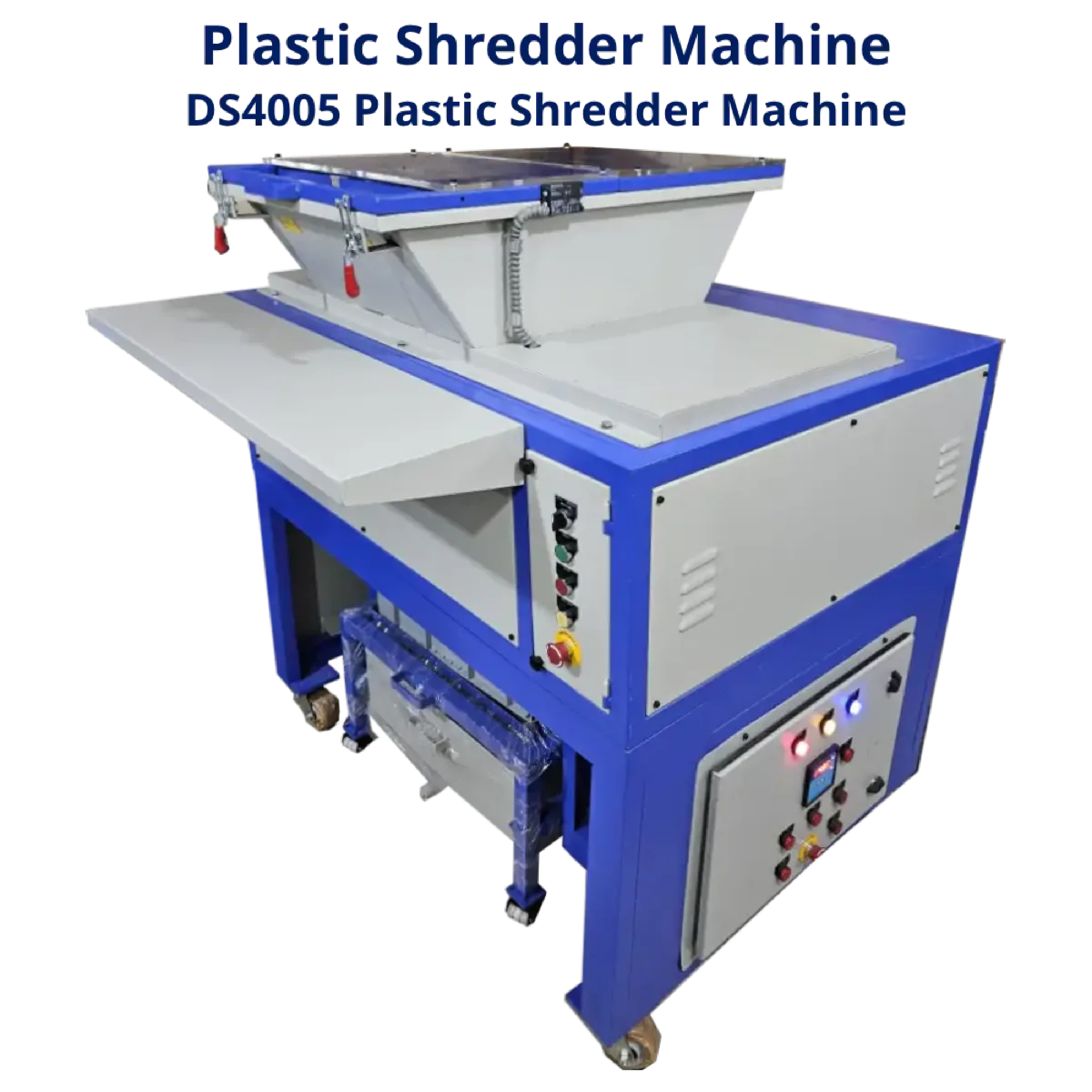
Dual Shaft Shredder
Twin-shaft ripping action · manual feed
- Capacity: sized to your stream
- Motor: sized to the model, 415 V, 3 phase
- Output: uneven shred, ideal for grinder feed
Best for: moderate reject volumes — grips and rips flexible LLDPE wall sections effectively.
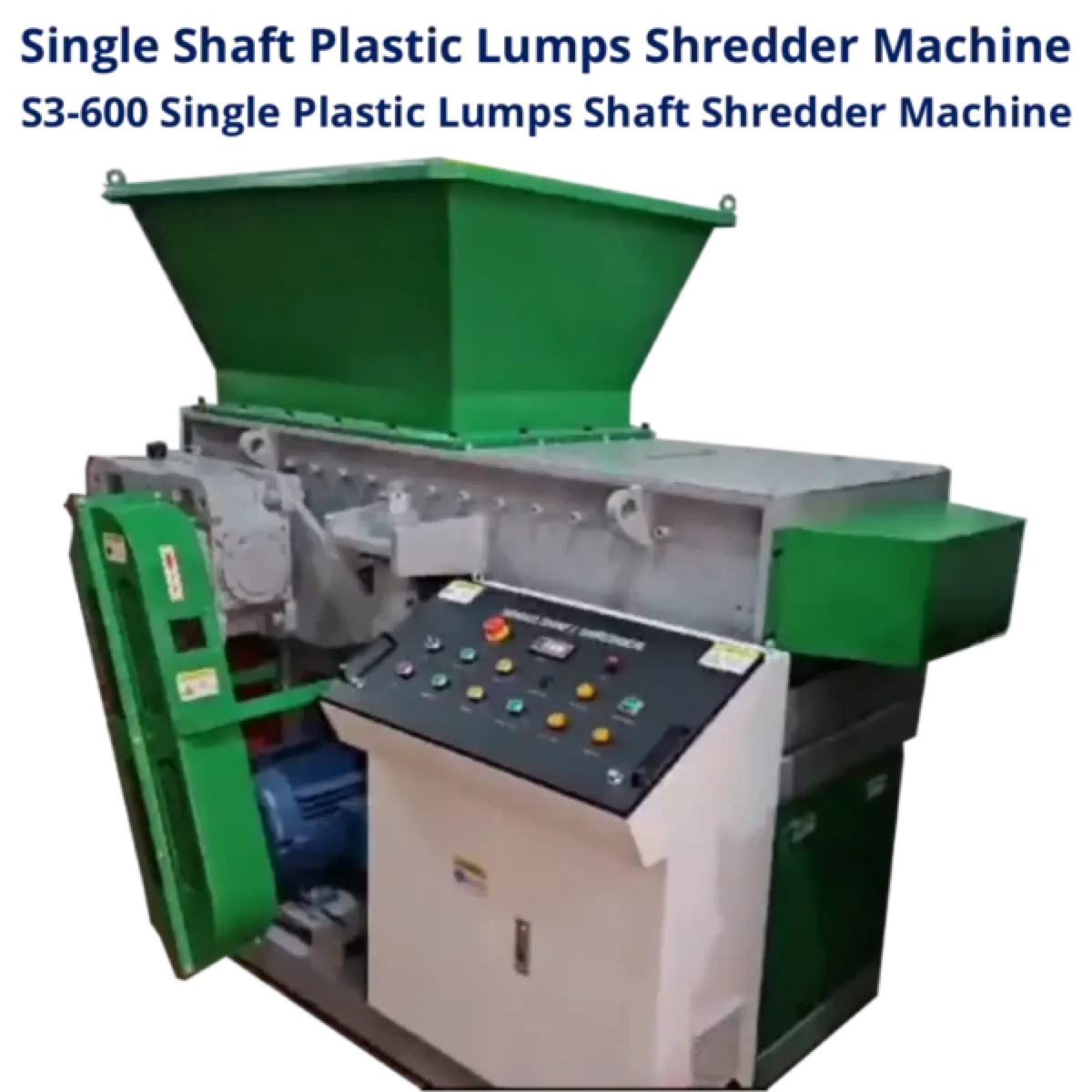
Single Shaft Shredder — S3-600
High-torque rotor · 24-hour duty
- Capacity: 300–500 kg/hr (by material density)
- Drive: 22 kW, 415 V, 3 phase
- Feed: 600 × 1000 mm side-feeding hopper
- 26 hardened rotary blades + 2 fixed
Best for: high reject volumes and thick-wall sections — trolley-load panels through the side hopper.
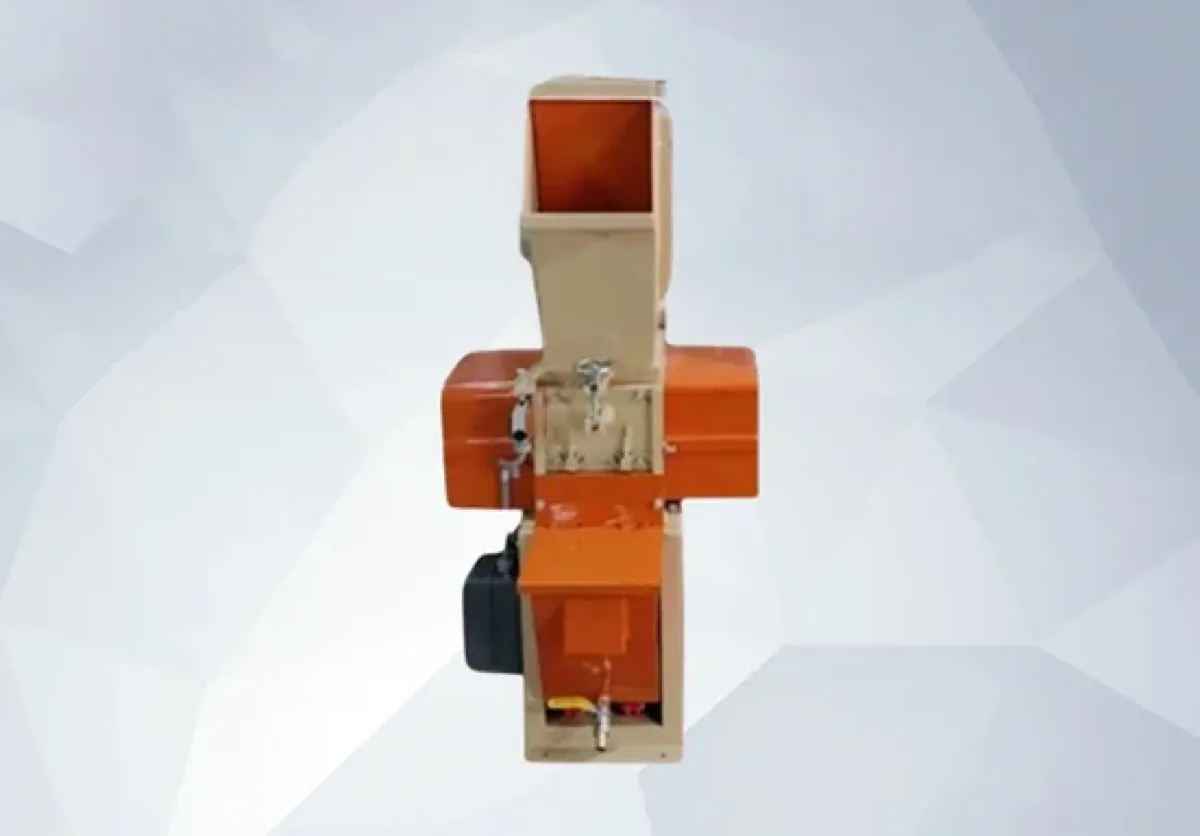
Plastic Grinder — RE Series (Downstream)
Blade-type grinder · regrind stage
- Capacity: 35–1,200 kg/hr across 7 models
- Power: 3–30 HP
- Throat sizes: 8″ × 8″ to 30″ × 30″
- Mesh screen sized to your regrind spec
Best for: converting tank shred into uniform regrind for pulverising or direct resale.
Technical Specifications Comparison
| Specification | Dual-Shaft Shredder | S3-600 Single Shaft Shredder | Plastic Grinder RE Series |
|---|---|---|---|
| Role | Primary shredding | Primary shredding, higher volume | Secondary grinding to regrind |
| Cutting action | Twin counter-rotating shafts, interlocked blades | Single high-torque rotor, 80 rpm | High-speed 5-blade rotor against mesh |
| Motor power | Sized to the model | 22 kW | 3–75 HP by model |
| Capacity | Sized to your stream | 300–500 kg/hr (by material density) | 35–1,200 kg/hr by model |
| Feeding | Manual, top feed | 600 × 1000 mm side-feeding hopper | Top hopper, 8″–30″ throat |
| Output | Uneven shred | Coarse shred | Uniform screened regrind |
| Machine weight | By model | Contact us for detailed specifications | 150–4,700 kg by model |
| Best for | Flexible LLDPE wall panels | Thick sections, high volumes | Regrind for pulverising or sale |
| Get Quote → | Get Quote → | Get Quote → |
Reject tanks piling up in the yard?
Tell our technical team your tank sizes, wall thickness and monthly reject count — we’ll recommend dual shaft or single shaft, free.
Why Choose Raj Electricals
Heavy-duty dual and single shaft shredders fabricated in Mumbai since 1985 — supplied across India and exported to seven countries.





Frequently Asked Questions
Can a shredder take a whole water tank without cutting it first?
No — and any supplier who says otherwise is selling you a machine the size of a room. A 1,000-litre tank is over a metre across in every direction; practical shredders have feed openings a fraction of that. The workflow that actually works is pre-cutting: a saw or cutter reduces the tank to panels in minutes, and panels feed steadily through a dual shaft machine’s top opening or the S3-600’s 600 × 1000 mm side hopper. Cutting is cheap, fast and turns an impossible object into routine shredder feed.
Dual shaft or single shaft — which suits rotomolding scrap better?
Both work; the choice is volume and wall thickness. A dual shaft machine grips flexible LLDPE panels between counter-rotating blade shafts and rips them through — effective on the rubbery, tough wall sections typical of tanks, with manual feeding. The S3-600 single shaft brings more power (22 kW) and a side-feed hopper that takes trolley-loaded panels, shredding 300–500 kg/hr and running 24 hours continuously. Occasional rejects point to the dual shaft; a steady reject stream or thick-wall industrial parts point to the S3-600.
Can shredded tank material go back into rotomolding production?
Yes, with one extra step: rotomolding machines feed on pulverised powder, not regrind. The path is shred → grind → pulverise, after which the recovered LLDPE is typically dosed into non-critical products, inner layers of multi-layer tanks, or dark colours where the recycled fraction does not affect appearance. Reground material that skips pulverising still sells well to injection and extrusion processors, since rotomolding-grade LLDPE is premium polymer. Either route recovers far more value than selling uncut tanks to a dealer.
How much scrap does a rotomolding plant actually generate?
The reject rate itself is usually modest, but each reject is enormous — a single failed 2,000-litre tank can outweigh a week of trimming waste from smaller processes. Add kiss-off and vent trimmings, cutout sections from fitting manholes and outlets, and mold tryout parts, and a mid-size tank plant accumulates tonnes of LLDPE per year. Because the parts are hollow, the pile looks even bigger than it weighs — which is exactly why shredding for density is the first economic step.
Does foam-insulated or multi-layer tank scrap need special handling?
Yes. Tanks with foamed middle layers or multi-layer walls shred mechanically just like single-layer parts, but the output is a mixed material — LLDPE with foam fraction — that cannot return to a premium single-polymer stream. Plants typically segregate multi-layer scrap and sell it as mixed regrind, or route it into applications where the foam content is acceptable. Keep single-layer and multi-layer rejects separate from the start; the price difference on the regrind justifies the two-bin discipline.
How much does a rotomolding scrap shredder cost in India?
Every machine is quoted to the job. What moves the number is capacity, throat size, motor rating, MS or SS construction and the automation you add — a blower, a conveyor, a control panel. Our guide to what drives machine cost walks through each of those; send us your material and daily volume and we will size the machine and quote it, usually the same day.
Can I trial the machine on my own tank sections before buying?
Yes — cut a reject tank into sections, bring them to our works at Andheri East, Mumbai, and we will shred them so you can check throughput and shred quality on your actual wall thickness and material. We can also demonstrate second-stage grinding of the shred. Outstation plants can send sections by transport or request a video trial. Contact us to arrange it — Mon–Sat, 9 AM to 7 PM.
Get a Free Quote for a Rotomolding Scrap Shredder
Tell us your tank sizes, wall thickness and monthly reject volume — our technical team responds with a machine recommendation and firm pricing, usually within one working day. No spam, no obligation.
102/103/104, Madhu Industrial Estate, Old Nagardas Road, Mogra Lane, Andheri East, Mumbai – 400069
Mon–Sat, 9:00 AM – 7:00 PM
Related Solutions
Plastic Lumps & Blocks Shredding
Purgings and solid blocks from your molding operations — the S3-600 in its core application.
Learn more →
Blow Molding Scrap Grinding
The other hollow-part process — flash, tails and reject containers ground inline at the line.
Learn more →
HDPE & LDPE Plastic Grinding
LLDPE’s polyethylene family — material-side guidance on grinding PE containers, pipes and parts.
Learn more →