Plastic Drum Shredder Machine for HDPE Drums & Barrels
From 20 L jerry cans to 220 L barrels — shred empty HDPE drums into dense, saleable regrind instead of stockpiling them in the yard. Dual shaft shredding, with two-stage grinding for uniform flake. Built in Mumbai since 1985.
The Empty Drum Problem at Plants, Depots and Recyclers
India’s chemical, lubricant, paint, agrochemical and food-ingredient supply chains all move product in HDPE packaging — 20 L jerry cans, 35–50 L carboys, and 200–220 L open-top and tight-head drums and barrels. Once emptied, they become a problem nobody budgeted for. Drums are mostly air: they eat yard space, a truckload of whole barrels carries very little actual plastic, and drum reconditioners only take units in resale condition. The dented, brittle, cut or contaminated drums simply accumulate.
Intact drums are also a liability, not just clutter. A branded chemical drum leaving your gate whole can be refilled with spurious product and sold against your name — and a drum that once held industrial chemicals routinely ends up reused for water storage somewhere down the chain. At the same time, EPR obligations under India’s Plastic Waste Management Rules mean rigid plastic packaging has to be accounted for by brand owners, not quietly dumped. Controlled in-house shredding answers all three problems at once: it destroys the drum and the brand on it, converts dead stock into dense HDPE regrind that recyclers actively buy, and gives you a documented disposal route.
The Right Shredding Approach for Drums and Barrels
Thick-walled HDPE drums need ripping torque, not blade speed — which makes a dual shaft shredder the right primary machine. Two counter-rotating shafts with interlocked blades grab the drum wall and tear it into coarse pieces at low speed, handling the mixed shapes a drum yard actually produces: jerry cans, carboys, lids, bung rings and barrel bodies. Our dual shaft shredders are documented for exactly this duty — plastic drums, cans, jars and crates — and they can run continuously for 24 hours. Depending on the drum sizes in your mix and the cutting chamber selected, full-size 200–220 L barrels are generally cut into halves or sections before feeding; smaller cans and jerry cans feed directly. Share your drum mix and we will confirm the feeding approach and chamber size for your line.
If your buyer wants uniform flake rather than coarse shred, run a two-stage line: the dual shaft shredder does the primary ripping, then an RE-series plastic grinder regrinds the pieces against a mesh screen into even, washable HDPE flake. For high single-stream volumes of thick material, the S3-600 single shaft shredder adds a 600 × 1000 mm side-feeding hopper and 300–500 kg/hr capacity. All machines are built in MS with SS-grade construction available on request, shred size on customized shredders can be defined by mesh from 1 mm to 30 mm or more, and export orders get motors wound for your country’s voltage and frequency.
Drum Shredding Process — From Yard Stockpile to HDPE Regrind
- Emptying & residue check Drums are drained and checked; chemical residues are handled per your site’s safety norms before shredding
- Sorting & metal removal Steel lid clamps, locking rings and bung fittings are removed — metal in the chamber damages blades
- Pre-cutting oversized drums Full-size 200–220 L barrels are cut into halves or sections sized to the shredder’s feed opening
- Primary dual shaft shredding Counter-rotating shafts rip drum sections, cans and lids into coarse pieces
- Secondary grinding An RE-series grinder regrinds the shred against a mesh screen into uniform HDPE flake
- Washing & dispatch Flake is washed where residues demand it, dried and packed for HDPE reprocessors
Recommended Machines for Drum & Barrel Shredding
A primary shredder, a high-volume single shaft option, and a grinder for the second stage. Full spec tables live on each machine page.
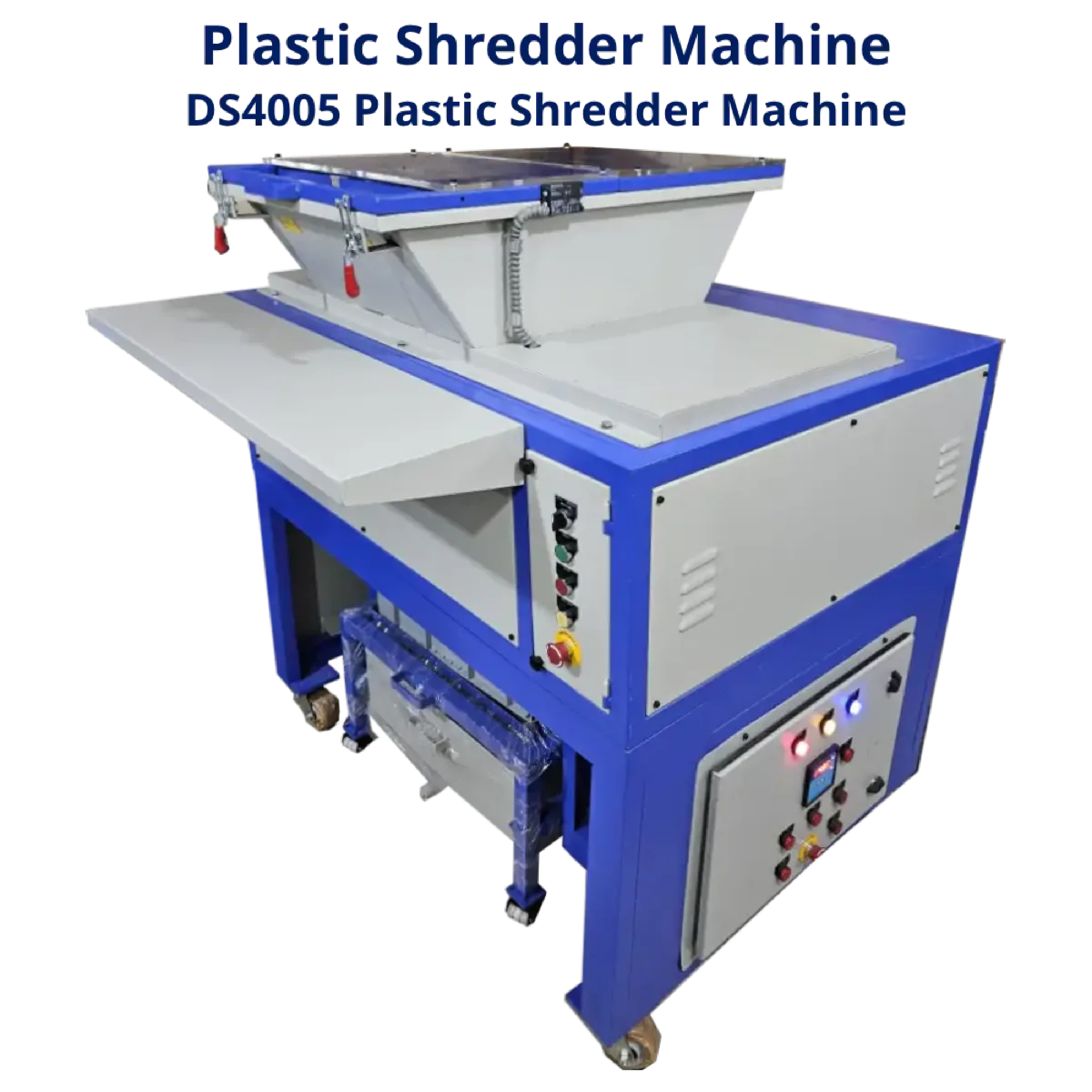
Dual-Shaft Shredder
Dual shaft shredder · 24-hr continuous duty
- Capacity: sized to your stream
- Power: sized to the model
- Shreds drums, cans, jars & crates
- MS build; SS grade on request
Best for: drum destruction and mixed rigid packaging waste at plants, depots and recyclers.
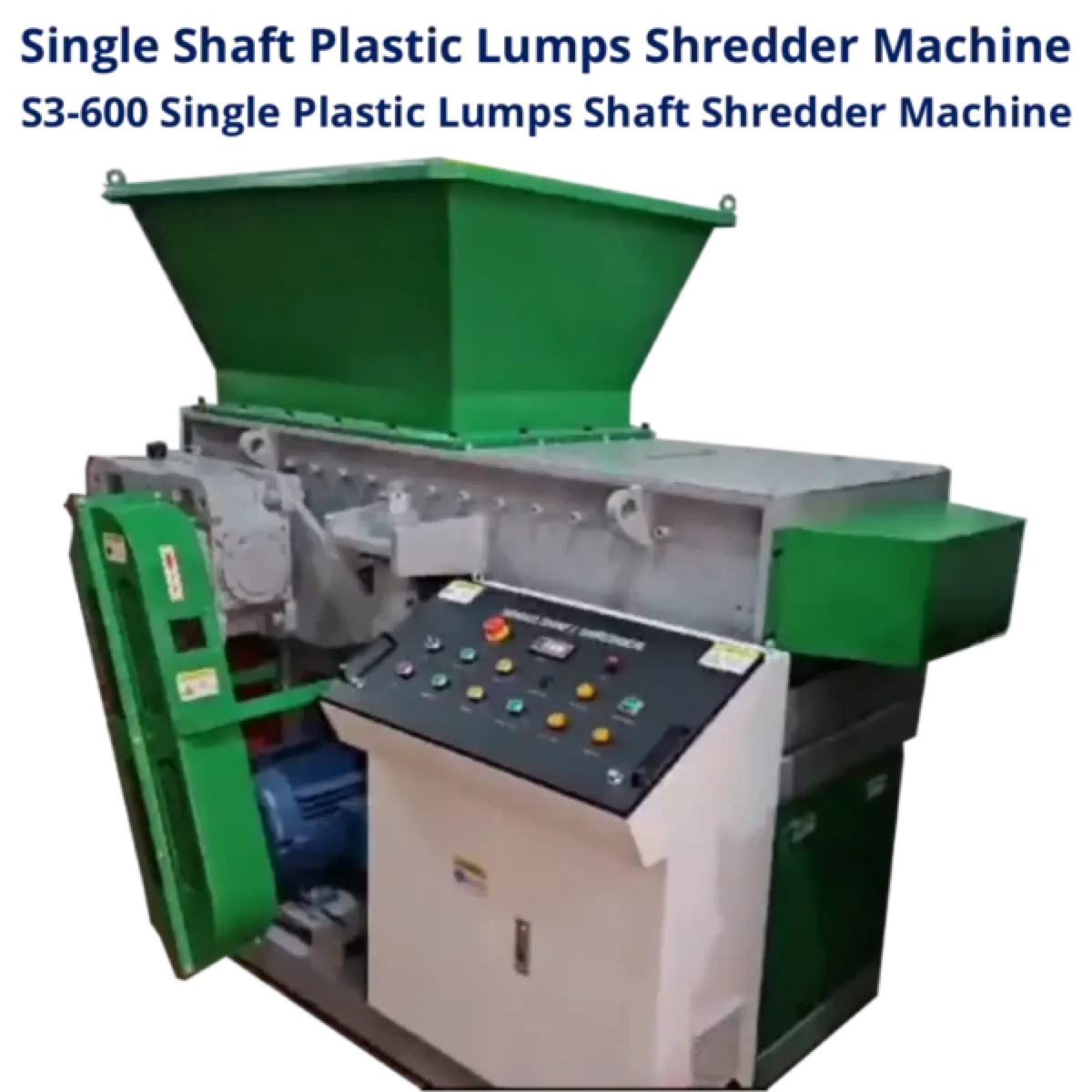
S3-600 Single Shaft Shredder
Single shaft · low-speed 80 rpm rotor
- Capacity: 300–500 kg/hr
- Power: 22 kW, 415 V 3-phase
- 600 × 1000 mm side-feeding hopper
- 26 rotary + 2 fixed hardened blades
Best for: high single-stream volumes of thick HDPE sections and bulky rigid pieces.
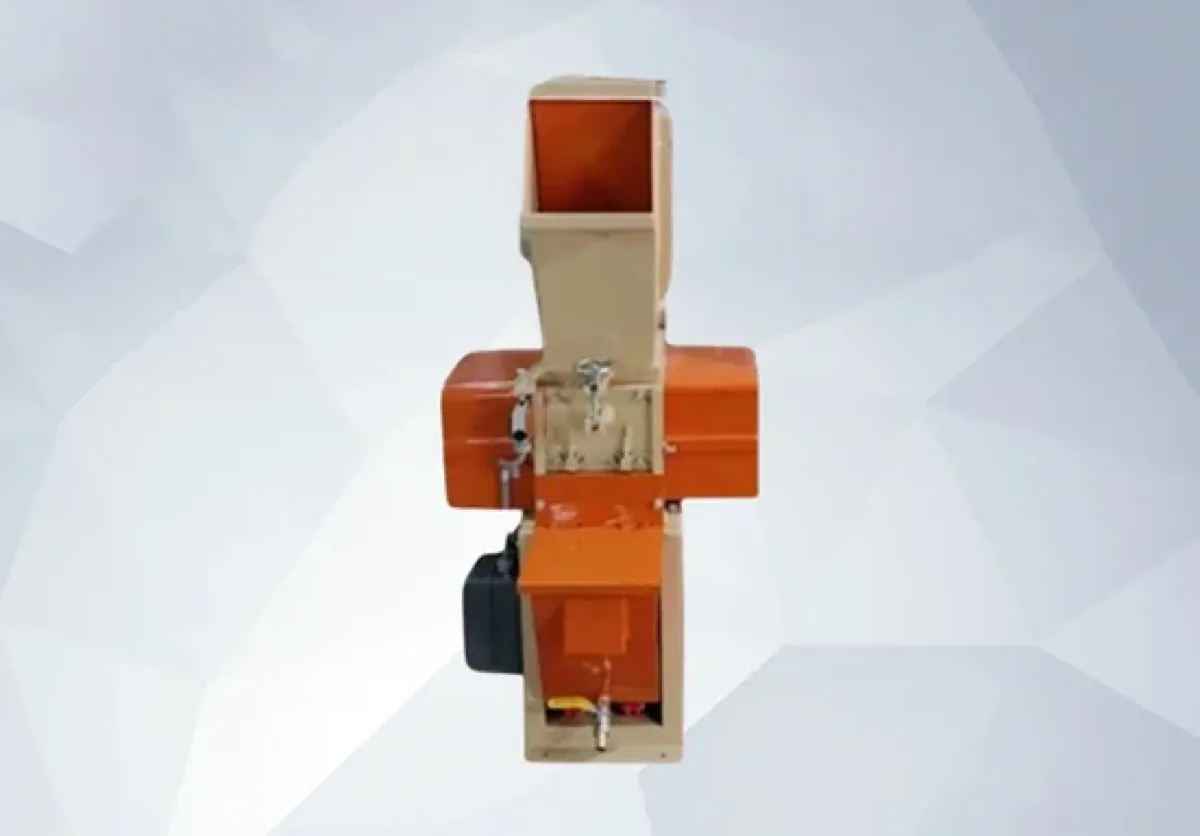
Plastic Grinder — RE Series (RE8–RE40)
Second-stage grinder · seven models
- Capacity: 35–1,200 kg/hr across models
- Power: 3–30 HP
- Throat sizes: 8″ × 8″ to 30″ × 30″
- RE25/RE30 grind any plastic below 25″/30″
Best for: regrinding shredded drum pieces into uniform, washable HDPE flake.
Technical Specifications Comparison
| Specification | Dual-Shaft Shredder | S3-600 Single Shaft Shredder | Plastic Grinder RE Series |
|---|---|---|---|
| Machine type | Dual shaft shredder | Single shaft shredder | Blade-type grinder, 7 models |
| Motor power | Sized to the model | 22 kW, 415 V 50 Hz 3-phase | 3–75 HP |
| Capacity | Sized to your stream | 300–500 kg/hr | 35–1,200 kg/hr |
| Feed opening | Manual feeding hopper | 600 × 1000 mm side-feeding hopper | Throat 8″ × 8″ to 30″ × 30″ |
| Output | Coarse, uneven shred | Coarse pieces, ready for grinding | Uniform flake via mesh screen |
| Machine weight | By model | Contact us for detailed specifications | 150–4,700 kg by model |
| Best for | Drum & mixed rigid destruction | High-volume thick sections | Second-stage regrind |
| Get Quote → | Get Quote → | Get Quote → |
Not sure which machine fits your drum sizes?
Tell our technical team your drum and can sizes, monthly quantity and what the drums held — we’ll recommend the right configuration, free.
Why Choose Raj Electricals
A Mumbai machine builder since 1985 — the same workshop that builds destruction and shredding machines for India’s chemical, FMCG and pharma names.






Frequently Asked Questions
Can used HDPE drums and barrels actually be recycled?
Yes — HDPE is one of the most readily recycled plastics in India. Once a drum is shredded and ground into flake, reprocessors wash and pelletize it into granules used for pipes, crates, drums and other non-critical mouldings. The catch is logistics: whole drums are uneconomical to transport, so recyclers pay properly only for shredded or ground material. That is why the shredder sits at the start of the drum recycling chain — see our HDPE & LDPE grinding solution for what happens after shredding.
Why shred empty branded drums instead of selling them whole?
Two reasons: brand risk and downstream liability. An intact branded drum can be refilled with spurious product and sold against your name — a real and recurring problem in lubricants, agrochemicals and specialty chemicals. And drums that held industrial chemicals routinely get reused for water or food storage in the informal market, which is a hazard you do not want traced back to your gate. Shredding destroys both the container and the branding, and converts the drum into regrind you can sell legitimately with documentation for EPR purposes.
Does a 200-litre drum fit into the shredder whole, or does it need pre-cutting?
It depends on the cutting chamber and hopper of the machine selected. Jerry cans, carboys and lids generally feed directly. Full-size 200–220 L barrels are wider than most standard feed openings, so in typical plant setups they are first cut into halves or sections — a quick job with the right cutting setup — and then fed. Larger customized chambers are possible for dedicated drum lines. Tell us the exact drum types and monthly volumes in your enquiry and we will confirm the feeding approach before you buy.
Dual shaft or single shaft — which is better for drum shredding?
For mixed drum yards — cans, carboys, lids, barrel sections, the odd crate — a dual shaft shredder is the safer choice: high torque at low speed grips and rips thick walls without fuss. For high volumes of a single thick HDPE stream, the S3-600 single shaft shredder offers 300–500 kg/hr and a large 600 × 1000 mm side-feeding hopper. Many recyclers run dual shaft first, then an RE-series grinder to produce uniform flake. The honest answer depends on your material mix — which is exactly what a trial settles.
What about residue inside chemical or oil drums?
Drums should be drained and emptied per your site’s safety and handling norms before shredding — the shredder is a size-reduction machine, not a cleaning system. Residues left in the drum travel into the shred, lower the regrind’s value and can make washing mandatory. For oily or chemical-contact drums, plan a washing stage after grinding; for food-grade or clean drums, dry regrind often sells as-is. We factor the residue question into machine and process recommendations, so mention what your drums held when you enquire.
How much does a plastic drum shredder machine cost in India?
Every machine is quoted to the job. What moves the number is capacity, throat size, motor rating, MS or SS construction and the automation you add — a blower, a conveyor, a control panel. Our guide to what drives machine cost walks through each of those; send us your material and daily volume and we will size the machine and quote it, usually the same day.
How do I work out the capacity I need for drum shredding?
Count in kilograms, not drum units. Weigh a representative empty drum of each type you handle, multiply by monthly quantities, and divide by your planned running hours — that gives the kg/hr figure to size against. We size the dual shaft model from that figure depending on feed speed and material density; the S3-600 covers 300–500 kg/hr. Size with headroom for growth and uneven arrivals. Our machine selection guide walks through the arithmetic, or send us your numbers and we will do it for you.
Can I trial the machine on my own drums before purchasing?
Yes — we recommend it. Bring sample drums, cans and lids to our works at Andheri East, Mumbai, and we will shred them in front of you so you can judge throughput, shred size and how the machine handles your thickest material. For outstation and export buyers we arrange recorded video trials on your material. Installation and maintenance support is available on site, and spares ship pan-India from Mumbai. Contact us to book a trial slot.
Get a Free Quote for Plastic Drum Shredding Machines
Tell us your drum and can sizes, monthly volumes and what the drums held — our technical team responds with a machine recommendation and firm pricing, usually within one working day. No spam, no obligation.
102/103/104, Madhu Industrial Estate, Old Nagardas Road, Mogra Lane, Andheri East, Mumbai – 400069
Mon–Sat, 9:00 AM – 7:00 PM
Related Solutions
Plastic Crate & Pallet Shredder
Retire broken PP/HDPE crates, pallets and bottle shells through the same dual shaft line.
Learn more →
HDPE & LDPE Plastic Grinding
Where your shredded drum pieces go next — grinding HDPE into clean, saleable flake.
Learn more →
Blow Molding Scrap Grinding
Drums are blow molded — reprocess reject drums, flash and startup scrap at the plant itself.
Learn more →