Agricultural Plastic Waste Shredder for Mulch Film, Drip Pipe & Shade Nets
Turn used mulch films, drip laterals, shade nets and rinsed pesticide containers into recyclable shred — instead of field-edge fires. Machines for agri-plastic collection centres, FPOs and recyclers, built in Mumbai since 1985.
The Agricultural Plastic Waste Challenge
Modern farming runs on plastic: mulch films laid every season, drip laterals replaced every few years, shade nets, crop covers, fertilizer and pesticide containers. Almost none of it goes back to a recycler. Used mulch film comes off the field torn, tangled and heavy with soil; drip pipe comes out in kilometre-long coils; shade nets bundle into springy masses. None of it is worth a transporter’s diesel in loose form — so it gets burned at the field edge or ploughed in, contaminating soil and air.
The economics change at the point of size reduction. A shredder at a taluka-level collection centre, an FPO yard or a rural recycling unit converts loose, bulky agri-plastic into dense shred that is worth transporting and that film and pipe recyclers will actually buy. With plastic waste management rules pushing panchayats and producers towards organised collection of farm plastics, the missing piece in most districts is exactly this: a robust machine, tolerant of dirty material, that a small team can run. That is the gap this page addresses.
The Right Shredding Approach for Farm Plastics
Start with an honest caveat: soil is the enemy of every shredder. Sand and grit dull blades fast, so mulch film should be shaken out, and ideally washed, before it reaches the cutting chamber — a machine fed muddy film will run, but you will pay for it in blade sharpening. Plan the line as shake-out and sorting first, shredding second, washing downstream if your buyer needs clean flake.
Then match the machine to the material. Tangly, springy waste — films, shade nets, woven covers — suits a dual shaft shredder, whose slow interlocked blades grip and tear without wrapping. Rigid waste — drip laterals, HDPE/LDPE pipes and triple-rinsed pesticide containers — runs well through an RE-series blade grinder, which cuts it against a screen into uniform regrind that pipe and film recyclers buy directly. For light film at volume, the grinder-with-blower configuration conveys the fluffy output pneumatically into collection bags instead of letting it choke the chamber. Note that throughput on film is at the lower end of any machine’s rated range — output capacity varies with material type and density, and film is the lightest feed there is.
Agri-Plastic Shredding Process — From Field to Recycler
- Collection & shake-out Films and pipes are gathered post-harvest; loose soil is shaken and beaten out before transport
- Sorting by type Film, pipe, net and containers are separated — mixed-material shred sells for less than sorted shred
- Pre-cleaning Heavily soiled film is rinsed; pesticide containers are accepted only triple-rinsed and punctured
- Shredding / grinding Films and nets through the dual shaft shredder; pipes and containers through the blade grinder
- Bagging & dispatch Dense shred is bagged or baled and sold to film, pipe and granule recyclers — now worth the freight
Recommended Machines for Agricultural Plastic Shredding
Three options — one for tangly films and nets, one for rigid pipes and containers, one for light film at volume. Full spec tables live on each machine page.
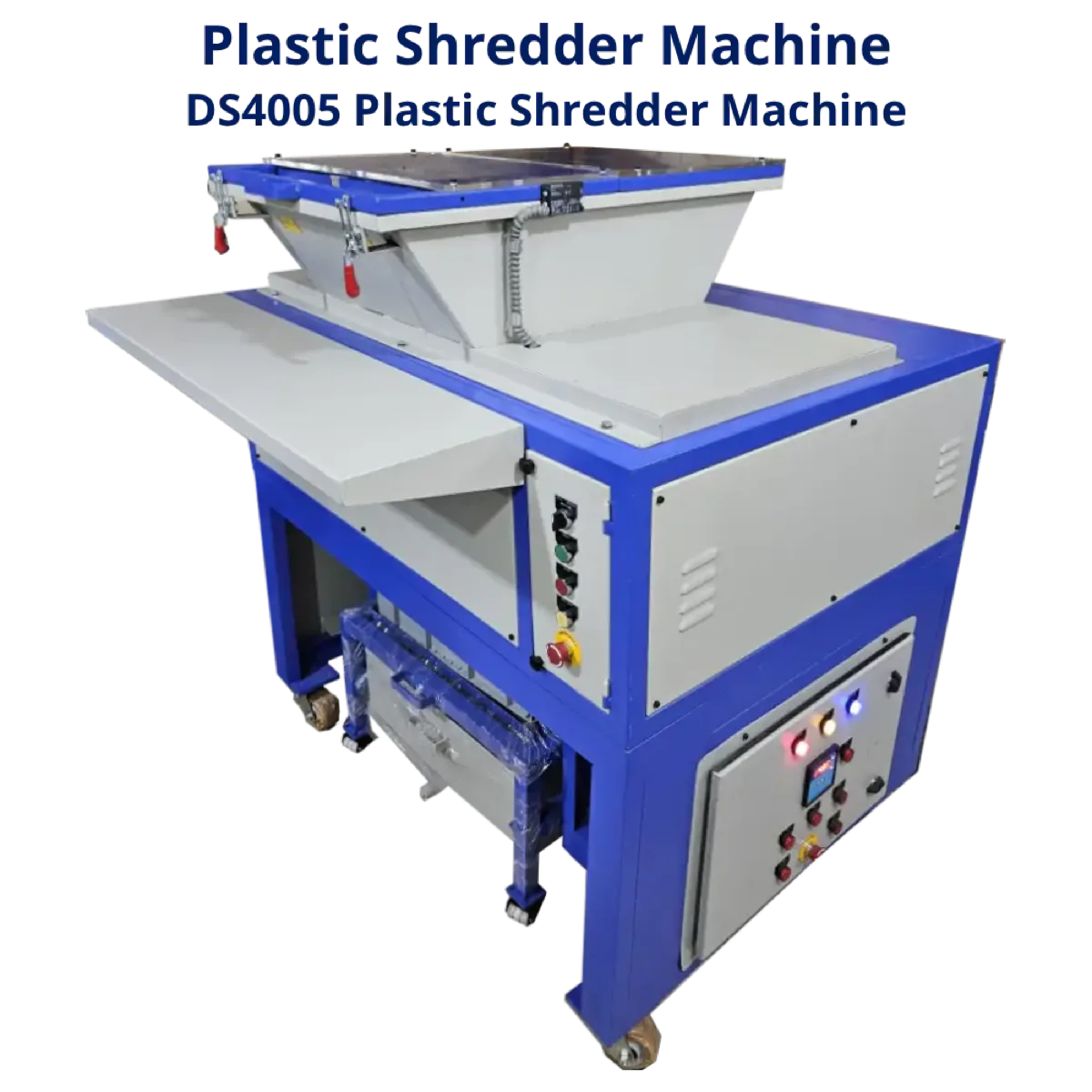
Dual-Shaft Shredder
Dual shaft shredder · grips tangly material
- Capacity: sized to your stream
- Motor: sized to the model
- Runs continuously for 24 hours
- Handles films, nets & mixed farm plastic
Best for: mulch film, shade nets and woven covers — the tangly waste that wraps other machines.
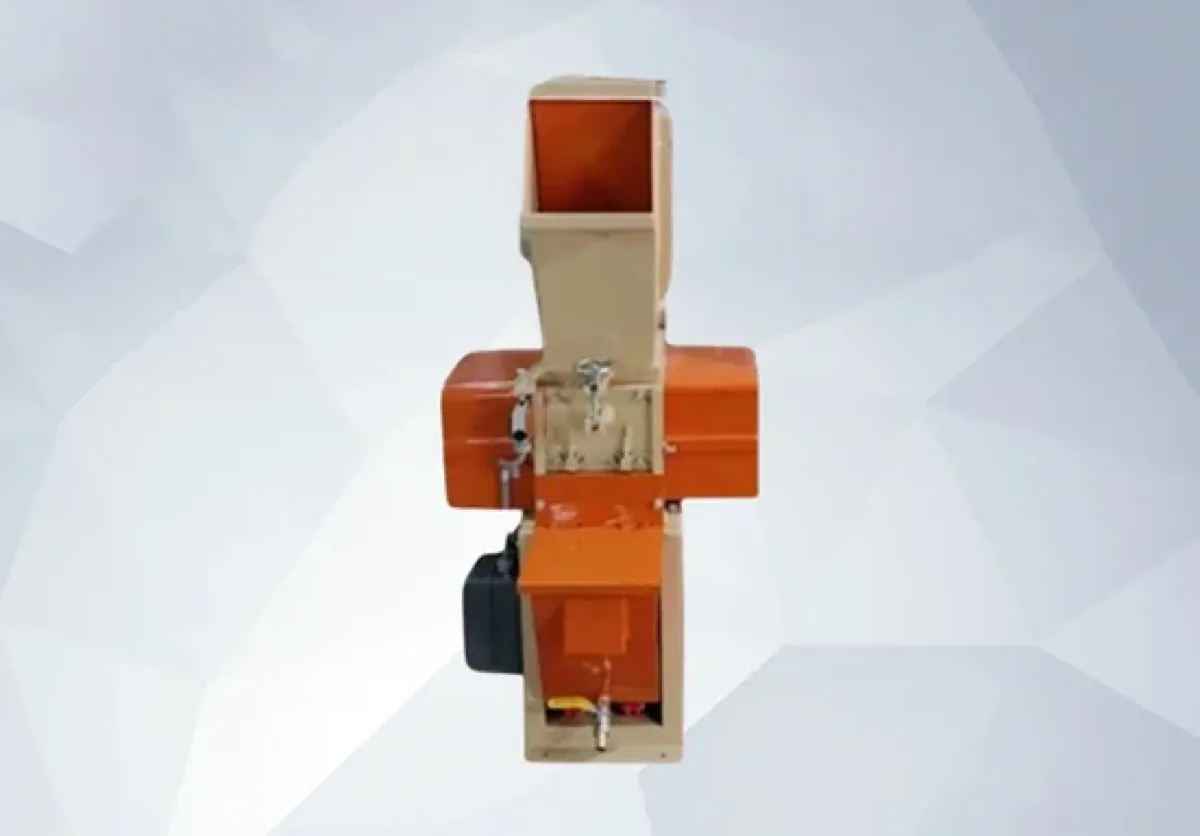
Plastic Grinder — RE Series (RE8–RE40)
Six grinder models · screened regrind output
- Capacity: 35–1,200 kg/hr across models
- Power: 3–30 HP
- Throat sizes: 8″ × 8″ to 30″ × 30″
- 5 blades per set; overload-protection starter
Best for: drip laterals, HDPE/LDPE pipe offcuts and triple-rinsed pesticide containers.
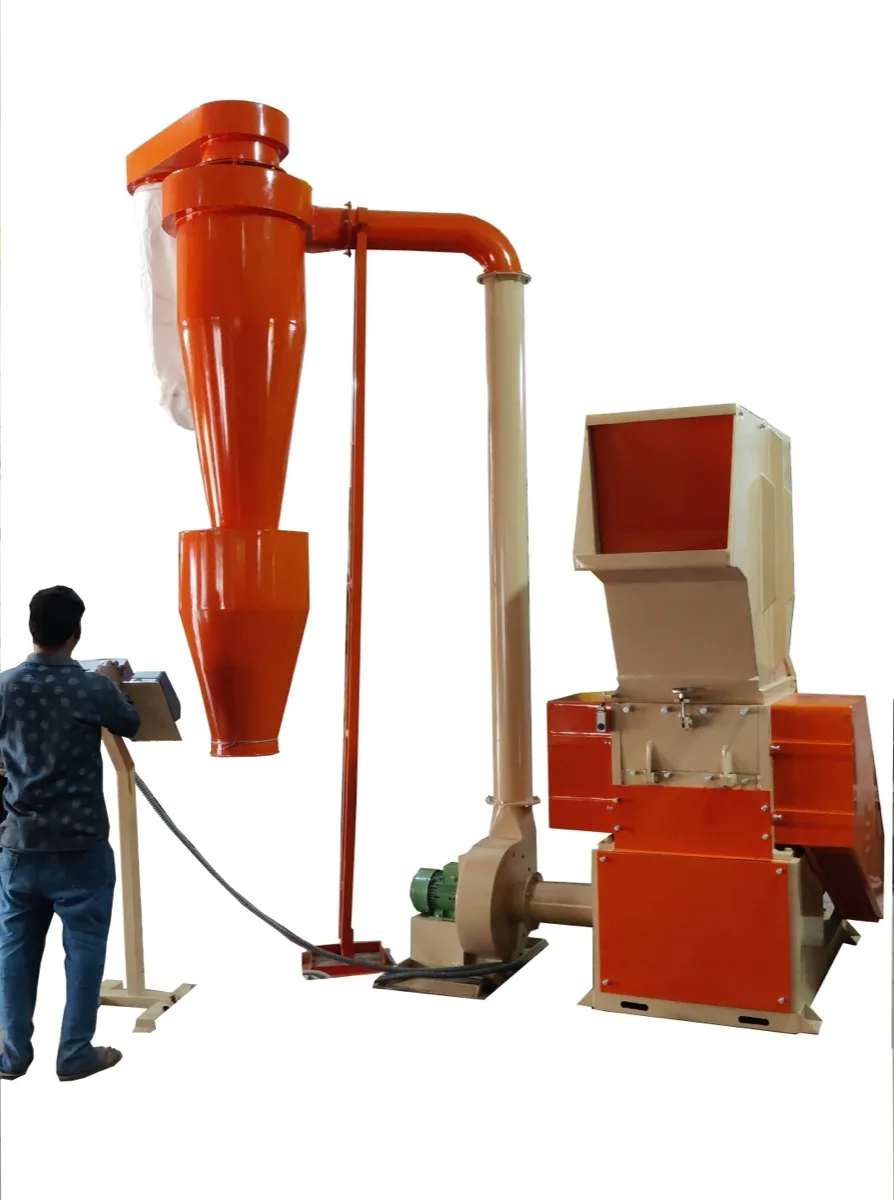
RE Series CB Grinders with Blower
Grinder + pneumatic discharge · seven models · HDPE/LDPE
- Capacity: 20–700 kg/hr across models
- Power: 3 + 0.5 HP to 30 + 5 HP
- Mesh: 15 mm standard, customisable
- Blower conveys light output into bags
Best for: washed film and light agri-plastic at volume — the blower keeps fluffy output moving.
Technical Specifications Comparison
| Specification | Dual-Shaft Shredder | Plastic Grinder RE Series | RE Series CB Grinder with Blower |
|---|---|---|---|
| Machine type | Dual shaft shredder | Blade-type grinder, 7 models | Blade-type grinder with blower, 7 models |
| Motor power | Sized to the model | 3–75 HP | 3 + 0.5 HP to 75 + 10 HP |
| Capacity | Sized to your stream | 35–1,200 kg/hr | 20–700 kg/hr |
| Output | Uneven shred size | Screened regrind | Screened regrind, blower-conveyed to bags |
| Suits | Mulch film, shade nets, woven covers | Drip pipes, rinsed containers | Washed film, light scrap |
| Machine weight | By model | 150–4,700 kg by model | 275–3,000 kg by model |
| Best for | Tangly, springy farm waste | Rigid agri-plastic | Film at volume |
| Get Quote → | Get Quote → | Get Quote → |
Setting up agri-plastic collection or recycling?
Tell our technical team what plastics your district generates — film, pipe, nets, containers — and we’ll recommend the right machine, free.
Why Choose Raj Electricals
A Mumbai machine builder since 1985 — all-metal construction, no plastic parts, machines built to run far from the nearest service centre.






Frequently Asked Questions
Can used mulch film with soil on it be shredded directly?
It can be fed, but it should not be — and we would rather tell you that now than after your first blade bill. Sand and grit dull cutting blades quickly, so soiled film means frequent resharpening and falling throughput. Shake and beat the soil out at collection, and rinse heavily caked film before shredding. Recyclers also pay noticeably more for clean shred, so the washing effort comes back as price. If your stream is unavoidably dirty, say so in your enquiry and we will plan blade maintenance honestly into the recommendation.
Can drip irrigation pipes and laterals be recycled?
Yes — used drip laterals are LDPE/LLDPE and pipe recyclers buy them readily once size-reduced. Cut the coils into machine-length pieces, feed them through a blade grinder like the RE series, and the screened regrind goes straight to granule makers. Flush pipes of water and mud first, and pull out metal fittings, joints and filters — metal entering the cutting chamber breaks blades. Emitters and drippers moulded into the pipe pass through with the regrind and are acceptable to most buyers; confirm with yours.
Is it safe to shred empty pesticide containers?
Only after proper rinsing. The accepted practice is triple-rinsing the container (the rinse water goes into the spray tank, not the drain) and puncturing it so it cannot be refilled. Once triple-rinsed, containers are handled as plastic scrap and can be ground for recycling. Never shred containers with product residue — for the operator’s safety and because contaminated regrind has no legitimate buyer. Your local agriculture department or container-collection programme can confirm the rinsing protocol applicable in your state; we keep this general because rules differ.
Which machine handles shade nets without tangling?
Shade nets are the classic wrapping material — springy HDPE mesh that winds around a single fast rotor. That is why we point net-heavy streams to our dual shaft shredders: two slow, interlocked shafts pull the net down through the cutting zone instead of letting it ride around a blade. Feed nets in bundled armfuls rather than one long continuous sheet, and the machine works through them steadily. If nets dominate your stream, bring a bundle for a trial — tangling behaviour is exactly what a trial is for.
What capacity machine does a village or FPO collection centre need?
Most collection centres are seasonal: film arrives in a rush after harvest, pipe and net replacement is spread through the year. Size for your peak month, not the annual average. A centre aggregating 2–4 tonnes a month runs comfortably on a smaller RE-series grinder for a few hours a day; a district-level operation taking 1–2 tonnes a day needs a dual shaft shredder or a larger grinder. Our machine selection guide walks through the arithmetic — or tell us your collection estimates and we will size it for you.
How much does an agricultural plastic shredder cost in India?
Every machine is quoted to the job. What moves the number is capacity, throat size, motor rating, MS or SS construction and the automation you add — a blower, a conveyor, a control panel. Our guide to what drives machine cost walks through each of those; send us your material and daily volume and we will size the machine and quote it, usually the same day.
We are far from any city — what about installation, service and spare blades?
We provide installation and maintenance service on site, and support machines pan-India with spares from Mumbai. The machines themselves are built for remote duty: all-metal construction with no plastic parts, simple blade sets an operator can learn to change, and routine care that amounts to lubrication and periodic blade sharpening. Keep a spare blade set on the shelf — we will tell you the sensible spares kit for your model at quotation — and downtime stays measured in hours, not weeks.
Get a Free Quote for Agricultural Plastic Shredders
Tell us what your area generates — mulch film, drip pipe, nets, containers — and the monthly volume. Our technical team responds with a model recommendation and firm pricing, usually within one working day. No spam, no obligation.
102/103/104, Madhu Industrial Estate, Old Nagardas Road, Mogra Lane, Andheri East, Mumbai – 400069
Mon–Sat, 9:00 AM – 7:00 PM
Related Solutions
Plastic Film Shredding
Shred LDPE and LLDPE film waste — the material family mulch films and crop covers belong to.
Learn more →
HDPE & LDPE Plastic Grinding
Grind pipes, containers and blow-molded HDPE — including drip laterals and rinsed agro-chemical cans.
Learn more →
FIBC / Jumbo Bag Shredder
Shred PP woven jumbo bags and sacks — the fertilizer and seed packaging side of farm plastic waste.
Learn more →