Thermocol Grinder & EPS Crusher Machine for Recycling
Thermocol is roughly 98% air — which is exactly why it swallows your godown. Crush appliance packaging, moulded inserts and EPS boxes into dense, bag-ready regrind with a purpose-built thermocol recycling machine from a Mumbai builder est. 1985.
The Thermocol (EPS) Waste Challenge
Thermocol — expanded polystyrene, or EPS — arrives with practically every appliance, television and machine sold in India. Appliance dealers, e-commerce warehouses, electronics assemblers and cold-chain operators with fish and vegetable boxes all end up with mountains of it. The material itself is nearly weightless; the problem is volume. EPS is roughly 98% air, so a tempo stacked to the roof with thermocol carries only a few kilograms of actual polystyrene. Storing it eats floor space, transporting it loose makes no commercial sense, and handling it badly turns it into static-charged beads that scatter across the premises.
Disposal pressure is rising at the same time. Under the Plastic Waste Management Rules and EPR obligations, brand owners and bulk generators are answerable for the packaging they put into the market — and open burning of polystyrene is both polluting and prohibited. The recycling chain for EPS exists and pays, but recyclers buy dense material: ground regrind and compacted ingots, not loose foam. Until the volume problem is solved at your own site, thermocol remains a cost. Once it is crushed and densified, it becomes a saleable material.
The Right Approach for EPS — Crush and Densify, Not Blade-Shred
An honest note before machine selection: a standard blade shredder or granulator — the kind that handles bottles, pipes and crates — is the wrong tool for thermocol. Those machines are designed for rigid plastics with real mass behind them. Foam is too light to feed consistently into a cutting chamber sized for solid material, the output is static-clinging fluff, and the throughput by weight is so low that the machine never earns its power bill. EPS recycling worldwide follows a different route: crush or grind the foam first, then densify it downstream.
That is exactly how our RE12CB grinder with blower is applied to thermocol. Moulded EPS — packaging inserts, sheets, boxes — is fed in and reduced to small beads and regrind, collapsing the storage volume dramatically and turning awkward mouldings into bag-ready material. From there the ground EPS is either reused directly (void-fill packaging, insulation filler, lightweight-concrete applications) or passed to a densifier or melting unit that compacts it into ingots and briquettes — the form GPPS recyclers and pellet makers actually buy. Raj Electricals also builds customized machines to client requirements, so the crushing stage can be matched to your material and volumes. Contact us for detailed specifications and a trial on your own thermocol.
Thermocol & EPS Grinding Process — From Foam Mould to Dense Output
- Collection & sorting Clean white EPS is separated from film-faced or laminated foam; tape, stickers and cardboard are removed
- Pre-breaking Oversize mouldings and large boxes are broken down to pieces the feed opening accepts
- Grinding to beads The thermocol grinder reduces foam to small beads and regrind, collapsing the stored volume
- Bagging Ground EPS is collected straight into bags — compact, dust-controlled and ready to move or store
- Densification downstream A densifier or melting unit compacts beads into ingots or briquettes recyclers pay for
- Reuse Ingots feed GPPS pellet production; loose regrind is reused as void-fill, insulation or concrete filler
Recommended Machine for Thermocol & EPS Grinding
One purpose-built machine for the crushing stage — plus a customised route when your material or volumes demand it.
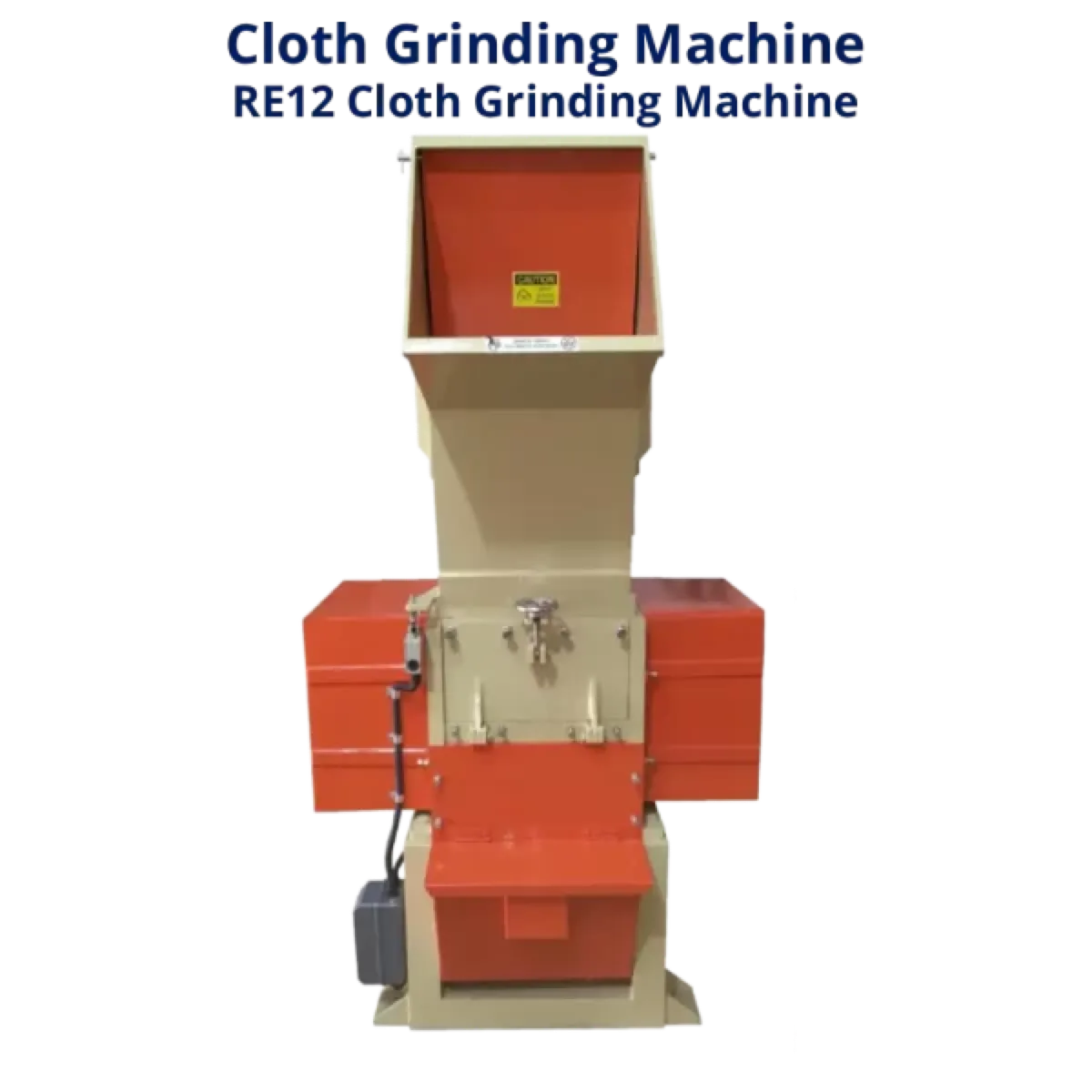
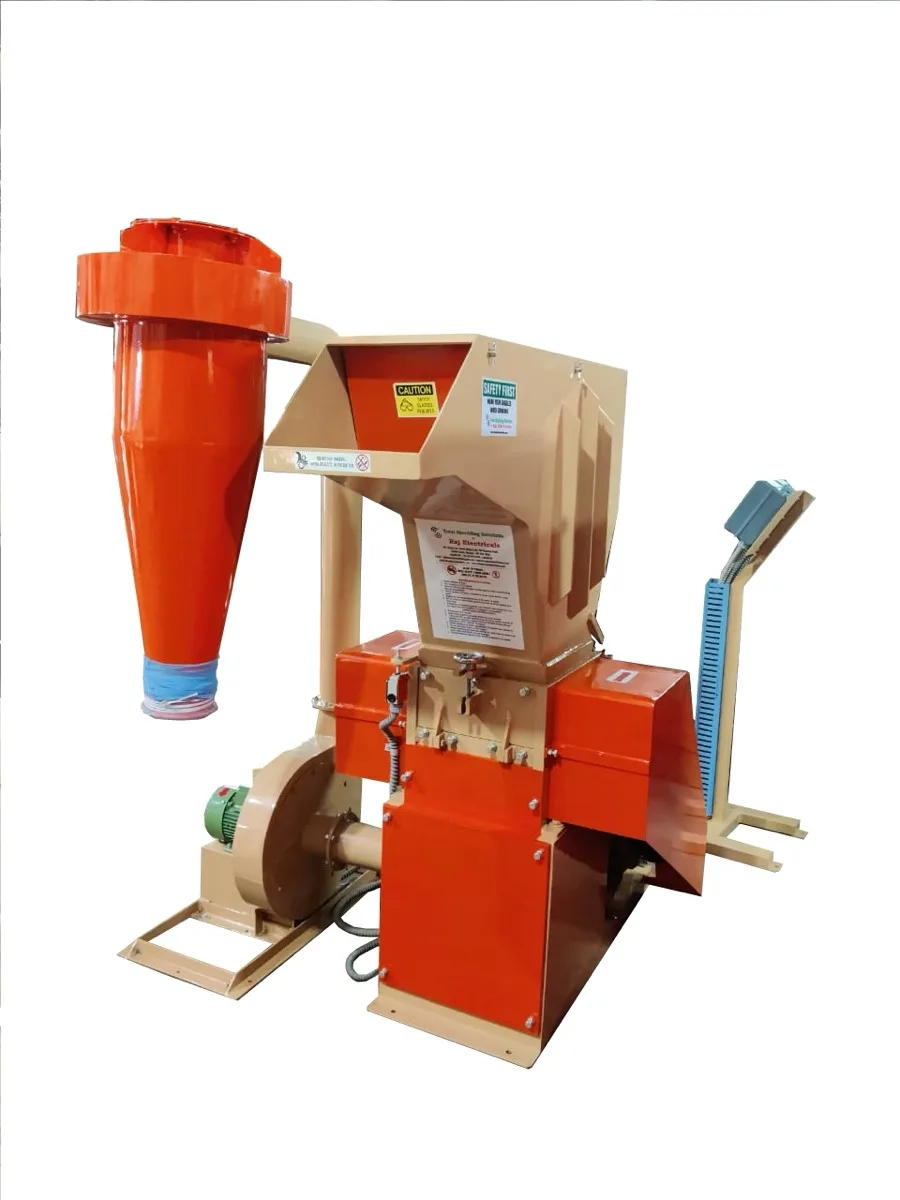
RE12CB Grinder with Blower
Grinder with cyclone blower · EPS/thermocol crusher route
- Built for light, brittle EPS foam — not rigid plastics
- Reduces mouldings to beads and regrind for bagging
- All-metal construction; no plastic parts used
- Capacity & feed size: contact us for detailed specifications
Best for: appliance dealers, e-commerce warehouses, cold-chain operators and packaging units drowning in thermocol.
Customised EPS Crushing Systems
Built to order · matched to your material
- Customized machines built to client requirements
- Feed opening and output sized to your mouldings
- Export orders: motor voltage/frequency to your country’s spec
- Trial on your own thermocol at our Mumbai works
Best for: high-volume generators who need the crushing stage engineered around their specific EPS stream.
EPS Crushing vs Standard Blade Shredding
| Consideration | RE12CB Grinder (EPS crusher route) | Standard blade shredder / granulator |
|---|---|---|
| Designed for | Light, brittle expanded foam (EPS / thermocol) | Rigid plastics — bottles, pipes, crates, lumps |
| How it reduces material | Crushes and grinds foam into beads/regrind | High-speed blades cut solid plastic against a screen |
| Behaviour with EPS | Consistent feeding and bead-size output | Foam too light to feed properly; static fluff output; poor throughput by weight |
| Output | Bag-ready beads/regrind for densifying or reuse | Screen-sized regrind of rigid plastics |
| Downstream step | Densifier/melter compacts beads into saleable ingots | Regrind goes directly to pelletizing or molding |
| Verdict for thermocol | Recommended — this is the proven EPS route | Not recommended for foam (use it for your rigid plastic waste instead) |
| Get Quote → | See rigid-plastic grinders → |
Not sure how to make thermocol recycling pay?
Tell our technical team what EPS you generate and how much per week — we’ll recommend the right crushing setup and the downstream route, free.
Why Choose Raj Electricals
A Mumbai machine builder since 1985 — the same family workshop that supplies shredders and grinders to India’s biggest FMCG and appliance names.




Frequently Asked Questions
Can thermocol actually be recycled in India?
Yes. Thermocol is expanded polystyrene (EPS) — chemically the same polystyrene used in rigid products. The working recycling chain in India is: grind the foam to beads, densify the beads into ingots or briquettes, and sell those to recyclers who convert them back into GPPS pellets for products like photo frames, skirting profiles and decorative mouldings. The chain breaks only when the foam stays loose — no recycler will truck air. That is why on-site volume reduction with a thermocol recycling machine is the step that makes everything downstream viable.
Why can’t I just use a normal plastic shredder for thermocol?
Because EPS behaves nothing like rigid plastic. A blade shredder or granulator needs material with mass that presses against the cutting edges — foam is roughly 98% air, so it floats above the blades, feeds inconsistently and comes out as static-charged fluff. Measured in kilograms per hour, the result is dismal. EPS needs a crusher/densifier approach: a purpose-built thermocol grinder breaks the foam into beads, and a densifying step downstream compacts those beads into dense, saleable form. We say this plainly so you don’t buy the wrong machine — from us or anyone else.
What does the ground EPS output look like, and what is it used for?
The grinder reduces mouldings to small polystyrene beads and regrind that collect in bags. From there you have two routes: reuse the loose material directly — void-fill packaging, insulation filler and lightweight-concrete applications are common — or densify it into ingots/briquettes for sale to GPPS recyclers and pellet makers. Which route pays better depends on your location and buyers; share your situation with us and we will give you a straight recommendation.
Do I need a densifier as well as the grinder?
It depends on your buyer. If a local buyer takes bagged regrind for filler or void-fill uses, the grinder alone completes your job. If you intend to sell to polystyrene recyclers — who pay materially better rates — they generally want densified ingots, which means a melting/compacting stage after grinding. Raj Electricals builds customized machines to client requirements, so tell us your end buyer and weekly volumes and we will configure the right setup. Contact us to discuss your line.
What capacities do your thermocol grinders come in?
Thermocol grinder sizing is quoted against your material and volumes rather than off a fixed chart — EPS throughput depends heavily on moulding size and density, and feed openings are matched to the boxes or inserts you handle. Visit the RE12CB Grinder with Blower machine page for the machine overview, then contact us with your weekly thermocol quantity and largest moulding size for detailed specifications and a recommendation.
How much does a thermocol grinder machine cost in India?
Every machine is quoted to the job. What moves the number is capacity, throat size, motor rating, MS or SS construction and the automation you add — a blower, a conveyor, a control panel. Our guide to what drives machine cost walks through each of those; send us your material and daily volume and we will size the machine and quote it, usually the same day.
Can I trial the machine on my own thermocol before buying?
Yes — and with EPS we strongly recommend it, because foam streams vary more than buyers expect (clean white mouldings vs film-faced sheets vs soiled fish boxes behave differently). Bring a sample lot to our works at Andheri East, Mumbai, and watch the machine run your material; for outstation buyers we can arrange a video trial. Contact us to book a trial slot.
Is there really a market for ground and densified EPS?
Yes — densified polystyrene has established buyers in India. Recyclers convert ingots back into GPPS pellets used for picture frames, skirting, stationery and moulded household products, and loose regrind finds local use as insulation and lightweight-concrete filler. Rates vary by region and cleanliness of material, which is one more reason to keep clean white EPS separate from laminated or soiled foam at collection. With EPR pushing brand owners to account for packaging waste, organised demand for recovered EPS is growing rather than shrinking.
Get a Free Quote for Thermocol & EPS Grinding Machines
Tell us what EPS you generate, your weekly quantity and your largest moulding size — our technical team responds with a recommendation and firm pricing, usually within one working day. No spam, no obligation.
102/103/104, Madhu Industrial Estate, Old Nagardas Road, Mogra Lane, Andheri East, Mumbai – 400069
Mon–Sat, 9:00 AM – 7:00 PM
Related Solutions
ABS Plastic Shredding
The other half of appliance waste — shred and grind the rigid ABS housings the thermocol arrived wrapped around.
Learn more →
Plastic Film Shredding
LDPE stretch wrap and BOPP film from the same packaging stream — shredded on dual shaft machines built for film.
Learn more →
FMCG Rejects Shredding
Reject packaging and product destruction for FMCG plants — secure, auditable shredding of mixed reject streams.
Learn more →