Plastic Carry Bag Shredder Machine for Poly Bag Recycling
Carry bags jam ordinary grinders — they wrap, tangle and stall the rotor. Shred poly bags from collection centres, malls and dry-waste facilities with a dual shaft plastic bag shredder built in Mumbai since 1985.
The Carry Bag & Poly Bag Waste Challenge
Carry bags are the most visible plastic waste in India and the least loved by recyclers. They arrive in volume from every direction — kabadiwala and waste-collector networks, mall and retail back-rooms, housing society dry-waste rooms, and the municipal dry waste collection centres (DWCCs) that segregate household plastic. The Plastic Waste Management Rules have banned the thinnest bags and pushed carry bags to a minimum thickness of 120 microns, but enforcement seizures and legacy waste mean enormous quantities of mixed poly bags still need processing every single day.
The problem is the material’s behaviour, not its chemistry. Carry bags are LDPE or HDPE film — among the easiest plastics to re-pelletize once densified. But loose bags are nearly weightless: a full godown of bags may hold only a few hundred kilograms, so storage and transport costs eat the margin. Worse, film is the classic machine-killer. In a high-speed grinder, bags float above the blades, wrap around the rotor shaft and choke the screen — operators spend more time cutting tangles off the machine than running it. Processing carry bags economically starts with a shredder designed for film behaviour.
The Right Shredding Approach for Carry Bags & Film
Film needs grip. A dual shaft shredder runs two counter-rotating shafts with interlocked blades at low speed and high torque: bags are pulled positively down into the shear zone and torn through, instead of riding on top of a spinning rotor. Carry bags are a documented application on Raj Electricals’ dual shaft machines — the same platform that shreds non-woven bags, cement sacks and film-type waste. A dual shaft shredder is the standard recommendation, sized to your daily film intake, with the heavy all-metal build these machines share.
Plan the line around what comes after the shredder. Dual shaft output is an uneven shredded strip — ideal feed for the agglomerator or densifier that gives film enough bulk density to pelletize. If your stream includes baled or compacted bag lumps, a single shaft S3-600 with its 600 × 1000 mm side-feeding hopper handles dense blocks at 300–500 kg/hr — confirm your specific material at a trial. And if non-woven bags dominate your collection mix (common since the carry-bag bans), the dedicated non-woven bags shredder is built for exactly that fabric. Mixed municipal streams carry moisture and dirt, so we recommend MS construction with periodic blade attention — and a feeding discipline that keeps stones and metal out of the chamber.
Carry Bag Shredding Process — From Loose Bags to Granules
- Collection & sorting Bags are separated from paper, rigid plastic and wet waste; PVC film and metallised pouches go to separate lots
- De-baling & foreign-object check Compressed bales are loosened; stones, metal and glass are removed before the material reaches the blades
- Dual shaft shredding Bags are fed loose; interlocked blades grip the film and tear it into strips without wrapping
- Washing (if contaminated) Municipal-stream film is washed downstream to remove dirt and organics before melting
- Agglomeration & densification Shredded film is densified into crumb with enough bulk density for the extruder
- Pelletizing & reuse Reprocessed LDPE/HDPE granules go into pipes, sheets, new film and molded products
Recommended Machines for Carry Bag Shredding
A dual shaft all-rounder for loose bags, a fabric specialist for non-woven streams, and a single shaft for baled lumps.
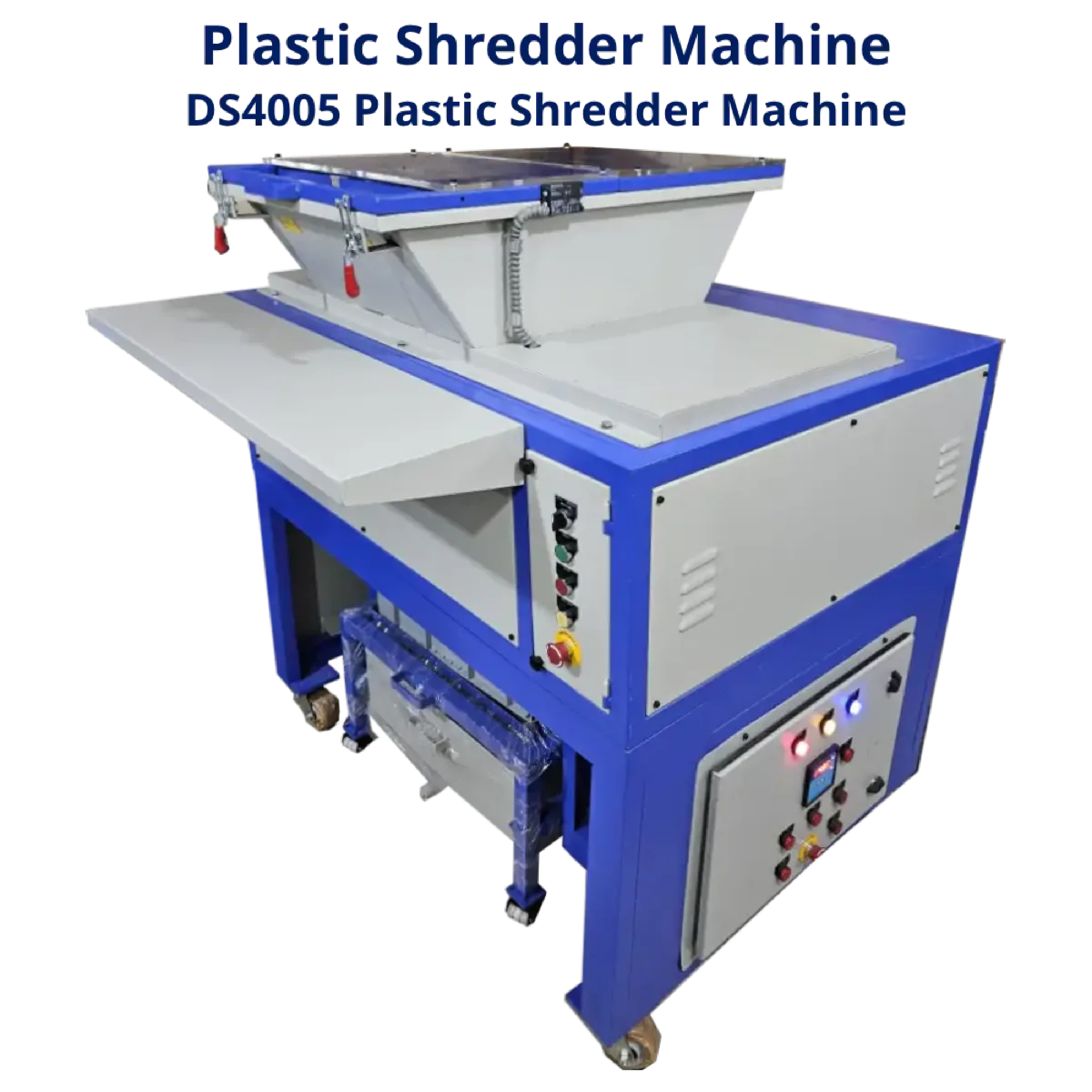
Dual-Shaft Shredder
Dual shaft shredder · film-capable
- Capacity: sized to your stream
- Power: sized to the model
- MS build; SS-grade option available
Best for: dry-waste centres and recyclers processing loose carry bags with mixed plastic scrap.
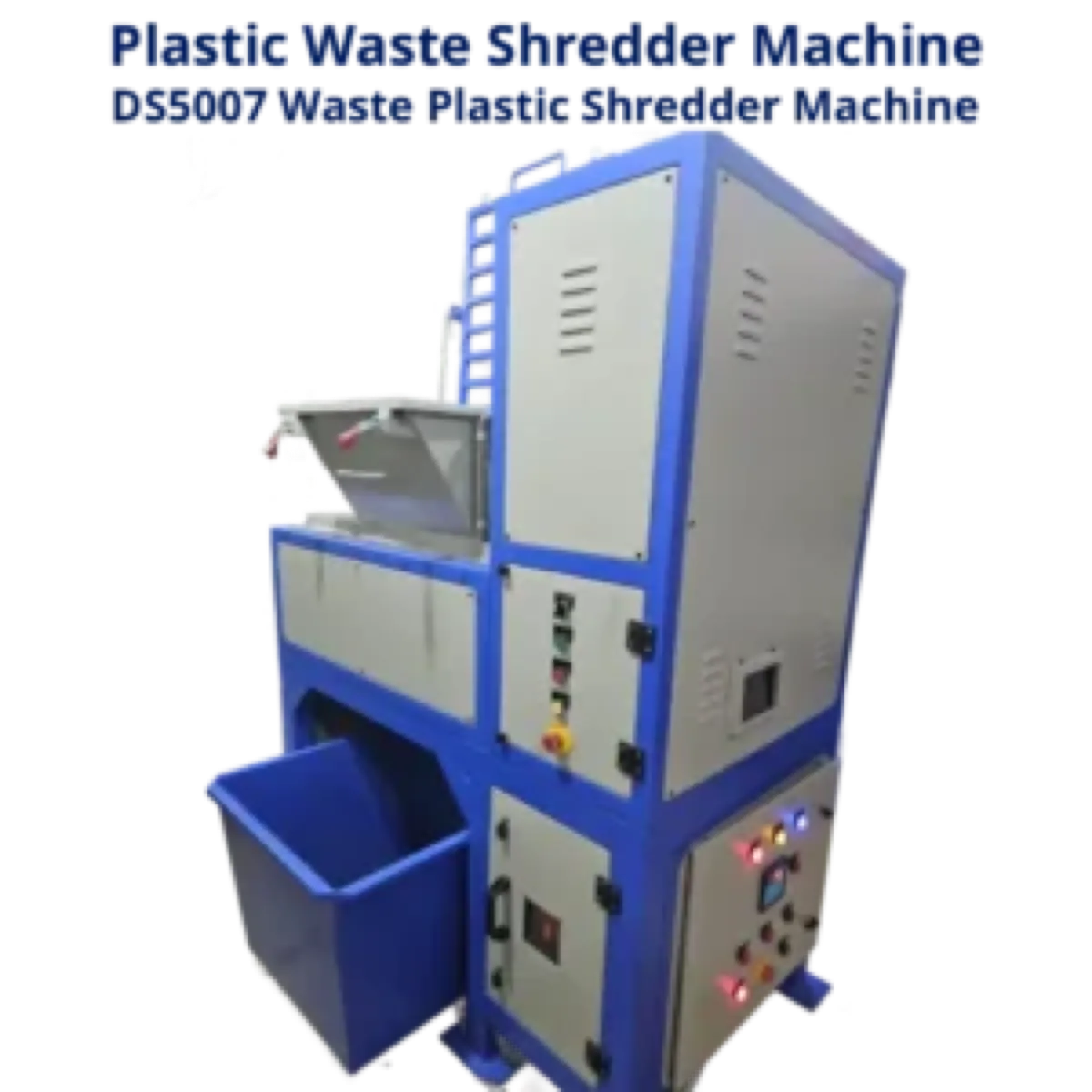
DS5007 Dual-Shaft Shredder
Dual shaft shredder · PP fabric specialist
- Dual shaft design for PP non-woven fabric
- All-metal construction, no plastic parts
- Sized against your bag volume
- Specifications shared on enquiry against a material sample
Best for: streams dominated by non-woven carry bags, common since the polythene bag bans.
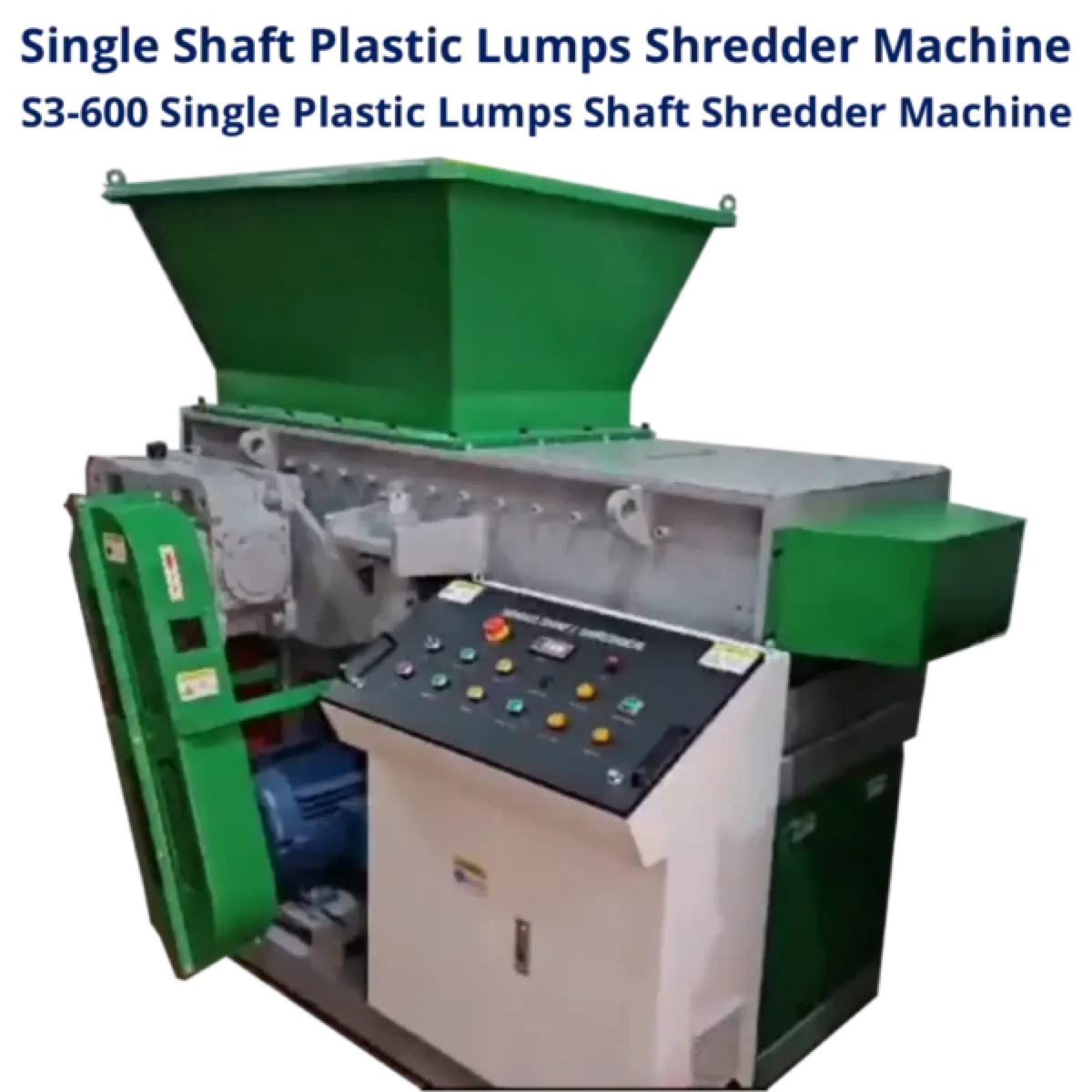
Single Shaft Shredder — S3-600
Single shaft shredder · for dense lumps
- Capacity: 300–500 kg/hr (material-density dependent)
- Drive: 22 kW, 415 V, 3 phase
- Feeding: 600 × 1000 mm side hopper
- 26 rotary + 2 fixed hardened blades
Best for: baled or agglomerated film lumps too dense for the dual shaft — confirm on your material at a trial.
Technical Specifications Comparison
| Specification | Dual-Shaft Shredder | DS5007 Dual-Shaft Shredder | S3-600 Single Shaft Shredder |
|---|---|---|---|
| Machine type | Dual shaft shredder | Dual shaft shredder | Single shaft shredder |
| Motor power | Sized to the model | Contact us for detailed specifications | 22 kW, 415 V, 3 phase |
| Capacity | Sized to your stream | Sized against your bag volume | 300–500 kg/hr |
| Feed | Manual feeding, top hopper | Loose bags and fabric | 600 × 1000 mm side feeding hopper |
| Handles | Loose poly bags plus mixed plastic scrap | PP non-woven carry bags and fabric | Baled/compacted lumps, dense blocks |
| Output | Uneven shredded strips | Shredded fabric strips | Shredded pieces for further grinding |
| Best for | Mixed bag and plastic streams | Non-woven-dominated streams | Dense baled film lumps |
| Get Quote → | Get Quote → | Get Quote → |
Not sure which machine fits your bag waste?
Tell our technical team what your collection mix looks like — polythene, non-woven, baled or loose — and we’ll recommend the right machine, free.
Why Choose Raj Electricals
A Mumbai machine builder since 1985 — carry bags, non-woven bags and cement sacks are documented applications on our dual shaft platform.






Frequently Asked Questions
Is there really a market for shredded carry bags?
Yes — LDPE and HDPE film is one of the most reprocessed plastics in India. Once shredded, washed where needed and agglomerated, the material extrudes into reprocessed granules used in pipes, sheets, new film and molded goods. Film reprocessors and agglomerator operators buy shredded bag material by the tonne; what they will not buy is loose, unsorted bags, because the handling cost exceeds the material value. Shredding is the step that converts a storage nuisance into a tradeable raw material.
Why do plastic bags jam ordinary grinders and shredders?
Three behaviours: film floats, wraps and stretches. In a high-speed blade grinder, near-weightless bags ride the air current above the blades instead of entering the cut; whatever does catch tends to wrap around the rotor shaft in layers until the motor stalls; and stretchy PE film absorbs blade impact instead of fracturing the way rigid plastic does. A dual shaft shredder avoids all three by gripping the film between interlocked, counter-rotating blades and tearing it through at low speed — see how the dual shaft platform works.
Do collected bags need washing before shredding?
No — shred first, wash after. Washing whole bags is impractical: they trap water, nest inside each other and refuse to dry. The standard line order is sort, shred, then wash the shredded film, because small strips wash and dry far more efficiently. What you must do before shredding is remove non-film contaminants — stones, metal, glass and wet organic waste — both to protect the blades and to keep the output saleable. Clean retail and mall bags often skip washing entirely and go straight to agglomeration.
Can one machine handle polythene bags and non-woven bags together?
Mechanically, a dual shaft shredder tears both — the cutting action does not distinguish PE film from PP fabric. The issue is downstream: PE and PP are different polymers, and a mixed shred sells at mixed-plastic prices, while segregated streams each fetch more. If your collection is dominated by non-woven bags, the dedicated non-woven bags shredder with a sorted PP-only stream earns better realisation. Most dry-waste centres sort by bag type first and shred in campaign runs — same machine, separate batches.
What capacity does a municipal dry waste centre or aggregator need?
Work from your daily film intake in kilograms. We size the dual shaft model against that figure so an 8-hour shift clears your intake with steady feeding — comfortably ahead of most ward-level DWCC film volumes, which leaves headroom for growth or second-shift aggregation. Remember that loose bags feed slower than their rated weight suggests because of their volume, so practical throughput depends on feeding discipline. Send us your daily intake and we will size the machine — or walk through our machine selection guide first.
How much does a plastic bag shredder machine cost in India?
Every machine is quoted to the job. What moves the number is capacity, throat size, motor rating, MS or SS construction and the automation you add — a blower, a conveyor, a control panel. Our guide to what drives machine cost walks through each of those; send us your material and daily volume and we will size the machine and quote it, usually the same day.
Can we see the machine run on our own collected bags first?
Yes. Collection-centre material varies enormously — moisture, dirt load, bag mix — so we run trials on your actual material at our works in Andheri East, Mumbai. Bring a representative gunny or two from a normal collection day, not a cleaned-up sample, and you will see realistic feeding behaviour, throughput and output. For municipal tenders we can also document the trial results for your file. Contact us to book a slot.
Get a Free Quote for a Plastic Carry Bag Shredder
Tell us your bag mix, daily intake and whether the material arrives loose or baled — our technical team responds with a machine recommendation and firm pricing, usually within one working day. No spam, no obligation.
102/103/104, Madhu Industrial Estate, Old Nagardas Road, Mogra Lane, Andheri East, Mumbai – 400069
Mon–Sat, 9:00 AM – 7:00 PM
Related Solutions
Non-Woven Bag Shredder
The PP fabric bags that replaced polythene — shredded on a dedicated dual shaft machine.
Learn more →
Jumbo Bag & FIBC Shredder
Woven PP bulk bags from chemical, cement and food plants, torn down to recyclable raffia.
Learn more →
Plastic Film Shredding
LDPE, BOPP and flexible packaging film — the wider film stream beyond carry bags.
Learn more →