Synthetic Textile Shredder for Polyester & Nylon Fabric Waste
Shred polyester and nylon fabric rolls, cutting-room offcuts and rejected garments into recyclable fibre feedstock — with machines that handle the tangling that defeats ordinary shredders. Cloth shredders from Mumbai since 1985.
The Synthetic Textile Waste Challenge
Garment factories, weaving and knitting units and made-ups exporters generate synthetic textile waste in every shift: cutting-room offcuts (typically a meaningful share of every lay), rejected rolls and thaans, end-of-run fabric, sampling waste and finished garments that failed inspection or came back as returns. Polyester and nylon do not rot and do not burn cleanly — and branded rejects carry the same grey-market risk as any other branded product: seconds leaking out of the factory with the label intact.
The mechanical problem is what stops most units from processing this in-house: fabric is the worst-behaved feed a shredder can meet. Continuous lengths wrap around fast rotors, knits stretch instead of cutting, and elastic content snaps back. Add fine fibre dust that needs housekeeping discipline, and an ordinary plastic granulator simply stalls or chokes. Meanwhile the shoddy, fibre-fill and nonwoven industries — and SRF users — pay real money for shredded synthetic feedstock. The gap between fabric waste and that market is a machine built for textile behaviour, not a repurposed bottle grinder.
The Right Shredding Approach for Polyester & Nylon Fabric
Tangling is beaten with torque, not speed. A dual shaft shredder pulls fabric down between two slow, interlocked blade shafts — the material is gripped and torn through rather than given a rotor to wind around. That is why our cloth shredder machines and elastic waste shredders have always been dual shaft designs, and why we point fabric-heavy streams to the dual shaft range: feed bundled offcuts, folded rejects and cut roll sections, and the machine works through them steadily. Feed discipline matters — bundles and armfuls, not one continuous unrolled length — and zips, buttons and metal trims should be removed first, because metal breaks blades.
Two honest caveats. First, fibre dust: shredding synthetics generates fine fluff, so plan the machine’s corner with ventilation and regular cleaning — it is manageable housekeeping, but pretending it does not exist helps nobody. Second, output: a shredder produces torn fabric pieces, which is exactly what shoddy mills, fibre-fill processors and SRF buyers want as feedstock; it does not produce respun fibre. Textile units also generate a rigid plastic stream — bobbins, cones, spools and packing — and that is a separate, easier job for a blade shredder like the RE20. Raj Electricals has built cloth shredders and elastic waste shredders for years; the machines below are where we would start a conversation about your stream.
Synthetic Textile Shredding Process — From Cutting Room to Fibre Buyer
- Sorting & de-trimming Waste is sorted by fibre type and colour; zips, buttons, metal trims and hangers are removed
- Bundling for feed Rolls are cut to sections and offcuts are bundled — controlled armfuls feed better than continuous lengths
- Dual shaft shredding Interlocked slow-speed blades grip and tear fabric without wrapping — brands and labels destroyed in the same pass
- Second pass (optional) Where the buyer wants smaller pieces, shred is run through again for a finer, more uniform cut
- Baling & dispatch Shredded fabric is baled and sold to shoddy mills, fibre-fill processors, nonwoven units or SRF users
Recommended Machines for Synthetic Textile Shredding
Two dual shaft machines for fabric, plus a blade shredder for the rigid plastics every textile unit also generates. Full spec tables live on each machine page.
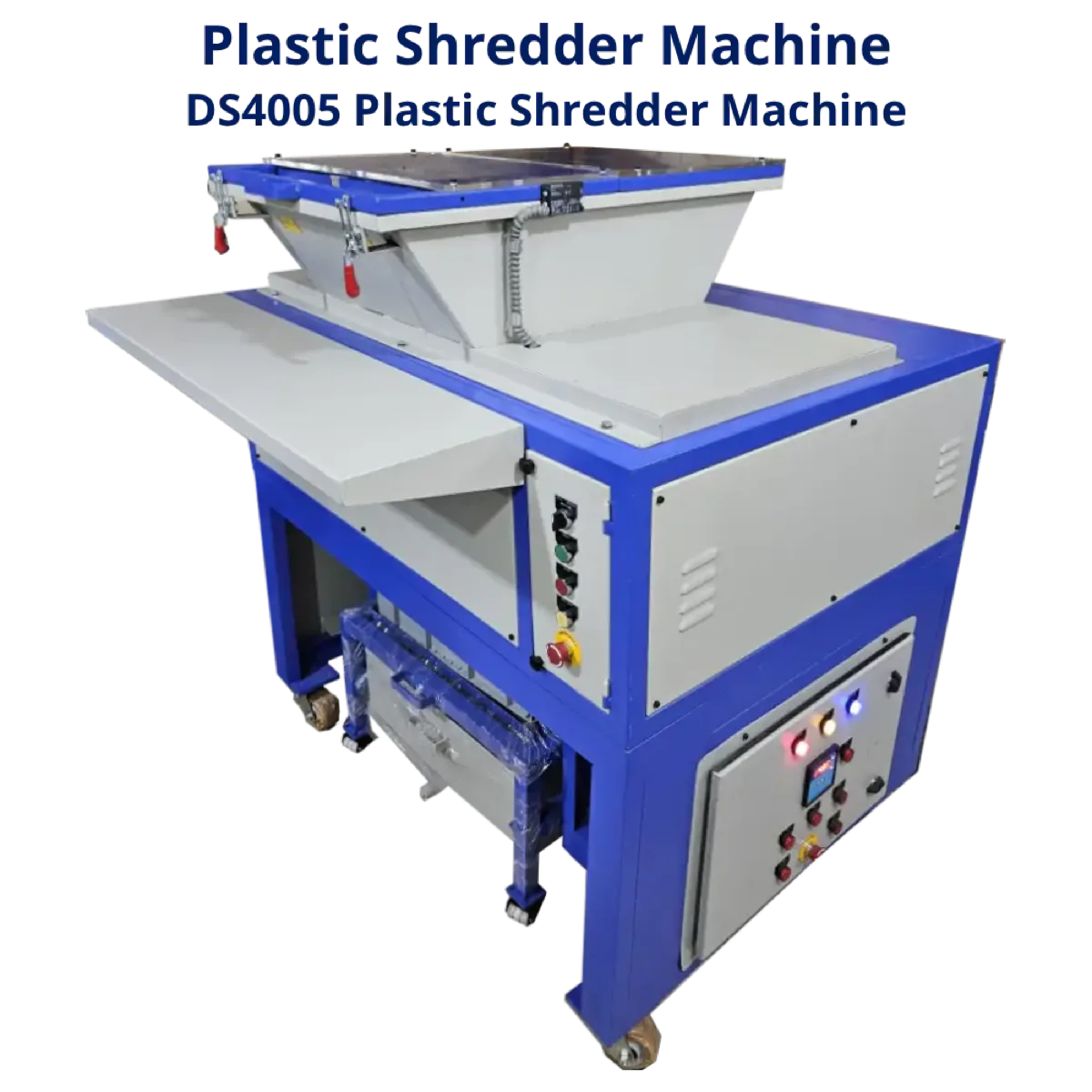
Dual-Shaft Shredder
Dual shaft shredder · grips, doesn’t wrap
- Capacity: sized to your stream
- Motor: sized to the model
- Runs continuously for 24 hours
- Handles fabric, garments & mixed soft waste
Best for: fabric rolls, cutting-room offcuts and rejected garments — the main textile waste stream.
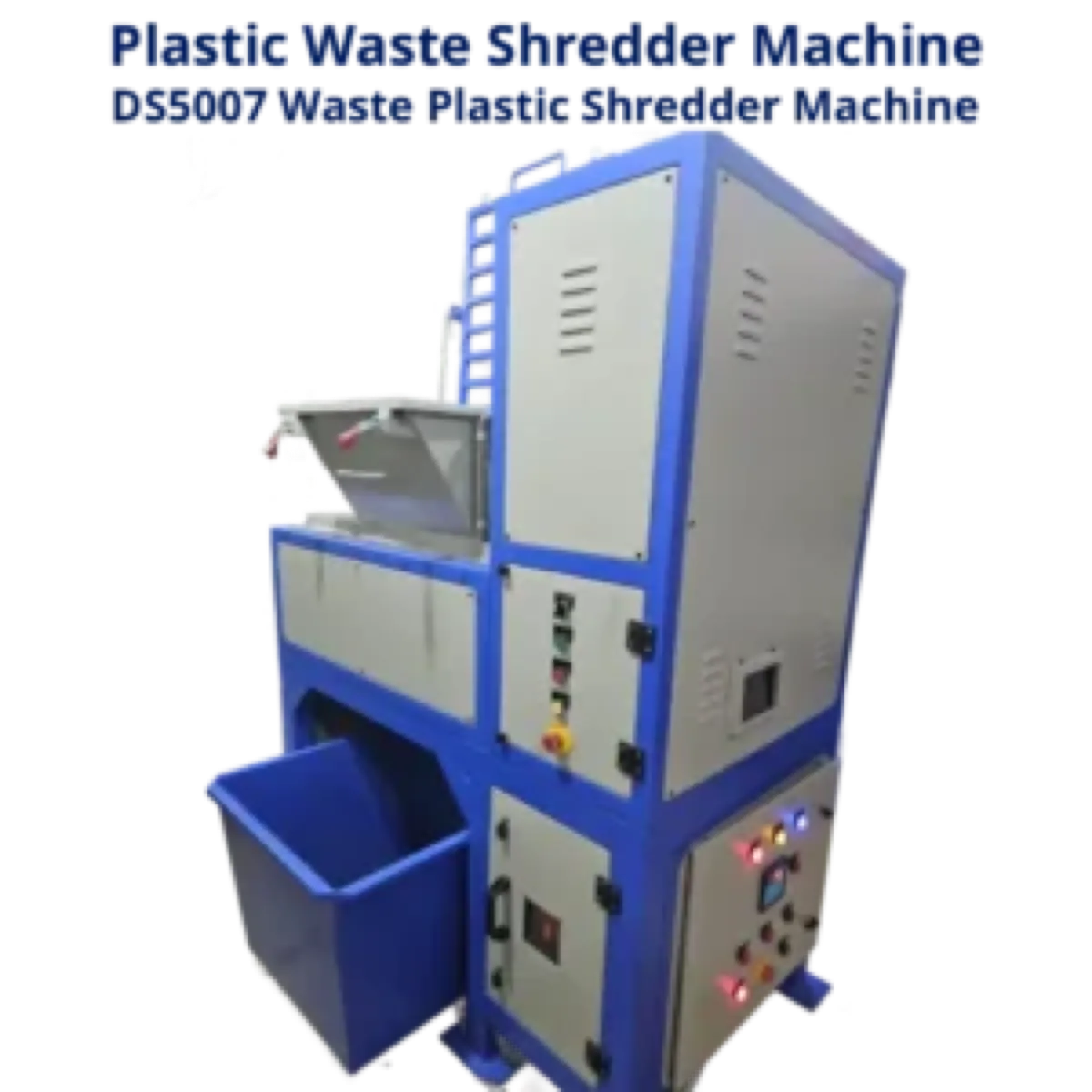
DS5007 Dual-Shaft Shredder
Dual shaft shredder · non-woven fabric duty
- Shreds PP non-woven bags & fabric
- Dual shaft cutting chamber
- Built to order — sized to your volumes
- Contact us for detailed specifications
Best for: non-woven fabric waste — bags, interlining, PPE and spunbond offcuts.
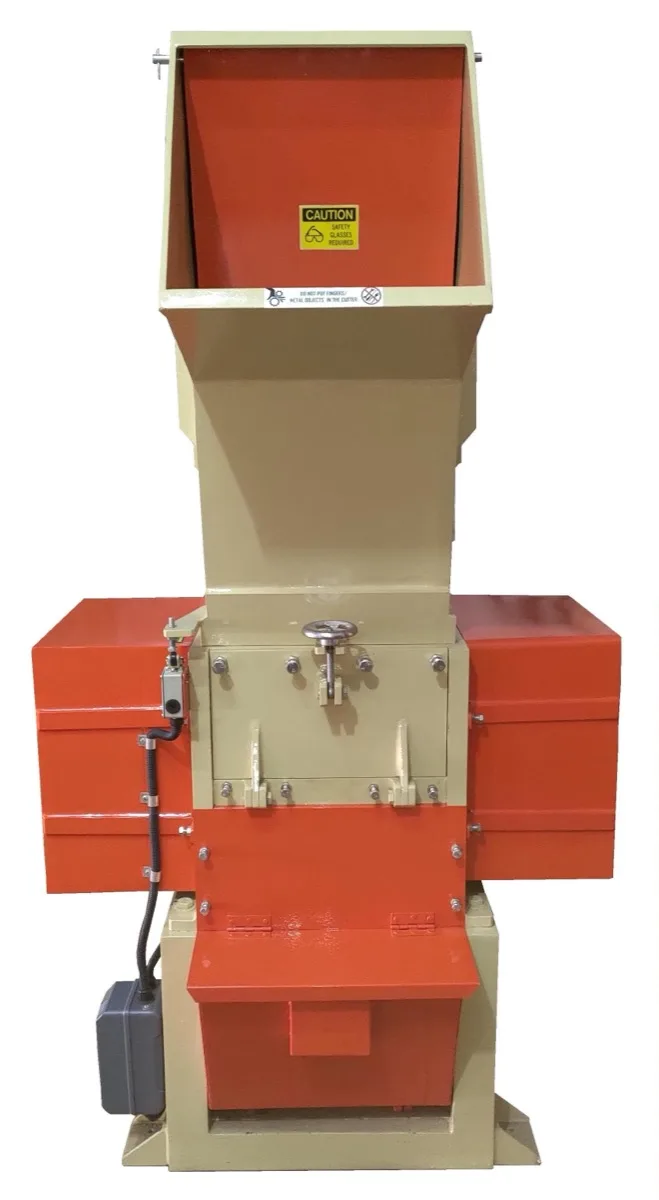
RE20 Plastic Grinder
Blade-type grinder · 20″ throat · mixed plastic waste
- Capacity: 250–400 kg/hr
- Power: 15 HP
- Throat: 20″ × 20″
- 5-blade cutting set
Best for: the rigid plastic side of a textile unit — bobbins, cones, spools and packing waste.
Technical Specifications Comparison
| Specification | Dual-Shaft Shredder | DS5007 Dual-Shaft Shredder | RE20 Plastic Grinder |
|---|---|---|---|
| Machine type | Dual shaft shredder | Dual shaft shredder | Single-rotor blade machine (RE series) |
| Motor power | Sized to the model | Contact us for detailed specifications | 15 HP |
| Capacity | Sized to your stream | Contact us for detailed specifications | 250–400 kg/hr |
| Suits | Polyester & nylon fabric, garments | PP non-woven fabric & bags | Bobbins, cones, spools, rigid packing |
| Output | Uneven shred size | Contact us for detailed specifications | Contact us for detailed specifications |
| Machine weight | 1,062 kg (approx) | Contact us for detailed specifications | By model |
| Best for | Woven & knitted fabric waste | Non-woven streams | Rigid plastics at textile units |
| Get Quote → | Get Quote → | Get Quote → |
Not sure which machine fits your fabric waste?
Tell our technical team your fabric types — woven, knit, non-woven, elastic content — and daily volumes; we’ll recommend the right machine, free.
Why Choose Raj Electricals
A Mumbai machine builder since 1985 — with cloth shredders and elastic waste shredders in the catalogue, built for material that fights back.






Frequently Asked Questions
Why do ordinary shredders struggle with polyester and nylon fabric?
Because fabric does not behave like rigid plastic. Continuous lengths wind around a fast single rotor; knits stretch and slip past blades instead of being cut; elastic content snaps back instead of shearing. A dual shaft shredder solves this with geometry: two slow, interlocked blade shafts grip the fabric and tear it down through the cutting zone, so there is no free-spinning rotor for material to wrap. That is why purpose-built cloth shredders — including ours — are dual shaft machines, and why we tell buyers to be wary of bottle granulators relabelled as fabric shredders.
Can full fabric rolls and thaans be fed into the shredder?
Not whole, and not as one continuous unrolled length — that is asking for a wrap even on a dual shaft machine. The working method is to cut rolls into manageable sections and feed them as bundles, alternating with loose offcuts. It takes a worker with a band knife a few minutes per roll and keeps the shredder running steadily all day. When you come for a trial, bring rolls in the state they actually leave your store — we will show you the feed routine that works on your material.
What about zips, buttons, hooks and metal trims on rejected garments?
Remove them first. Metal objects entering the cutting chamber break blades — that is true of every shredder we build, and a blade change costs more than the de-trimming labour ever will. Most garment units run rejects past a small de-trimming table where zips and metal buttons are cut out; plastic buttons and labels can stay. If your rejects volume makes de-trimming impractical, tell us honestly at the enquiry stage and we will discuss what that means for blade maintenance instead of letting you discover it later.
Who buys shredded polyester and nylon fabric waste?
Several established markets: shoddy and regenerated-yarn mills (the Panipat cluster being the best known), fibre-fill processors who use shredded synthetic waste in cushions, mattresses and quilting, nonwoven manufacturers, and cement plants buying high-calorific SRF. Buyers pay better for sorted material — single fibre type, consistent colour, free of metal. A shredder gets you into these markets; what it does not do is produce respun fibre, which needs dedicated fibre-opening machinery further downstream. We will tell you which output your local buyers actually want before you size the machine.
Does shredding synthetic fabric create dust, and how do we manage it?
Yes — fine fibre fluff is part of shredding synthetics, and we would rather you plan for it than be surprised. Practical management is straightforward: position the machine in a ventilated corner away from spark sources, clean the chamber surroundings on a schedule, and give operators dust masks. Accumulated synthetic fluff is combustible, so housekeeping is a safety discipline, not just tidiness. Units running continuous volumes often add local exhaust ventilation at the discharge. Ask us about discharge arrangements when you enquire — it is easier to plan at layout stage.
Can the shredder destroy branded garments and uniforms securely?
Yes — brand destruction is one of the most common reasons textile units buy a shredder. Rejected branded garments, returned export seconds and retired corporate uniforms are fed in whole and leave as torn fragments with no usable panel, label or logo. Run the destruction under supervision and photograph it, and you have the record your brand customer or compliance team wants. For export houses, in-house destruction is often a buyer-imposed condition — a shredder on site is the simplest way to meet it verifiably.
How much does a synthetic textile shredder cost in India?
Every machine is quoted to the job. What moves the number is capacity, throat size, motor rating, MS or SS construction and the automation you add — a blower, a conveyor, a control panel. Our guide to what drives machine cost walks through each of those; send us your material and daily volume and we will size the machine and quote it, usually the same day.
Can we trial the machine on our own fabric waste before deciding?
Yes — and with fabric we recommend it more strongly than with any other material, because tangling behaviour varies with weave, knit and elastic content in ways no spec sheet captures. Bring a sack of your actual waste — offcuts, rejected garments, roll ends — to our works at Andheri East, Mumbai, and watch the machine run on it. For outstation units we arrange video trials. Contact us to book a slot, and mention if your material has high elastane content so we set up accordingly.
Get a Free Quote for Synthetic Textile Shredders
Tell us your fabric types and daily waste volume — our technical team responds with a model recommendation and firm pricing, usually within one working day. No spam, no obligation.
102/103/104, Madhu Industrial Estate, Old Nagardas Road, Mogra Lane, Andheri East, Mumbai – 400069
Mon–Sat, 9:00 AM – 7:00 PM
Related Solutions
Nylon Waste Shredding
Shred rigid nylon waste — lumps, moulded parts and engineering scrap from the same polymer family.
Learn more →
Non-Woven Bag Shredder
Shred PP non-woven bags and spunbond fabric waste — the non-woven side of synthetic textiles.
Learn more →
FIBC / Jumbo Bag Shredder
Shred PP woven jumbo bags and raffia sacks — woven synthetics with the same tangling behaviour.
Learn more →